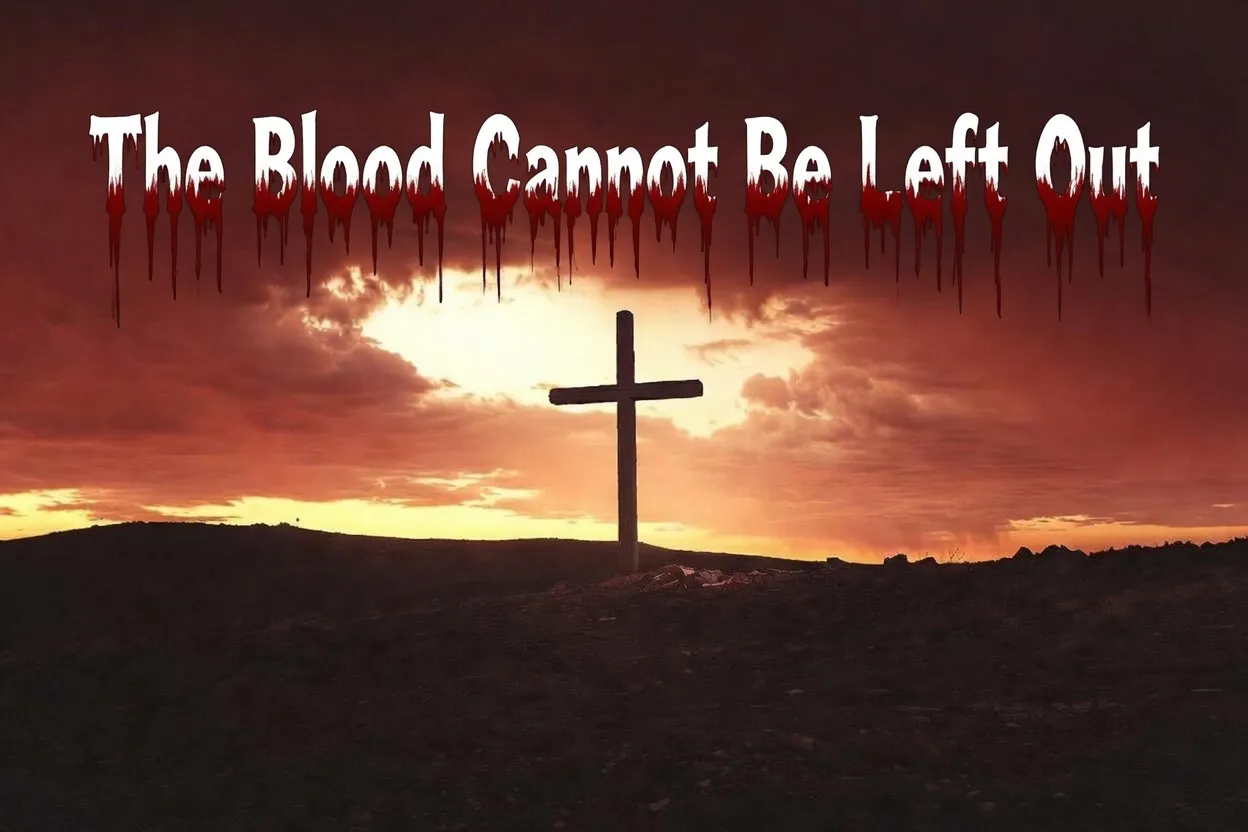
There is a quiet erosion happening in much of modern preaching. The death of Christ is mentioned, His love is praised, His example is admired — but the blood is left out. It is treated as too primitive, too bloody, too offensive for refined ears. Yet when the Apostle Paul preached the gospel that saves in this present dispensation of the grace of God, he would not, and could not, leave the blood out. The blood is not a detail of the gospel. It is the gospel's beating heart.
This study traces the blood of Christ through the writings of Paul, our apostle, and shows why the manner of Christ's death — the cross, the shedding of His blood — is not incidental but essential. He could not have saved us by dying just any way.
The Principle God Laid Down: No Blood, No Remission
Long before Paul ever wrote a word, God established the principle that governs everything the gospel later announces. He put it plainly in the law:
"For the life of the flesh is in the blood: and I have given it to you upon the altar to make an atonement for your souls: for it is the blood that maketh an atonement for the soul." (Leviticus 17:11 KJV)
The life is in the blood. Atonement is made by blood. This is God's own appointed means, not man's invention. And the Scriptures press it to an absolute:
"And almost all things are by the law purged with blood; and without shedding of blood is no remission." (Hebrews 9:22 KJV)
Without shedding of blood there is no remission. Not less remission, not partial remission — none. This is why Paul's gospel had to center on blood and not merely on a teaching, an example, or a moral influence. God Himself set the terms. When Paul declares that Christ died for our sins, he is invoking a principle every reader of the Scriptures already knew governed the whole question of how a holy God forgives sinners.
Foreshadowed from the Beginning
The principle did not begin with Moses. It runs back to the gate of Eden, where the first death recorded after sin was an innocent one, shed to cover the guilty:
"Unto Adam also and to his wife did the LORD God make coats of skins, and clothed them." (Genesis 3:21 KJV)
The blood is not named in the verse, but there are no skins without a death. An innocent life was taken to clothe the guilty pair who could not cover themselves — the first picture of a covering God provides at the cost of another's life. It continues in Abel, whose more excellent sacrifice testified to a better way than his brother's bloodless offering of the ground's produce:
"By faith Abel offered unto God a more excellent sacrifice than Cain, by which he obtained witness that he was righteous..." (Hebrews 11:4 KJV)
Abel's own blood, spilled by a religious brother, cried from the ground for justice. But the blood of Christ speaks something better:
"And to Jesus the mediator of the new covenant, and to the blood of sprinkling, that speaketh better things than that of Abel." (Hebrews 12:24 KJV)
Abel's blood cried for vengeance. Christ's blood is now preached for grace and peace. These witnesses belong to Israel's Scriptures and program, and we do not cite them to place the Body of Christ under sacrifice, covenant, or law. We cite them because they reveal the one unchanging principle God has honored from the beginning: it is innocent blood that answers for sin. From Eden forward, the whole testimony of Scripture points in that single direction.
What the Blood Does in Paul's Gospel
Paul never treats the blood as a symbol or a sentiment. He loads it with the full weight of an accomplished payment, piling benefit upon benefit upon it. Consider how much our apostle fastens directly to the blood of Christ.
The blood is our propitiation — it satisfies God's righteous wrath against sin. To propitiate is to satisfy justice and turn wrath away; the blood does not merely hide sin from view, it pays sin's penalty in full, so that a holy God can forgive the sinner and still remain just:
"Whom God hath set forth to be a propitiation through faith in his blood, to declare his righteousness for the remission of sins that are past, through the forbearance of God." (Romans 3:25 KJV)
This is the wonder of the gospel — that God can be "just, and the justifier of him which believeth in Jesus" (Romans 3:26). At the blood, mercy and justice meet, and neither is compromised.
The blood is our redemption — the price that buys us out of bondage. We were sold under sin and could not free ourselves; the blood is the ransom paid:
"In whom we have redemption through his blood, the forgiveness of sins, according to the riches of his grace." (Ephesians 1:7 KJV; cf. Colossians 1:14)
Notice that redemption and forgiveness stand together in the same breath. To be bought by the blood is to be forgiven by it — and that forgiveness reaches every trespass, for Paul says He has "forgiven you all trespasses" (Colossians 2:13).
The blood is the ground of our justification — God declares us righteous on the strength of it, not on our works:
"Much more then, being now justified by his blood, we shall be saved from wrath through him." (Romans 5:9 KJV)
Two benefits stand in that one verse: we are justified by the blood, and we are saved from wrath by it. The judgment we deserved fell upon Him, that it might never fall upon us.
The blood is our reconciliation and peace — it ends the hostility and makes peace with God where sin had made us enemies:
"And, having made peace through the blood of his cross, by him to reconcile all things unto himself..." (Colossians 1:20 KJV)
And that peace is no distant truce. By the blood the far-off sinner is brought near, given access to God Himself:
"But now in Christ Jesus ye who sometimes were far off are made nigh by the blood of Christ." (Ephesians 2:13 KJV)
The Gentile who was once "without God in the world" (Ephesians 2:12) is, by the blood, made nigh and "accepted in the beloved" (Ephesians 1:6).
Propitiation, redemption, forgiveness, justification, deliverance from wrath, reconciliation, peace, and nearness to God — Paul lays every one of these upon the blood of Christ. Strike out the blood and the whole structure of our salvation collapses, for there is not one benefit of grace that stands without it.
"Now Received the Atonement": A Present Possession
Here the riches of grace shine. Israel's day of atonement was repeated every year, a continual reminder of sins not yet finally taken away, pointing forward to a future cleansing. But Paul tells the Body of Christ that the atonement is not a future hope still owed under a covenant — it is a present possession we have already received:
"And not only so, but we also joy in God through our Lord Jesus Christ, by whom we have now received the atonement." (Romans 5:11 KJV)
That one word, now, is the mystery distinction. Israel waited and still waits for the fulfillment of their day of atonement; we already have its full benefit, provided through the offering of the blood. We are "now justified by his blood" (Romans 5:9). The atonement is finished, accepted, and ours — not awaited.
Some would change the word here, insisting Romans 5:11 should read "reconciliation" rather than "atonement." But the King James reading is deliberate and right. "Atonement" is not a weaker word meaning merely to cover sin from view; it speaks of full satisfaction — the complete sacrificial payment Israel sought year by year on their day of atonement. By choosing "atonement," the verse fixes our attention on that finished sacrificial work; by adding "now," it sets our present possession in sharp contrast to Israel's still-future day. We do not await an atonement — we have received it.
This also answers an objection that might be raised: if atonement means full satisfaction, why was Israel's day of atonement repeated year after year? The repetition was not because atonement is by nature a temporary covering, but because the blood able to make a finished atonement had not yet been shed. It was "not possible that the blood of bulls and of goats should take away sins" (Hebrews 10:4); those offerings could only point forward, being "a remembrance again made of sins every year" (Hebrews 10:3). Israel's atonement was provisional not because the word is weak, but because the true and final blood — the blood of Christ — was still to come. Once that blood was shed, the atonement it secured needs no repeating, and we receive it as a finished and present possession.
Purchased With His Own Blood
The blood does more than forgive us; it bought us. Paul's own words to the Ephesian elders add the dimension of ownership:
"Take heed therefore unto yourselves, and to all the flock, over the which the Holy Ghost hath made you overseers, to feed the church of God, which he hath purchased with his own blood." (Acts 20:28 KJV)
The church is a blood-bought possession. This is the same purchase language Paul uses throughout his epistles — "in whom we have redemption through his blood" (Ephesians 1:7; Colossians 1:14). The blood is the price; the church of God is what that price purchased. And note the worth of it — "his own blood," God's own — for nothing less could have bought us.
He Could Not Die By Any Means: The Cross and the Shedding of Blood
Here is the heart of the matter. When Paul defines the gospel, he does not merely say Christ died. He says Christ died a particular way that the Scriptures had already specified:
"For I delivered unto you first of all that which I also received, how that Christ died for our sins according to the scriptures; And that he was buried, and that he rose again the third day according to the scriptures." (1 Corinthians 15:3-4 KJV)
That little phrase, "according to the scriptures," reaches past the bare fact of death to the kind of death foretold — a sacrificial, blood-shedding, pierced death upon a tree. The Scriptures never predicted that Messiah would simply expire. They predicted how He would die:
"But he was wounded for our transgressions, he was bruised for our iniquities... he hath poured out his soul unto death." (Isaiah 53:5,12 KJV)
"...they pierced my hands and my feet." (Psalm 22:16 KJV)
"...and they shall look upon me whom they have pierced..." (Zechariah 12:10 KJV)
A death without piercing and pouring out would not be a death "according to the scriptures." This is precisely why the cross is not a decorative detail of the gospel but a load-bearing pillar of it. He could not have died of age, or illness, or any quiet means, because two things were required that only the cross supplies.
First, the blood had to be shed, for "without shedding of blood is no remission" (Hebrews 9:22). A bloodless death would end a life without satisfying the principle God laid down in Leviticus 17:11. Second, the tree itself was required, to bear the curse of the law on our behalf:
"Christ hath redeemed us from the curse of the law, being made a curse for us: for it is written, Cursed is every one that hangeth on a tree." (Galatians 3:13 KJV; cf. Deuteronomy 21:23)
So the manner of death was doctrinally necessary on two counts — the blood had to flow for remission, and the cross had to be the means for bearing the curse. Change the manner of His death, and you lose the gospel.
There is a second strand to the death the gospel proclaims: His body was not only killed, it was broken. At the table the bread is "my body, which is broken for you" (1 Corinthians 11:24), and the cup is His blood shed. These two — the body broken and the blood shed — are what fully depict His death, and together they are the necessary content the gospel preaches. We need not catalog every wound to proclaim a true gospel; the particulars simply confirm what those two elements declare. The nails "pierced my hands and my feet" (Psalm 22:16), the scourging left His visage "marred more than any man" (Isaiah 52:14), and the spear opened His side:
"And one of the soldiers with a spear pierced his side, and forthwith came there out blood and water." (John 19:34 KJV)
There the broken body and the shed blood are displayed together. This is all that Paul means by "Christ died for our sins" (1 Corinthians 15:3), and all that the Supper sets before our eyes. And even here the Scripture was kept to the letter: "a bone of him shall not be broken" (John 19:36) — His body broken for us without a single bone broken, that the Passover type might stand.
The Burial and the Resurrection: The Work Proven
Yet the shed blood and the broken body are not, by themselves, the whole gospel Paul preached. When he defines that gospel he names three things, not one: that Christ "died for our sins," that "he was buried," and that "he rose again the third day according to the scriptures" (1 Corinthians 15:3-4). The blood and the cross are the heart of it, but the burial and the resurrection are not optional additions — they belong to the gospel itself.
The burial is no incidental detail. It is the witness that the death was real and complete — He did not merely faint or swoon, but died and was laid in a tomb, exactly as the Scriptures had foretold: "he made his grave with the wicked, and with the rich in his death" (Isaiah 53:9). The grave seals the truth that the payment was actually made: a life truly given, a body truly dead.
Then comes the resurrection, which is far more than a happy ending. It is God's public receipt that the blood was accepted and the debt paid in full:
"Who was delivered for our offences, and was raised again for our justification." (Romans 4:25 KJV)
He was delivered to death for our sins and raised for our justification — the two belong together. Had He stayed in the grave, the payment would stand unproven and we would still be lost: "if Christ be not raised, your faith is vain; ye are yet in your sins" (1 Corinthians 15:17). But because He lives, our salvation is not only purchased but secured — "we shall be saved by his life" (Romans 5:10). The blood pays the debt, the empty tomb proves the payment received, and the living Christ guarantees that what His blood bought can never be lost.
The Preaching of the Cross
This is why Paul refuses to preach a generic death and presses instead the cross, Christ crucified, over and over again:
"...not with wisdom of words, lest the cross of Christ should be made of none effect. For the preaching of the cross is to them that perish foolishness; but unto us which are saved it is the power of God." (1 Corinthians 1:17-18 KJV)
"But we preach Christ crucified, unto the Jews a stumblingblock, and unto the Greeks foolishness." (1 Corinthians 1:23 KJV)
"For I determined not to know any thing among you, save Jesus Christ, and him crucified." (1 Corinthians 2:2 KJV)
"But God forbid that I should glory, save in the cross of our Lord Jesus Christ..." (Galatians 6:14 KJV)
Even when Paul describes the Lord's obedience, he will not stop at the bare fact of death but names the very manner of it:
"...he humbled himself, and became obedient unto death, even the death of the cross." (Philippians 2:8 KJV)
And notice how Paul fuses the two together in one phrase: he made "peace through the blood of his cross" (Colossians 1:20). It is not merely the blood, and not merely the cross — it is the blood of his cross. The cross is where and how the blood was shed, which is why Paul will not separate them, and neither should we.
Showing the Lord's Death Till He Come
There is one ongoing observance Paul delivers to the Body of Christ that keeps the blood before our very eyes, and it confirms everything said above. At the Lord's table, Paul deliberately gives us two elements — the bread and the cup — and he tells us plainly that the cup is the communion of the blood:
"The cup of blessing which we bless, is it not the communion of the blood of Christ? The bread which we break, is it not the communion of the body of Christ?" (1 Corinthians 10:16 KJV)
And he defines the purpose of the memorial as showing the Lord's death until He returns:
"For as often as ye eat this bread, and drink this cup, ye do shew the Lord's death till he come." (1 Corinthians 11:26 KJV)
Consider what this proves. The death we are commanded to show is not death in the abstract. It is shown by two elements: the body broken and the blood shed. The memorial that defines how we proclaim the Lord's death requires both. So the death Paul preaches is, by his own definition, a blood-shedding death — never death by any means. We do not merely believe the blood; at the table we proclaim it till He come.
One word of right division must be kept here. When the Lord said, "This cup is the new testament in my blood" (1 Corinthians 11:25), He spoke of the covenant promised to Israel. We who are the Body of Christ are not under the new covenant; we are reconciled apart from any covenant by that same blood (2 Corinthians 5:18-21). The table memorializes the blood and the finished work — it does not place us under Israel's covenant. The same blood that ratified the new covenant for Israel is the blood that reconciles us by grace.
A Note on Romans 3:25 and "Faith in His Blood"
A word is in order about the phrase "through faith in his blood" in Romans 3:25, because it is often pressed as the proof-text for the truth that a sinner today must place his faith in the blood. That truth is certainly taught in Scripture — but it is carried by other passages (Romans 4:5; Ephesians 1:7; 1 Corinthians 15:1-4), not chiefly by this verse. To be clear, Romans 3:25 does plainly declare that Christ is our propitiation by His blood — that much is certain. The only caution is against making the single clause "through faith in his blood" bear the entire weight of the sinner's call to believe, when the verse's own purpose clause points in another direction.
Read the verse with its own purpose clause: Christ was set forth as a propitiation "to declare his righteousness for the remission of sins that are past, through the forbearance of God." The question this answers is how God could justly forgive sinners in time past, before the blood was ever shed. The answer is that God remitted those past sins in the confidence that Christ would complete the blood atonement as agreed. The propitiation publicly vindicates God's righteousness in His prior forbearance. Paul makes the same observation when he says God "winked at" the times of past ignorance (Acts 17:30), and the writer of Hebrews says it plainly:
"And for this cause he is the mediator of the new testament, that by means of death, for the redemption of the transgressions that were under the first testament, they which are called might receive the promise..." (Hebrews 9:15 KJV)
Christ's death redeemed "the transgressions that were under the first testament" — sins committed before the cross. That is precisely the "remission of sins that are past" of Romans 3:25. So while the doctrine that we are saved through faith in the blood is gloriously true, the particular weight of this verse falls on God's vindicated righteousness regarding the past, and it is cleaner not to lean the whole doctrine on this single phrase.
Conclusion: The Blood Cannot Be Left Out
Trace the whole arc, and the case is overwhelming. The blood was God's appointed principle from the beginning — "it is the blood that maketh an atonement" (Leviticus 17:11) — and "without shedding of blood is no remission" (Hebrews 9:22). It was foreshadowed from Eden and Abel, paid at the cross, and is now received as our finished atonement (Romans 5:11). It is the very price by which the Lord purchased the church (Acts 20:28), and it is the truth we proclaim at His table till He come (1 Corinthians 11:26).
He could not have saved us by dying just any way. The Scriptures foretold a pierced and poured-out death; the law required shed blood for remission and a tree for the curse; and Paul, knowing this, gloried in nothing but the cross — and in the resurrection that proved its work complete. A bloodless gospel, or a gospel of a merely admirable death, is a different gospel than the one our apostle preached — which is to say, no gospel at all.
© 2026 Edward R. Cross



Comments
No comments yet. Be the first to share your thoughts.
Leave a comment