Israel & the Kingdom
God has not cast away His people Israel. The covenants, the earthly kingdom and the promises made to the fathers belong to Israel, and they will be fulfilled with Israel. These articles set Israel's program in its own place, its salvation, its remnant, its apostles and its olive tree, so that neither Israel's promises nor the standing of the Body of Christ is confused with the other.
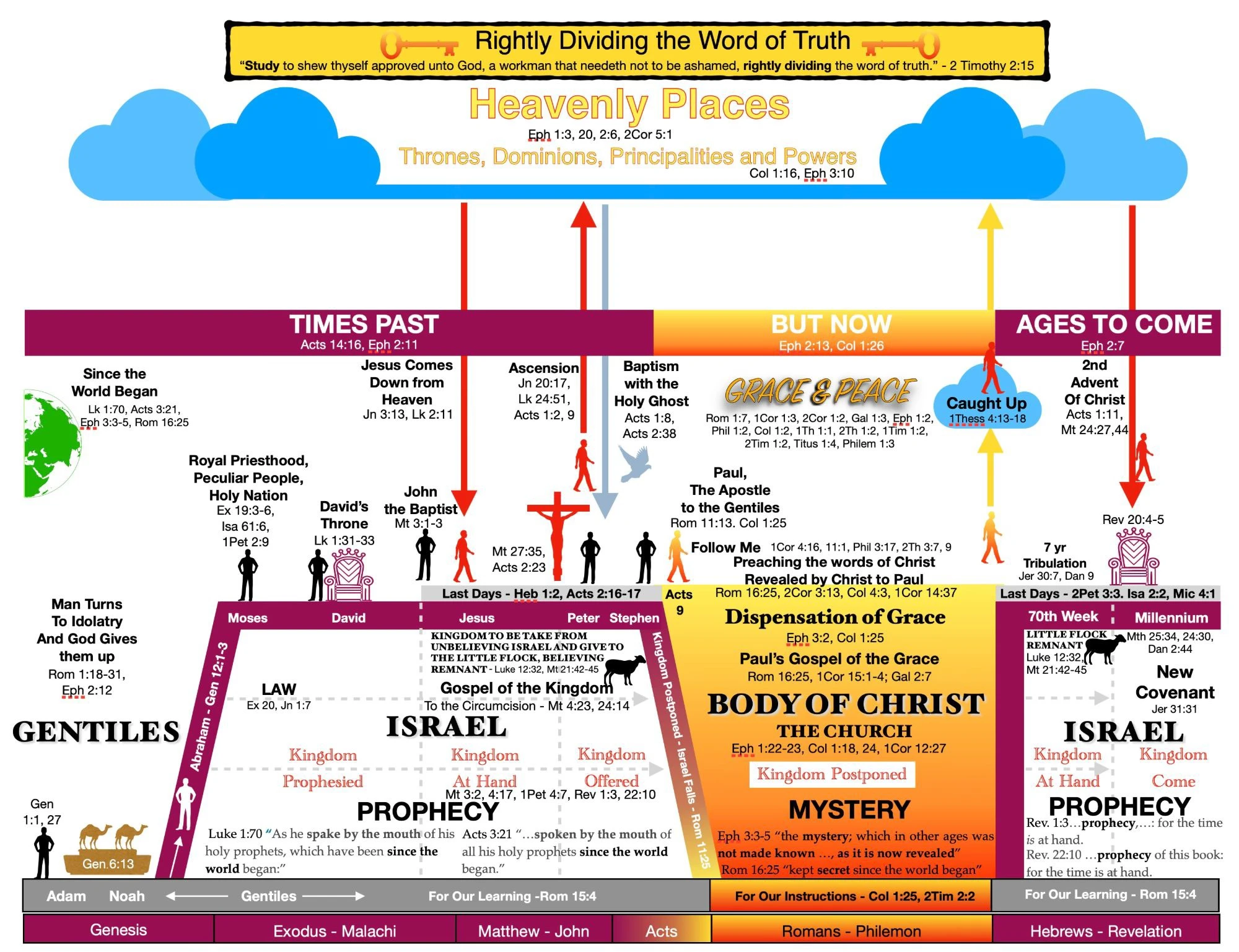
Start with these

Kingdom Salvation: The Conditions, the Covenant, and the Coming King
Posted by Edward Cross on
Kingdom salvation is a full program — repentance, baptism, endurance to the end — grounded in the New Covenant made with Israel and heading toward national fulfillment when the King returns. This article covers the conditions, the Remnant epistles, Matthew 24, Hebrews 6, and why both programs must stay in their own place.
Peter's Audience: The Little Flock of Israel
Posted by Edward Cross on
Peter wrote to the scattered little flock of believing Israel awaiting the earthly kingdom. His epistles contain conditional salvation language, endurance requirements, and a prophetic hope that belong to their program. This article shows why Peter's letters read so differently from Paul's and who they were actually written to.
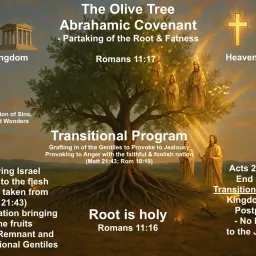
The Olive Tree in Romans 11: Study of the Transitional Graffing, Shared Covenant Blessings, the Warning of Being Cut Off, and the Fulness of the Gentiles
Posted by Edward Cross on
Romans 11 is not describing how the Body of Christ is formed. It is explaining the transitional olive tree during the Acts period, when kingdom blessings were temporarily extended to Gentiles to provoke Israel to jealousy. This article shows what the warning of being cut off means and why the two programs must be kept distinct.
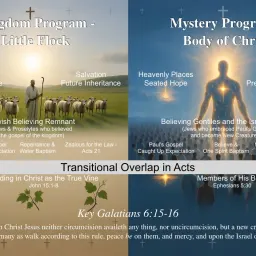
The Israel of God: Rightly Dividing the Jewish Remnant, the New Creature, and the One Body of Christ
Posted by Edward Cross on
The Israel of God in Galatians 6:16 is not the Body of Christ replacing Israel. It is the faithful Jewish remnant who embraced Paul's gospel and now walk according to the new-creature rule with a heavenly calling. This article traces the two programs running side by side and how God keeps both intact.
All articles on this topic
Is Your Child Really a Prodigal?
Posted by Edward R. Cross on June 19, 2026
The parable of the prodigal son belongs to Israel's kingdom program, not to the Body of Christ. Rightly divided, it reframes the wayward child entirely — a saved child never loses his standing or fellowship, and a lost child needs the gospel of grace, not a works-earned homecoming.
Did Any Remnant Believer Cross Into the Body of Christ?
Posted by Edward R. Cross on June 16, 2026
During the Acts transition, could a believer of Israel's kingdom remnant cross into the Body of Christ? Scripture answers yes, and names the proof: Barnabas, Silas, and Apollos among the Body's own apostles and prophets, a whole assembly at Antioch, and the Israel of God. Yet the programs never merge and the twelve stay fixed.

The Kingdom of God: Two Realms, Two Hopes, Two Inheritances
Posted by Edward R. Cross on June 16, 2026
The kingdom of God is often flattened into one destiny, but rightly divided it embraces two realms — one earthly, one heavenly — with two peoples and two hopes. This article shows why flesh and blood inherits Israel's earthly kingdom, and why only the incorruptible enter the heavenly realm of the Body of Christ.
Where Does Acts End and the Mystery Begin? The Dispensational Boundary
Posted by Edward R. Cross on June 16, 2026
The dispensational boundary is not a single line but a corridor with two walls. The mystery and the Body of Christ began at Acts nine, with Paul; the transitional overlap of Israel's program and the mystery closed at Acts twenty-eight. Not Acts 2 and not Acts 28 — Acts is the record of the transition between the two walls.
Prayer in the Dispensation of Grace: Praying as Paul Taught, Not as Israel Was Instructed
Posted by Edward R. Cross on June 15, 2026
Much of what Christendom calls prayer was given to Israel — kingdom petitions, conditional forgiveness, and an anxious checklist of unanswered prayer. Paul gives the Body of Christ its own doctrine of prayer, continual and thankful and interceding, asking chiefly for wisdom and the inner man, on the ground of a finished work.
But Jesus Said… — Answering the Red-Letter Reflex
Posted by Edward R. Cross on June 13, 2026
When someone answers the gospel of grace with a verse in red, the question is never whether Jesus said it, but to whom and under what program. This study gives one diagnostic question and applies it to the texts most often quoted — the rich young ruler, judge not, Lord Lord, endure to the end — each belonging to Israel's kingdom program.
Progressive Revelation Within Each Program — Not Between Them
Posted by Edward R. Cross on June 13, 2026
There is real progressive revelation within each of God's programs, but none between them. The kingdom program does not ripen into the mystery, and the mystery does not collapse back into the kingdom — as Christ's command to keep the law, given after the cross in the Great Commission, makes plain.
Who Was the Book of Hebrews Written To?
Posted by Edward R. Cross on June 13, 2026
The book of Hebrews was written to believing Israel — the scattered remnant tempted to return to the temple — not to the Body of Christ. Seeing the audience rightly settles its covenant, its priesthood, its warnings about falling away, and its earthly hope, and leaves the grace believer's assurance untouched.