
"O Jerusalem, Jerusalem, thou that killest the prophets, and stonest them which are sent unto thee, how often would I have gathered thy children together, even as a hen gathereth her chickens under her wings, and ye would not! Behold, your house is left unto you desolate. For I say unto you, Ye shall not see me henceforth, till ye shall say, Blessed is he that cometh in the name of the Lord." (Matthew 23:37-39 KJV)
Three sentences. A lament, a sentence of judgment, and a condition.
The last of the three is quoted constantly, and it is nearly always quoted alone. Lifted out by itself it reads as a bare prediction — one day Israel will greet the Messiah, and that day is coming. That is true. It will happen, and Scripture says so in more places than this one.
But a verse lifted out of its paragraph is a verse with its reasons removed. The Lord does not say till ye shall say and leave the matter floating. He has just spent four verses telling the men of Jerusalem exactly what they do to those God sends them, and part of it He tells them in the future tense — describing something that had not happened yet when He said it. Then He pronounces the house desolate. Then He names the condition.
The paragraph explains the condition. And the book of Acts, read straight through, answers the paragraph clause by clause.
The Sentence That Has Not Been Said
Start with what the verse actually claims, because the claim is remarkable and familiarity has worn it smooth.
"Ye shall not see me henceforth, till ye shall say, Blessed is he that cometh in the name of the Lord."
Try it with one word taken out:
Ye shall not see me henceforth.
That is a closed door. That is a nation dismissed, a house emptied, a ministry ended, and no way back. Read it that way and the covenant promises come to nothing, the prophets were mistaken, and everyone who has ever said God is finished with Israel has this verse for a proof text.
Now put the word back.
Ye shall not see me henceforth, till ye shall say…
One syllable, and the door is not closed but latched — latched from the inside, with the latch named. Till is not a decoration. It is the hinge of the sentence. It converts a dismissal into a deferral, and it tells you precisely what ends the deferral.
Whatever else this verse is doing, it is not writing Israel off. It is stating a condition, and then telling you what the condition is.
Read the Paragraph, Not the Last Verse
Back up seven verses, into the middle of the woes.
"Fill ye up then the measure of your fathers." (Matthew 23:32) The measure is the fathers' treatment of the prophets — that is what the preceding verses have been about. Then:
"Wherefore, behold, I send unto you prophets, and wise men, and scribes: and some of them ye shall kill and crucify; and some of them shall ye scourge in your synagogues, and persecute them from city to city:" (Matthew 23:34 KJV)
"That upon you may come all the righteous blood shed upon the earth, from the blood of righteous Abel unto the blood of Zacharias son of Barachias, whom ye slew between the temple and the altar." (Matthew 23:35 KJV)
"Verily I say unto you, All these things shall come upon this generation." (Matthew 23:36 KJV)
And then the lament: "thou that killest the prophets, and stonest them which are sent unto thee". And then the desolation. And then the condition.
Lay the paragraph out and the subject of it is not obscure. From verse 32 to verse 39 the Lord is talking about one thing: what Jerusalem does to the men God sends. The fathers did it to the prophets. The men He is speaking to are about to do it to Him. And — verse 34 — they are about to do it again, to a set of messengers not yet sent.
And note who He is saying it to, because it matters later and it is easy to read past. The ye of these verses is not the crowd in the street. It reaches back to verse 13 and the men named there — "scribes and Pharisees", who "sit in Moses' seat" (Matthew 23:2). When the Lord says ye shall kill, and your house, and ye shall say, He is addressing the men who answer for the nation. Jerusalem is addressed in them. That single observation answers the objection a reader is likeliest to raise, and we will come to it.
That is the sentence the condition sits on. Till ye shall say, Blessed is he that cometh. The paragraph has just finished telling you what Jerusalem says to those who come.
Verse 34 Is in the Future Tense, and That Changes Everything
This is the observation the whole article turns on, and it is available to anyone who reads the verse slowly.
"Wherefore, behold, I send unto you prophets, and wise men, and scribes: and some of them ye shall kill and crucify; and some of them shall ye scourge in your synagogues, and persecute them from city to city."
I send. Not I sent. Ye shall kill. Not ye killed. Shall ye scourge. Not ye scourged.
The Lord is not summarizing Israel's past here. Verse 35 does that — Abel to Zacharias, the whole record of shed righteous blood. Verse 34 is doing something else. It is a prophecy of a sending still ahead, and of what will be done to the ones sent.
So the paragraph contains a testable prophecy. Messengers will be sent. They will be killed, scourged in the synagogues, and driven from city to city. If Scripture records what became of those messengers, we can read the fulfillment rather than speculate about it.
Scripture does record it. The record is the book of Acts.
Verse 36 adds "All these things shall come upon this generation", and that clause is left out of the argument deliberately. It is the single most abused phrase in the passage, and it is taken up on its own below.
Luke records the same lament and the same sentence, with one phrase Matthew does not have: "Behold, your house is left unto you desolate: and verily I say unto you, Ye shall not see me, until the time come when ye shall say, Blessed is he that cometh in the name of the Lord." (Luke 13:35 KJV) Until the time come — there is a time appointed for it, and it has not arrived. These two verses, Matthew 23:38 and Luke 13:35, are the only two places in all of Scripture where the words "house is left unto you desolate" stand. The desolation and the condition are stated together, twice, and nowhere else. They belong to each other.
Acts Answers Verse 34, Clause by Clause
Take the clauses of verse 34 in order and set the Acts narrative beside them.
"Ye shall kill." Stephen, before the council, is rushed and stoned: "And cast him out of the city, and stoned him: and the witnesses laid down their clothes at a young man's feet, whose name was Saul." (Acts 7:58 KJV) Then James: "And he killed James the brother of John with the sword." (Acts 12:2 KJV) And Paul, looking back on what he himself had done, says of the believers, "when they were put to death, I gave my voice against them" (Acts 26:10) — a plural, and a settled practice.
"Stonest them which are sent unto thee." Stephen again. And then Paul at Lystra: "And there came thither certain Jews from Antioch and Iconium, who persuaded the people, and, having stoned Paul, drew him out of the city, supposing he had been dead." (Acts 14:19 KJV)
"Shall ye scourge in your synagogues." Note the place named — not the street, not the court, the synagogue. Paul describes his own former work in exactly that location: "Lord, they know that I imprisoned and beat in every synagogue them that believed on thee" (Acts 22:19). And the council does it to the apostles directly: "when they had called the apostles, and beaten them, they commanded that they should not speak in the name of Jesus" (Acts 5:40).
"Persecute them from city to city." At Antioch in Pisidia: "the Jews stirred up the devout and honourable women, and the chief men of the city, and raised persecution against Paul and Barnabas, and expelled them out of their coasts" (Acts 13:50). The men who stoned Paul at Lystra had traveled from Antioch and Iconium to do it (Acts 14:19) — that is persecution from city to city, described as such. And the whole Jerusalem assembly is scattered: "at that time there was a great persecution against the church which was at Jerusalem; and they were all scattered abroad throughout the regions of Judaea and Samaria, except the apostles." (Acts 8:1 KJV)
Four clauses. Four fulfillments, each recorded by name, each with the men named and the cities named.
This is not a loose thematic resemblance. The Lord named the killing, the stoning, the scourging, the location of the scourging, and the driving from city to city — and Luke records the killing, the stoning, the scourging, the synagogue, and the driving from city to city. The prophecy has a checklist and the history ticks it.
Stephen Was Standing Inside the Prophecy
One junction in that list deserves its own consideration, because it is the sharpest thing in the whole passage.
Stephen, on trial, makes his defense a history lesson, and he ends it like this:
"Ye stiffnecked and uncircumcised in heart and ears, ye do always resist the Holy Ghost: as your fathers did, so do ye. Which of the prophets have not your fathers persecuted? and they have slain them which shewed before of the coming of the Just One; of whom ye have been now the betrayers and murderers:" (Acts 7:51-52 KJV)
Read that against Matthew 23 and the overlap is not partial. Your fathers — Matthew 23:32, fill up their measure. Which of the prophets have not your fathers persecuted — Matthew 23:37, thou that killest the prophets. As your fathers did, so do ye — Matthew 23:36, all these things shall come upon this generation.
Stephen is charging Jerusalem with the exact indictment the Lord brought in Matthew 23. He is a man sent, standing in front of the people who were told they would kill the men sent, accusing them of being the sort of people who kill the men sent.
And they stone him.
He does not merely fulfill verse 34. He announces it and then fulfills it in the same hour. The prophecy is quoted back at the city by its own victim, and the city's answer is to prove him right.
Justin Johnson of Grace Ambassadors makes the same connection from the other end, working from Zechariah rather than from Acts. Writing on this very paragraph he says: "Before his death Jesus warned the scribes and Pharisees of killing Stephen by referring to Zechariah's death. Jesus said he would send prophets to Israel, but they would be killed."
He is pointing at the man named in verse 35 — the Zacharias slain "between the temple and the altar", whose death 2 Chronicles records like this: "And they conspired against him, and stoned him with stones at the commandment of the king in the court of the house of the LORD." (2 Chronicles 24:21 KJV)
Stoned, by official decision, in the house of God, for telling Israel what they did not want to hear. No stoning is recorded in the Old Testament after his. Acts 7 records the next one.
A Caution About "This Generation"
The argument above rested on the content of verse 34 and on the Acts record that matches it. It did not rest on verse 36, and that was deliberate, because verse 36 is where a reader can be led badly astray — including a reader who agrees with everything else here.
"Verily I say unto you, All these things shall come upon this generation." (Matthew 23:36 KJV)
It is tempting to treat that as a clock: this generation means the men in front of Him, so everything in the paragraph is dated to the first century, and the case is closed.
But a demonstrative does not carry a date. It points, and what it points at has to be identified from somewhere else in the sentence. This generation tells you which generation is meant only once you know what falls within it — and the verse says where to look for that, in the words all these things.
Read it as a clock instead, and watch what the identical phrase then does in the next chapter.
"Verily I say unto you, This generation shall not pass, till all these things be fulfilled." (Matthew 24:34 KJV)
On the clock reading, the generation Christ addressed has long since died, so everything in Matthew 24 must already have happened — at the destruction of Jerusalem in A.D. 70. The tribulation, the abomination of desolation, the return of Christ: all of it behind us. That is the preterist conclusion, and it is not a distortion of the clock reading. It is what the clock reading yields when it is applied consistently.
The answer is not to make the phrase mean something vague. The answer is to read what happens inside the generation, and let that identify it.
Matthew 24 says plainly what belongs to its all these things: the abomination of desolation standing in the holy place (Matthew 24:15); "great tribulation, such as was not since the beginning of the world to this time, no, nor ever shall be" (Matthew 24:21); and then, "Immediately after the tribulation of those days" (Matthew 24:29), "they shall see the Son of man coming in the clouds of heaven with power and great glory" (Matthew 24:30).
Christ has not returned in the clouds with power and great glory. So all these things have not been fulfilled, so the generation that sees them fulfilled has not yet come. The verse describes a generation still future, identified by what it will witness.
Now apply the same rule — the same one, not a convenient variant — to Matthew 23:36. What are all these things there? The sending of verse 34, and what is done to the men sent. And those are recorded. Not inferred, not reconstructed from a date: named men, named cities, in the book of Acts. So the generation of Matthew 23:36 is identified the same way the generation of Matthew 24:34 is — by the events, not by the pronoun. In the one case the events are on the page; in the other they are not yet.
One rule, honestly applied, gives different answers because the evidence differs. That is not special pleading. Special pleading would be reading the demonstrative as a clock where it suits and as a figure where it does not.
So nothing in this article turns on dating verse 36, and nothing in it should be quoted in support of the claim that the prophetic program is finished. The point is much narrower and much sturdier: the Lord said what would be done to the men He sent, and Acts records it being done.
For the full answer to the preterist system, and how it builds its case out of proof texts that are largely ours, see Redemption Is Not a Covenant Remedy — Answering a Preterist Use of Hebrews 9:15.
Who Is the He That Cometh?
Most readers take the he of verse 39 to be Christ Himself, so that the verse means Israel will one day welcome their returning Messiah. The me in the first half of the sentence seems to settle it — "Ye shall not see me henceforth, till ye shall say, Blessed is he that cometh" — and surely the me and the he are the same person.
They are connected. They are not the same person. And the chapter says which is which.
Try it out loud. Put the name in place of the pronoun and read the sentence as it would then stand:
Ye shall not see me henceforth, till ye shall say, Blessed is Christ that cometh in the name of the Lord.
Three things go wrong at once.
The speaker changes how he refers to himself in the middle of his own sentence, from me to a third-person title, about one event, with nothing whatever marking the switch.
Christ is the sender in this chapter, not the sent. Matthew 23 speaks of sending exactly twice, and both times He is the one doing it: "Behold, I send unto you prophets, and wise men, and scribes" (Matthew 23:34), and "them which are sent unto thee" (Matthew 23:37). Put His name into verse 39 and He is the sender at verse 34 and the sent one five verses later, in a paragraph that never signals the change.
And the condition closes on itself — you shall not see Christ until you say, Blessed is Christ that cometh — which is a fault serious enough to have its own section a little further on.
Now do it the other way:
Ye shall not see me henceforth, till ye shall say, Blessed is he whom I send that cometh in the name of the Lord.
The speaker stays himself throughout. The sender stays the sender. The condition falls into two steps that happen in order, and every word of verses 34 and 37 is doing work in verse 39.
In fairness, the first reading is strained rather than impossible. Christ did come in His Father's name and says so — "I am come in my Father's name, and ye receive me not" (John 5:43) — and the crowds applied the formula to Him at the entry. So the question is not whether the words could describe Him. It is what this chapter, in this paragraph, is actually putting in front of Jerusalem. Three things in the text answer that.
First: the phrase is a formula of WELCOME, and the one being welcomed is whoever comes with God's sanction. Go to its source and read it in its setting, which is a man arriving at the temple gates:
"Open to me the gates of righteousness: I will go into them, and I will praise the LORD: This gate of the LORD, into which the righteous shall enter." (Psalms 118:19-20 KJV)
"Blessed be he that cometh in the name of the LORD: we have blessed you out of the house of the LORD." (Psalms 118:26 KJV)
We have blessed you out of the house of the LORD. The words are spoken by those inside the house to the one coming in. It is a greeting at a gate — a reception. To say Blessed is he that cometh in the name of the Lord is not to name a person; it is to receive him.
Second: the formula is a frame with an empty slot, and Scripture fills the slot when it means to. Set the occurrences side by side and watch:
- "Blessed be the King that cometh in the name of the Lord" (Luke 19:38) — the slot filled.
- "Blessed is the King of Israel that cometh in the name of the Lord" (John 12:13) — filled.
- "Blessed be the kingdom of our father David, that cometh in the name of the Lord" (Mark 11:10) — filled, and not with a person at all.
- Psalms 118:26, Matthew 21:9, Mark 11:9, Luke 13:35 and Matthew 23:39 — left bare. Just he.
Where the one who comes is Christ as King, the text says so. Where it is the kingdom, the text says so. Matthew 23:39 says neither. It leaves the slot open, and the reader fills it from the context — which is the whole reason the paragraph in front of it exists.
Third, and this is what settles it: the context of this chapter is sent men, and nothing else. "Behold, I send unto you prophets, and wise men, and scribes" (Matthew 23:34). "thou that killest the prophets, and stonest them which are sent unto thee" (Matthew 23:37). The subject from verse 34 to verse 37 is men God sends and what Jerusalem does to them. Then verse 39 asks them to pronounce a welcome over one who comes in the Lord's name — and the chapter has spent four verses telling us who that is.
And the me is answered by Christ's own rule, stated in this same book, about these same sent men:
"He that receiveth you receiveth me, and he that receiveth me receiveth him that sent me." (Matthew 10:40 KJV)
"He that receiveth a prophet in the name of a prophet shall receive a prophet's reward" (Matthew 10:41 KJV)
Be exact about that second verse, because it is not the authority idiom and should not be passed off as one. In the name of a prophet means as what he is — the next verse has "in the name of a disciple" (Matthew 10:42), and the sense in both is because he is one. Which is its own witness here: what is required is that a man be received for the office he carries, recognized rather than merely tolerated. That is what calling a man blessed who comes in the Lord's name amounts to.
There is the bridge, and Christ built it Himself. Receive the man I send, and you have received me. So the sentence holds together perfectly with two different referents: ye shall not see me, till ye welcome him whom I send — because welcoming the sent one is receiving the Sender. The pronoun changes because the person changes, and Matthew 10:40 is why the change costs the sentence nothing.
He says the same thing again from the other side, and to these same men: "I am come in my Father's name, and ye receive me not: if another shall come in his own name, him ye will receive." (John 5:43 KJV) Coming in a name, and being received or refused, is the very category under discussion.
And one thing must be said about the word see, because it is not bare eyesight — and He settles that Himself, to these same men. The council looked at Him within the week: "they that had laid hold on Jesus led him away to Caiaphas the high priest, where the scribes and the elders were assembled" (Matthew 26:57). They saw Him at His trial. So ye shall not see me henceforth was never a statement about whether their eyes would fall on Him again. And standing before that council He tells them exactly what seeing He meant:
"nevertheless I say unto you, Hereafter shall ye see the Son of man sitting on the right hand of power, and coming in the clouds of heaven." (Matthew 26:64 KJV)
The seeing withheld is the advent, and He says so to the men He withheld it from.
The Seeing Cannot Be What Causes the Saying
There is one more thing in the sentence, and it is the plainest of all. It needs no word study and no cross-reference. It is simply the logic of the verse.
"Ye shall not see me henceforth, till ye shall say…"
The saying comes first, and the seeing waits on it. Therefore the seeing cannot be what produces the saying. If the sight of Him were what moved Israel to speak, they would need to see Him in order to say it — and the seeing is withheld until it is said. The condition would be locked shut from both ends, and the till would be naming something that could never arrive.
This is worth pressing, because it quietly rules out the most common way the verse is explained.
It is usually taken that Israel will say these words at the appearing — looking on the One they pierced, recognizing Him at last, and confessing. Set that against the clause and it will not stand: that is a confession caused by the seeing, and the verse puts the seeing on the far side of the confession.
And the passage most often joined to this one turns out to run the other way. Watch the order Zechariah gives:
"And I will pour upon the house of David, and upon the inhabitants of Jerusalem, the spirit of grace and of supplications: and they shall look upon me whom they have pierced, and they shall mourn for him, as one mourneth for his only son, and shall be in bitterness for him, as one that is in bitterness for his firstborn." (Zechariah 12:10 KJV)
They look, and then they mourn. The looking produces the mourning. That is precisely the shape Matthew 23:39 forbids for its own condition — and it is a good reason to conclude that Zechariah 12:10 is describing something other than the saying of Matthew 23:39.
Then there is what those passages actually record Israel doing, which is not blessing anybody. Zechariah gives five verses of it: "In that day shall there be a great mourning in Jerusalem, as the mourning of Hadadrimmon in the valley of Megiddon" (Zechariah 12:11), and then the land mourning "every family apart… and their wives apart" (Zechariah 12:12-14). John's is the same: "every eye shall see him, and they also which pierced him: and all kindreds of the earth shall wail because of him." (Revelation 1:7 KJV)
Mourning and wailing. The word blessed does not occur in Zechariah 12, 13 or 14 at all. A welcome and a lament are not the same act, and these are the passages where a welcome ought to be if the welcome belonged to that day.
Nor does any prophet supply the sentence. Cometh in the name of the Lord stands eight times in Scripture: once in Psalm 118, five times at the triumphal entry, and twice in the passage before us with its Luke parallel. There is no prophetic text anywhere that puts those words in Israel's mouth at the advent. The only Scripture saying Israel will one day say them is this verse.
Let the limit be stated as plainly as the argument. None of this denies Zechariah 12:10 or Revelation 1:7. Both are true, both are future, and Israel will look on the One they pierced and mourn. What is being said is narrower: those passages do not supply Matthew 23:39's sentence, and they cannot be what satisfies its condition, because in them the sight comes first.
And the order tells you what kind of thing the confession is, which is the part worth carrying away. A confession made after seeing Him is recognition — anyone recognizes a king standing in front of him, and there is no faith in conceding a fact that has become unavoidable. A confession made before seeing Him is something else entirely: it is taking God at His word about a man not presently visible, on the testimony of those He sends.
Which returns the question to where the chapter had already put it. If the saying is not caused by seeing Christ, something else must occasion it — and verses 34 to 37 name what: men sent, arriving in the Lord's name, asking to be received. Not in the abstract, either — by specific men, on specific days, in that city.
The Prophets Put the Turning Before the Coming, Every Time
That order can be tested, and it should be. Go to the texts where the Lord actually returns and look for a change of heart. Where is it recorded — at the coming, or before it?
Start with the withdrawal, because one prophet states it in the very shape of Matthew 23:39.
"I will go and return to my place, till they acknowledge their offence, and seek my face: in their affliction they will seek me early." (Hosea 5:15 KJV)
A withdrawal, a till, and a condition of acknowledgment. He goes to His place and stays there until Israel owns that offense. And the next words are the acknowledgment itself — "Come, and let us return unto the LORD: for he hath torn, and he will heal us" (Hosea 6:1) — after which "he shall come unto us as the rain" (Hosea 6:3).
Justin Johnson reads the two together in the same way, teaching Hosea 6: He comes unto them as the rain and returns to them, but that is after they acknowledge their offence — and he goes straight from it to Matthew 23:37-39.
And the same order is written into the covenant's own terms, from the beginning.
"If they shall confess their iniquity, and the iniquity of their fathers… if then their uncircumcised hearts be humbled, and they then accept of the punishment of their iniquity: Then will I remember my covenant with Jacob." (Leviticus 26:40-42 KJV)
"And shalt return unto the LORD thy God, and shalt obey his voice… That then the LORD thy God will turn thy captivity, and have compassion upon thee, and will return and gather thee." (Deuteronomy 30:2-3 KJV)
"And ye shall seek me, and find me, when ye shall search for me with all your heart. And I will be found of you, saith the LORD: and I will turn away your captivity." (Jeremiah 29:13-14 KJV)
And Zechariah, at the end of the refining — a verse this article will come back to: "they shall call on my name, and I will hear them: I will say, It is my people: and they shall say, The LORD is my God." (Zechariah 13:9)
Confess, return, seek, call — and then He acts. Never once the reverse.
And when Israel is finally heard speaking at the deliverance itself, listen to the tense:
"And it shall be said in that day, Lo, this is our God; we have waited for him, and he will save us." (Isaiah 25:9 KJV)
We have waited. Past tense, spoken in the day of salvation. The waiting was already going on when He arrived.
Now, the advent passages themselves are full of judgment and warfare — "out of his mouth goeth a sharp sword… he treadeth the winepress of the fierceness and wrath of Almighty God" (Revelation 19:15); "Then shall the LORD go forth, and fight against those nations" (Zechariah 14:3). And it would be easy to read that as an answer to nothing — a King arriving to destroy, with no turning in view. It is worth asking whether the warfare is God answering something.
It is, and the texts say whose cry it answers.
Whom does He fight? "I will gather all nations against Jerusalem to battle; and the city shall be taken, and the houses rifled… and half of the city shall go forth into captivity" — then "Then shall the LORD go forth, and fight against those nations" (Zechariah 14:2-3). He fights the besiegers of a city already under the knife. The warfare is a rescue.
And the affliction is not incidental to the turning — it produces it. Read Hosea's sentence to its end: "till they acknowledge their offence, and seek my face: in their affliction they will seek me early." (Hosea 5:15) The trouble is the instrument. Judgment and a change of heart are not alternatives here; the one brings on the other.
And Israel's own words in that trouble are on record. Isaiah gives the winepress in chapter 63 — and then, before the passage is out, the nation speaking:
"Return for thy servants' sake, the tribes of thine inheritance." (Isaiah 63:17)
"Oh that thou wouldest rend the heavens, that thou wouldest come down." (Isaiah 64:1)
"But we are all as an unclean thing, and all our righteousnesses are as filthy rags." (Isaiah 64:6)
"Be not wroth very sore, O LORD, neither remember iniquity for ever: behold, see, we beseech thee, we are all thy people." (Isaiah 64:9)
A confession of unworthiness and a plea for Him to come down. Asked for this article's question — is there anything at the return that looks like a change of heart? — that is what it looks like, and it is spoken before He comes, not after. The Lord's answer in the same passage names both halves at once: "For the day of vengeance is in mine heart, and the year of my redeemed is come." (Isaiah 63:4) Vengeance on the nations, redemption for a people — one act.
And Zechariah 12 confirms this rather than complicating it. There the nations are destroyed (Zechariah 12:9) and the spirit of grace and the mourning come after (Zechariah 12:10) — which is the placement the last section reached from the till alone: not the turning that precedes, but what happens at the sight of Him. The seeking comes first, under affliction; the rescue answers it; the mourning comes when they look.
And one thing more must be said about that judgment, because it is not aimed where a hurried reader assumes. It falls on the NATIONS, not on Israel — "I will gather all nations against Jerusalem to battle", and then He fights those nations (Zechariah 14:2-3). Joel says why: "I will also gather all nations… and will plead with them there for my people and for my heritage Israel, whom they have scattered among the nations, and parted my land." (Joel 3:2 KJV)
And when the Lord Himself states the standard of that judgment, it is the reception rule, word for word.
"And before him shall be gathered all nations: and he shall separate them one from another, as a shepherd divideth his sheep from the goats… Verily I say unto you, Inasmuch as ye have done it unto one of the least of these my brethren, ye have done it unto me." (Matthew 25:32, 40 KJV)
And the other side of it: "Inasmuch as ye did it not to one of the least of these, ye did it not to me." (Matthew 25:45 KJV)
That is Matthew 10:40 again — at the end of the age, made the measure of the nations. What you did to the ones He sent, you did to Him. The rule that condemns the men in Moses' seat is the rule the Gentiles are judged by. One principle, laid on Israel's rulers in the gospels and on the nations at the advent — and in both places it turns on what was done to the sent ones.
Who those brethren are is settled elsewhere in this corpus: The Book of Matthew, Wrongly Divided identifies them as the King's kinsmen, the messengers of the kingdom in the day of tribulation — and the sentence as entrance into, or exclusion from, the earthly kingdom. Which is the same men, and the same test, this article has been tracing from Matthew 10 forward.
And the standard is older than the gospels. It is the term God gave Abraham: "And I will bless them that bless thee, and curse him that curseth thee" (Genesis 12:3). Wherever God has dealt with nations as nations, that is the term He has dealt with them on, and Matthew 25 is that clause come to judgment.
But say plainly when, because the clause is not in force today. The natural branches are broken off, Israel is set aside from its national position, and "there is no difference between the Jew and the Greek" (Romans 10:12). Those national curses are not being enforced in this dispensation, and God is not presently dealing with nations on that basis — He is "not imputing their trespasses unto them" (2 Corinthians 5:19) and is saving men one at a time out of every nation. The term is not repealed; its administration is suspended. Matthew 25 is where it resumes, and that is a judgment at the advent, not a rule running over the nations now.
So the search does not come back empty. It comes back with the turning in the wrong place for the common reading. Israel seeks Him in the trouble and pleads for Him to come down. Then He comes, fights the nations for the remnant, and is looked upon and mourned. No passage makes the sight of Him the thing that produces the change of heart. Every passage that names one puts it before — and the coming answers it.
Which is Matthew 23:39 in a single sentence, from the Lord's own mouth, about His own city.
Then Where Does the Mourning Belong?
So the Zechariah passages are not set aside — they are placed. And the placing is worth doing carefully, because once it is done the passages stop competing and fall into a single order.
Set the passages down in the order each one states for itself, and take nothing from any of them but its own sequence.
The men of Jerusalem say it. "Ye shall not see me henceforth, till ye shall say, Blessed is he that cometh in the name of the Lord." (Matthew 23:39) They call blessed the one God sends, and do it without having seen Christ. Saying, then seeing — the verse's own order.
Then they see Him. "Behold, he cometh with clouds; and every eye shall see him, and they also which pierced him" (Revelation 1:7). The seeing follows, which is what verse 39 promised.
Then, seeing Him, they mourn. "they shall look upon me whom they have pierced, and they shall mourn for him, as one mourneth for his only son, and shall be in bitterness for him, as one that is in bitterness for his firstborn." (Zechariah 12:10) Looking, then mourning — Zechariah's own order, and Revelation says the same: they see, and then they wail.
Then they are cleansed. "In that day there shall be a fountain opened to the house of David and to the inhabitants of Jerusalem for sin and for uncleanness." (Zechariah 13:1)
And then they own Him. "they shall call on my name, and I will hear them: I will say, It is my people: and they shall say, The LORD is my God." (Zechariah 13:9)
Not one of those verses has been turned around to make the chain fit. Matthew says saying before seeing; Revelation says seeing before wailing; Zechariah says looking before mourning, and mourning before the fountain. Each joint is stated in the text that supplies it. Lay them end to end and they run in one direction, without a single reversal — and the two passages that were thought to describe the same moment turn out to be consecutive links in one chain.
Which is also what explains the mourning, and nothing else does so well. If the blessing and the mourning were one act, the verse would be asking Israel to welcome and wail in the same breath. On this order they are two acts with a cause between them. Jerusalem receives the men God sends. Then they see the One who sent them — and grief falls, because the face before them belongs to somebody already refused and crucified. You do not mourn a man you never rejected. The mourning is the measure of what the refusal had cost, and it is felt at the sight, which is exactly where Zechariah puts it.
That Same Grief Has Already Happened Once — By Preaching
And it is not a thing we have to imagine. It happened in Jerusalem, in one day, to about three thousand souls — and Luke records the moment it landed.
Set the two sentences side by side and watch the construction:
"Therefore let all the house of Israel know assuredly, that God hath made that same Jesus, whom ye have crucified, both Lord and Christ. Now when they heard this, they were pricked in their heart, and said unto Peter and to the rest of the apostles, Men and brethren, what shall we do?" (Acts 2:36-37 KJV)
"they shall look upon me whom they have pierced, and they shall mourn for him" (Zechariah 12:10)
Whom ye have crucified — pricked in their heart. Whom they have pierced — they shall mourn. It is the same grief from the same cause: men brought face to face with One they had killed. Peter is preaching what Zechariah prophesied, and getting Zechariah's reaction.
But look at what put them there, because it is the whole point. "Now when they heard this". Not saw. They had no sight of the risen Christ — He had ascended, and nothing in Acts 2 shows Him to the crowd. About three thousand souls in Jerusalem were brought to that grief by a sermon from a man God sent them.
Which settles a question the reading might otherwise leave hanging. Can Israel be brought to this without seeing Him? They already were, in the thousands, on the day the Spirit came. The grief does not require the sight. It requires the testimony, and men willing to hear it.
And Peter's closing word names exactly why it went no further.
"And with many other words did he testify and exhort, saying, Save yourselves from this untoward generation." (Acts 2:40 KJV)
Untoward stands once in all of Scripture, and this is it. About three thousand received his word — and Peter's instruction to them was to get out from under the generation they belonged to. The response was real and it was a remnant's. The men in Moses' seat were not in that number; within two chapters they are forbidding the apostles to speak in the name at all.
So the first advent did have this, in miniature and by preaching — and it did not carry the nation. What Zechariah describes is that same grief on the whole house, and by then there will be no missing it, because by then they will be looking at Him.
And Peter Put It to Them Again, and Again
He did not say it once and leave it. He brought the same charge four times, and each time he moved nearer to the seat.
To the crowd at Pentecost: "that same Jesus, whom ye have crucified" (Acts 2:36). In Solomon's porch: "whom ye delivered up, and denied him in the presence of Pilate… But ye denied the Holy One and the Just, and desired a murderer to be granted unto you; And killed the Prince of life" (Acts 3:13-15). Then, standing before the council itself: "by the name of Jesus Christ of Nazareth, whom ye crucified" (Acts 4:10). And hauled back before that same council: "The God of our fathers raised up Jesus, whom ye slew and hanged on a tree" (Acts 5:30) — with the offer still open in the next breath, "Him hath God exalted with his right hand to be a Prince and a Saviour, for to give repentance to Israel, and forgiveness of sins" (Acts 5:31).
One accusation, pressed four times, from the street to the council itself. And Peter is careful about who is who even while he charges them: "I wot that through ignorance ye did it, as did also your rulers" (Acts 3:17).
Now watch what Luke does with the two responses, because he does not use the same words for them.
The people are pricked. "Now when they heard this, they were pricked in their heart, and said unto Peter and to the rest of the apostles, Men and brethren, what shall we do?" (Acts 2:37 KJV) That phrase stands once in all of Scripture. And the people kept coming: "many of them which heard the word believed; and the number of the men was about five thousand" (Acts 4:4).
The council is cut. "When they heard that, they were cut to the heart, and took counsel to slay them." (Acts 5:33 KJV) That phrase stands twice, and here is the other: "When they heard these things, they were cut to the heart, and they gnashed on him with their teeth." (Acts 7:54 KJV) — Stephen's trial, moments before the stoning.
Both occurrences are the council. Both end in a decision to kill. One was talked down by Gamaliel and the apostles were beaten instead; the other went through, and Stephen was stoned while Saul of Tarsus kept the raiment of the men who slew him.
So one charge, delivered to one city, produced two different woundings — and they sort exactly by who was hearing it. The people are pricked and ask what to do. The seat is cut and takes counsel to kill. The same testimony that converted thousands in the street hardened the men who answer for the nation — which is the whole of what this article has been arguing about Matthew 23, shown happening in the record.
And that is why the condition stood. It was never that no one in Jerusalem would say it. Thousands were ready to. It was that the men in Moses' seat would not, and it was their answer the Lord had made the kingdom wait on.
What This Makes of the Condition
Read as the chapter reads it, the sentence comes apart cleanly into two steps that happen in order:
Receive the men God sends you — and then you will see Him.
That is a condition Jerusalem could actually have met, on days that Scripture records, without any need of a vision or a sign in the sky. Men came to them in that name. They could have said the words. They did not, and the house is still empty.
So the thesis of this article is this:
The he that cometh in the name of the Lord is the one God sends. The me withheld is Christ. The two are joined by His own word that receiving the sent one is receiving Him — and what has kept the condition unmet is Jerusalem's refusal of the sent ones, of whom the apostles are the last so far.
One objection belongs here, because it is the shrewdest of them. If receiving the sent one is receiving Christ — if Matthew 10:40 really closes the distance — then what does this reading change? Bless the messenger, bless Him; the referent hardly seems to matter.
It matters because of when. On the common reading the sentence is spoken at the sight of Him, and a confession made in front of a fact that has become unavoidable is recognition. On this reading it is spoken to a man standing in the street with nothing to commend him but the God who sent him — and that is faith. The same words either way. The difference is whether Israel is believing a testimony or conceding a spectacle — and the till is what makes that difference, because it puts the words on the near side of the sight.
This is a harder reading than the common one, and it is not the reading most of our own shelf takes. It is taken here because the chapter's subject is sent men from verse 34 onward, because the formula is a welcome rather than a title, and because the text fills the slot with a name whenever it means a particular person and does not fill it here.
What a City Was Supposed to Do When God Sent Men to It
That thesis rests on a claim that ought to be defended directly rather than assumed. Why should a city's treatment of messengers have anything to do with when the King comes? Put like that it can sound like a rule invented to make a verse work.
It was not invented. Christ laid it down Himself, in detail, before any of this happened — and He laid it down four times, sending the twelve in Matthew 10, Mark 6 and Luke 9, and the seventy in Luke 10.
Start with who it was for. "Go not into the way of the Gentiles, and into any city of the Samaritans enter ye not: But go rather to the lost sheep of the house of Israel." (Matthew 10:5-6 KJV) Israel's cities, and nobody else's. And with one message: "And as ye go, preach, saying, The kingdom of heaven is at hand." (Matthew 10:7)
Receiving such a man was not a mood. It was a transaction, with words.
"And into whatsoever city or town ye shall enter, inquire who in it is worthy; and there abide till ye go thence. And when ye come into an house, salute it. And if the house be worthy, let your peace come upon it: but if it be not worthy, let your peace return to you." (Matthew 10:11-13 KJV)
Luke gives the sentence itself: "And into whatsoever house ye enter, first say, Peace be to this house. And if the son of peace be there, your peace shall rest upon it: if not, it shall turn to you again." (Luke 10:5-6 KJV)
A greeting is spoken. Something rests on the house, or it does not. The difference is whether the house received the man.
And here is the part that answers the question. Watch what the seventy were told to say to a city that took them in:
"And into whatsoever city ye enter, and they receive you, eat such things as are set before you: And heal the sick that are therein, and say unto them, The kingdom of God is come nigh unto you." (Luke 10:8-9 KJV)
The kingdom's nearness is pronounced on the city, at the reception of the men sent to it. That is not our construction laid over the text. It is the instruction, in the imperative, from the King whose kingdom it is.
And the refusal has its own words and its own act, equally exact:
"But into whatsoever city ye enter, and they receive you not, go your ways out into the streets of the same, and say, Even the very dust of your city, which cleaveth on us, we do wipe off against you: notwithstanding be ye sure of this, that the kingdom of God is come nigh unto you." (Luke 10:10-11 KJV)
"And whosoever shall not receive you, nor hear your words, when ye depart out of that house or city, shake off the dust of your feet." (Matthew 10:14 KJV)
Note carefully what changes and what does not. The kingdom came near to both cities — the text says so of the refusing city in the same breath. What reception decided was not whether the kingdom drew near, but what its nearness meant for that city: peace resting on the house, or dust shaken off in the street against it.
And the weight He put on it is startling. "Verily I say unto you, It shall be more tolerable for the land of Sodom and Gomorrha in the day of judgment, than for that city." (Matthew 10:15 KJV) Mark and Luke record the same sentence (Mark 6:11; Luke 10:12). A town that will not take in a man God sent is in a worse case than Sodom. Whatever else that means, it means the reception of a messenger is not a small courtesy.
Why so heavy? Because He said the two receptions are one. We have already seen the positive: "He that receiveth you receiveth me, and he that receiveth me receiveth him that sent me" (Matthew 10:40). Luke preserves the negative, and it is sharper: "He that heareth you heareth me; and he that despiseth you despiseth me; and he that despiseth me despiseth him that sent me." (Luke 10:16 KJV)
There is no gap in that chain for a city to stand in. It cannot refuse the man and leave the Sender untouched; He has closed the distance Himself, in both directions.
And the act itself turns up again in Acts — though not where a reader would expect, and the difference is worth stating plainly. The instruction was given to the twelve and to the seventy, for Israel's cities. Luke never records the twelve performing it. The men he shows doing it are Paul and Barnabas, and then Paul alone, and not in Israel's cities but in the synagogues of the dispersion.
At Antioch in Pisidia they "went into the synagogue on the sabbath day" (Acts 13:14); they were expelled — the same expulsion this article has already cited as the fulfillment of persecute them from city to city — and one verse further on: "But they shook off the dust of their feet against them, and came unto Iconium." (Acts 13:51 KJV) At Corinth, having "testified to the Jews that Jesus was Christ" (Acts 18:5), Paul "shook his raiment, and said unto them, Your blood be upon your own heads; I am clean." (Acts 18:6 KJV)
This is not Paul acting under the commission given to the twelve, and nothing here claims it is. It is the same gesture, made against the same refusal, during the years when he still went to the synagogue first — a transitional feature of his Acts-period ministry, and not part of the Body's walk now. That distinction is worked out in Not Everything Paul Did Is What We Do: Transitional Elements in His Acts-Period Ministry.
What it shows is narrower, and it is all this section needs: the instruction was still being obeyed. While the offer stood, men who were sent still shook off the dust against those who refused to hear them, and still said in effect what the seventy were told to say.
One limit before leaving this. In Matthew 10 and Luke 10 it is the messenger who speaks — Peace be to this house — and in Matthew 23:39 it is the city who speaks, of the one who comes. These are the two sides of one transaction, not the same sentence, and the article does not claim the seventy's greeting and Jerusalem's confession are the same words.
What it does claim is narrower and is simply what the chapter shows: that the reception of men God sends was a real, spoken, weighed thing in Israel, with the kingdom's nearness pronounced on the city that received them and dust shaken off against the city that did not. A reader who has taken that in will not find Matthew 23:39 strange. He will find it exactly in character.
The Strongest Objection to This Reading
It should be put at full strength, because it is a good one, it comes from the same psalm — and it is closer than two chapters of print make it look.
"Did ye never read in the scriptures, The stone which the builders rejected, the same is become the head of the corner: this is the Lord's doing, and it is marvellous in our eyes?" (Matthew 21:42 KJV)
That is Psalms 118:22-23, and Matthew records that the hearers understood it exactly so — "they perceived that he spake of them" (Matthew 21:45). So the objection runs: He takes Psalm 118 as speaking of Himself in chapter 21; why would He not be doing the same with Psalm 118:26 in chapter 23?
And Matthew's own time markers make the objection sharper still, because these are not two occasions. They are one day.
Read the run. He enters the city; then "he left them, and went out of the city into Bethany; and he lodged there" (Matthew 21:17). "Now in the morning as he returned into the city" (Matthew 21:18) — a new day. He comes into the temple and is met by the rulers with "By what authority doest thou these things?" (Matthew 21:23). The parables follow, the stone among them (Matthew 21:42), and the chief priests and Pharisees catch it (Matthew 21:45). Then "Jesus answered and spake unto them again by parables" (Matthew 22:1); the Pharisees take counsel to entangle Him (Matthew 22:15); and Matthew fixes the clock outright — "The same day came to him the Sadducees" (Matthew 22:23). The Pharisees regather (Matthew 22:34), He questions them (Matthew 22:41), "no man was able to answer him a word" (Matthew 22:46) — and the woes begin in the next sentence. They end at 23:39, and then "Jesus went out, and departed from the temple" (Matthew 24:1).
So Matthew 21:23 to Matthew 23:39 is one unbroken day in the temple, with the same men. The stone and the condition fall on that one day, not two chapters apart.
Which makes the objection as strong as it can be made — and then turns it. Because now there is no gap to hide a change of subject in. On that one day, to that one company, He named the stone and refused to name the comer. He was perfectly willing to say this is about me earlier in the day, and they heard it so plainly that they tried to arrest Him for it (Matthew 21:45-46). Later that same day He quotes the same psalm again and leaves the person unnamed, at the end of four verses about men He is sending. A silence that close to a naming is not oversight. It is the difference being marked.
Three answers follow, and the first goes to when the psalm's verses were fulfilled.
One — and it undoes the objection at the root: the two verses are not fulfilled at the same time, and the psalm says so itself.
Ask the plain question. When was the stone refused and made the head of the corner?
"The stone which the builders refused is become the head stone of the corner." (Psalms 118:22 KJV)
Is become. Not shall become. The psalm states it as a thing already done, and every man in the New Testament who takes it up keeps that tense. The Lord: "is become the head of the corner" (Matthew 21:42; and Mark 12:10, Luke 20:17 the same). Peter, standing before the council: "This is the stone which was set at nought of you builders, which is become the head of the corner" (Acts 4:11). And again in his epistle: "the stone which the builders disallowed, the same is made the head of the corner" (1 Peter 2:7).
So verse 22 was fulfilled at the first advent — refused at the cross, made the head of the corner in the raising and exalting that followed. It is behind us. Nothing about the second advent accomplishes it, because the second advent presupposes it.
Now set verse 26 beside that. It is the verse the Lord puts in the future, and makes a condition: "Ye shall not see me henceforth, till ye shall say." Unfulfilled, and waiting.
One psalm, then, holding a verse already accomplished and a verse not yet said. Which means the psalm cannot be read as one running scene, and quoting the fulfilled verse tells you nothing whatever about the referent of the unfulfilled one. The objection needs the two verses to be one picture. The fulfillment record pulls them apart.
And there is more here than two dates, because of where verse 26 sits. Verse 22 contains no pronouns at all — it is a bare statement of what God did. Then the people answer, and every verse after it is theirs:
"This is the LORD's doing; it is marvellous in our eyes." (v. 23) — they own whose work it was. "This is the day which the LORD hath made; we will rejoice and be glad in it." (v. 24) — they rejoice in the day of it. "Save now, I beseech thee, O LORD: O LORD, I beseech thee, send now prosperity." (v. 25) — they cry for saving and for prosperity. "Blessed be he that cometh in the name of the LORD: we have blessed you out of the house of the LORD." (v. 26) — they call blessed the man who comes, in the gate-greeting examined earlier. "God is the LORD, which hath shewed us light." (v. 27) — and light is shown them, in the verse straight after the one they welcome.
Five verses of response, all in the first person plural, and verse 26 is one of them. It is not a description of who the comer is. It is something the congregation does — set between rejoicing in the day and being shown the light — and it is the only one of the five aimed at a man.
And the order of those last two is worth a moment, because Matthew has already settled who carries light. Isaiah is quoted at the opening of the Lord's ministry — "The people which sat in darkness saw great light" (Matthew 4:16). One chapter later He turns to the men He will send out in chapter 10 and tells them "Ye are the light of the world" (Matthew 5:14), and "Let your light so shine before men, that they may see your good works, and glorify your Father which is in heaven" (Matthew 5:16). The Sender is the light and the sent are the light — the same doubling this article has been tracing since Matthew 10:40, in the same book, about the same two parties.
So when the psalm sets the welcome of the man at verse 26 and the showing of light at verse 27, it is putting them in the order Matthew would lead a reader to expect. The psalm does not say by whose hand the light comes, and nothing here claims that it does. It says the light is shown, and it says when.
That light is Israel's and not ours — the exemplar nation shining by obedience so that the nations come to her light. Where the line falls between it and the light the Body holds forth is drawn in You Shine Already: What Murmuring Cannot Touch.
Which is worth holding beside how the psalm opens. Three times it summons the nation to speak: "Let Israel now say", "Let the house of Aaron now say", "Let them now that fear the LORD say" (vv. 2-4). This is a psalm of things Israel is called on to say. The Lord ends His last day in the temple by naming one more.
Which is why the one day matters so much. On it He took verse 22 as an accomplished fact about Himself and verse 26 as an unmet condition laid on them — the same psalm, for two different things, to the same men. A man who does that is not treating the psalm as a single statement, and neither should a reader.
So the psalm's parts are not only different pictures. They carry different dates, and verse 26 belongs to the people's half of it.
Two — and this is the tell. In Matthew 21:42 the Lord says who the stone is. He names it, presses it, and His hearers catch it instantly. In Matthew 23:39 He names nobody. He leaves he that cometh bare, at the close of a paragraph that has just spent verses 34 to 37 on men He is sending. If He meant Himself in the second place as plainly as He meant Himself in the first, the second is where He stopped saying so.
Three — and notice who the builders are, both times the verse is used. Christ puts it to the rulers in the temple; Peter, in the words quoted above, puts it to that same council in Acts 4 — "set at nought of you builders." The men who refused the stone are the men being addressed on both occasions. So the psalm is not evidence that chapter 23 must be about Christ's own advent. It is another thread tying the woes in the temple to the council of Acts 4, which is where this article has said the condition was refused.
And there is an older setting for that stone, with the same kind of men standing under it. Isaiah is sent to "ye scornful men, that rule this people which is in Jerusalem" (Isaiah 28:14), and what he charges them with is already done: "Because ye have said, We have made a covenant with death, and with hell are we at agreement… for we have made lies our refuge, and under falsehood have we hid ourselves" (Isaiah 28:15). Isaiah names that refuge himself two chapters on — men who "walk to go down into Egypt… to trust in the shadow of Egypt" (Isaiah 30:2). The rulers of Jerusalem had bought themselves a hiding place, and it was a lie.
Then comes God's answer, and the word joining the two is therefore.
"Therefore thus saith the Lord GOD, Behold, I lay in Zion for a foundation a stone, a tried stone, a precious corner stone, a sure foundation: he that believeth shall not make haste." (Isaiah 28:16 KJV)
Their refuge is a lie; God's is a stone. And the New Testament says where that stone was laid: "Behold, I lay in Sion a stumblingstone and rock of offence" (Romans 9:33), "Behold, I lay in Sion a chief corner stone, elect, precious" (1 Peter 2:6). Peter then sets that stone beside the other one — Isaiah's in his sixth verse, the psalm's in his seventh, "the stone which the builders disallowed" — and he had already laid the psalm's on the council itself (Acts 4:11).
And the covenant the stone answers is never reported as ended. Isaiah says it will be: "And your covenant with death shall be disannulled, and your agreement with hell shall not stand" (Isaiah 28:18). Shall be. Those are the only two verses in Scripture that speak of this covenant at all, and the second one puts its undoing in the future. Nowhere is it recorded done.
Which puts the men of Matthew 23 in a sharper light than the psalm alone does. They sit in Moses' seat over a city whose rulers had made a refuge of lies that was never called off, and the stone God laid in Zion as His answer to it was standing in front of them, teaching in the temple. They asked it by what authority it came.
And that is where this reading rests — not on a claim that Psalm 118:26 could never describe Christ, but on the fact that Matthew 23 leaves the comer unnamed in a paragraph that has just spent four verses naming the men He sends.
But They Did Say It — And They Were Not the Ones Being Asked
Anyone reading Matthew straight through will raise this before the ink is dry, and it is the fairest question in the passage.
They said it already.
"And the multitudes that went before, and that followed, cried, saying, Hosanna to the Son of David: Blessed is he that cometh in the name of the Lord; Hosanna in the highest." (Matthew 21:9 KJV)
The next day, in the temple, the same Lord tells the men of that same city they will not see Him till those very words are said. How can a condition be unmet when the sentence has already been shouted in the street?
The answer is not that the crowd later changed its mind, though it did. The answer is that the crowd was never who was being addressed.
Ask who the ye of verse 39 is, and follow it backwards.
The chapter tells you at the outset who is under discussion: "The scribes and the Pharisees sit in Moses' seat" (Matthew 23:2). Then, from verse 13, the Lord turns and speaks to them directly, and does not stop:
"But woe unto you, scribes and Pharisees, hypocrites!" (Matthew 23:13) — and again at verse 14, and 15, and 23, and 25, and 27, and 29. Seven times He names them by title, each time in the second person, each time with the charge spelled out: ye shut up the kingdom of heaven against men, ye devour widows' houses, ye pay tithe of mint and anise, ye make clean the outside of the cup.
Then, without a break in the address: "Wherefore ye be witnesses unto yourselves, that ye are the children of them which killed the prophets" (Matthew 23:31). "Fill ye up then the measure of your fathers." (Matthew 23:32) "Ye serpents, ye generation of vipers" (Matthew 23:33). "Behold, I send unto you… ye shall kill" (Matthew 23:34). "That upon you may come all the righteous blood" (Matthew 23:35). "Verily I say unto you" (Matthew 23:36).
Then the city is addressed by name — "O Jerusalem, Jerusalem" — and the same second person runs straight on through it: "and ye would not!" (Matthew 23:37). "Behold, your house is left unto you desolate." (Matthew 23:38) "For I say unto you, Ye shall not see me henceforth, till ye shall say…" (Matthew 23:39).
From verse 13 to verse 39 the ye never changes. It is the scribes and Pharisees from the first woe to the last word. Jerusalem is addressed in them, because they are the men who sit in Moses' seat — the nation's official voice, the ones with authority to answer for the nation.
Which settles the objection at a stroke. A multitude cannot meet a condition laid on the men in Moses' seat. Pilgrims shouting in the road were not being asked, and their cry, however sincere, was not the nation's answer. The confession the Lord requires has to come from the seat He named. And on that day the seat was filled, and it was asked. The men who sat in it met Him in the temple the next morning and gave their answer — by demanding to know by what authority He came. So the cry in the road settles nothing, and the reason is exact: not that a crowd could never speak for Jerusalem, but that on that day there were men appointed to speak for her, and they spoke.
And those men did answer the triumphal entry — the following morning, in the temple, and it was not a blessing.
"And when he was come into the temple, the chief priests and the elders of the people came unto him as he was teaching, and said, By what authority doest thou these things? and who gave thee this authority?" (Matthew 21:23 KJV)
Read that against what the crowd had just cried. Blessed is he that cometh in the name of the Lord is a statement about authority — it says this man comes commissioned. And the leadership's reply, in the temple, is to demand to know by what authority He comes and who gave it to Him. The crowd asserted the commission; the men in Moses' seat challenged it. Matthew records the rest of their response plainly: when the children took up the cry in the temple, "the chief priests and scribes… were sore displeased" (Matthew 21:15), and in Luke's account the Pharisees tell Him outright, "Master, rebuke thy disciples" (Luke 19:39).
And note where the multitude finally lands, and who put it there. "But the chief priests and elders persuaded the multitude that they should ask Barabbas, and destroy Jesus." (Matthew 27:20 KJV) Then "Pilate saith unto them, What shall I do then with Jesus which is called Christ? They all say unto him, Let him be crucified." (Matthew 27:22 KJV)
The same crowd, the same week — led one way by pilgrims going up to a feast, and led the other by the men in Moses' seat. The multitude follows. It does not speak for the nation in either direction, which is precisely why its voice cannot be the thing the Lord is waiting to hear.
Luke puts the same objection in a harder form, and it should be met there too. In Luke the words come before the entry: He is "journeying toward Jerusalem" (Luke 13:22) when He says "Ye shall not see me, until the time come when ye shall say" (Luke 13:35). Six chapters later the cry goes up at the descent of the mount of Olives and He enters the city. Predict, then say, then arrive — so it can be claimed that Luke supplies his own fulfillment, and names the comer "the King."
Follow it through and it comes apart on its own terms. If that entry met the condition, then the house stood desolate from Luke 13:35 and the desolation ended days later in a street. It did not end. The morning after that entry, in the temple, He says it again — "Behold, your house is left unto you desolate" — and repeats the same condition directly after it (Matthew 23:38-39). A desolation pronounced, lifted by a crowd, and pronounced again inside a week is not a judgment. He said it after the cry. The cry had not answered it.
And Luke says as much in his own account of that day. The men crying were "the whole multitude of the disciples" (Luke 19:37), not the city — and when He drew near He wept over it: "thou knewest not the time of thy visitation" (Luke 19:44). Luke frames that entry as the visitation Jerusalem missed.
One more thing can be made of that day, and it is usually made the other way. When He says till ye shall say, the last time those words had been heard in Jerusalem was in the street, the day before, about Him — so proximity seems to argue that He means Himself. But look at who was where. The words came from the multitude. The men He was addressing were the ones who met Him in the temple the next morning demanding to know by what authority He came. The nearness of that cry does not tell against this reading. It sharpens it: they had just heard the sentence said — by other people, about a man they refused to credit — and He tells them they will not see Him until they say it.
And this is what makes the objection useful rather than merely answerable. The triumphal entry proves the city knows the words. Psalm 118 was theirs; the formula was theirs; the pilgrims sang it going up to the feast. Jerusalem was never in the position of not knowing what to say.
So the condition of verse 39 is not a riddle set for a nation that cannot solve it. It is a door with the key hanging beside it. What has never happened is that the men who answer for the nation have said it and stood by it.
And in Acts those same men were asked again — and they gave the same answer they had given Him.
Peter and John heal a lame man in the name of Jesus Christ of Nazareth, and are brought before the council. Luke is careful about who is sitting there: "their rulers, and elders, and scribes, And Annas the high priest, and Caiaphas, and John, and Alexander, and as many as were of the kindred of the high priest" (Acts 4:5-6). The seat of Moses, in session.
And this is what the seat of Moses asks:
"By what power, or by what name, have ye done this?" (Acts 4:7 KJV)
Set the two questions side by side.
To Christ, in the temple: "By what authority doest thou these things? and who gave thee this authority?"
To the men He sent, in the same city, before the same council: "By what power, or by what name, have ye done this?"
It is one question, asked twice. And Christ had already told these men what they were doing — "I am come in my Father's name, and ye receive me not" (John 5:43). The men who would not receive the One who came in His Father's name did not receive the ones He sent in the Lord's name either. The refusal did not change; only its object did.
In the Name Of Means By the Authority Of
That phrase carries the weight here, so it is worth being exact about it — and Scripture defines it plainly, in places where no religious question is in view at all.
David's men carry a message to Nabal and "spake to Nabal according to all those words in the name of David" (1 Samuel 25:9). They did not chant David's name over the message; they were his representatives, and the words carried his authority. A royal decree goes out over a hundred and twenty-seven provinces, and "in the name of king Ahasuerus was it written, and sealed with the king's ring" (Esther 3:12) — the king's authority, not a phrase repeated by scribes.
And Paul settles it for ordinary life: "whatsoever ye do in word or deed, do all in the name of the Lord Jesus" (Colossians 3:17) — which no one has ever supposed means reciting a sentence over every act of a man's life.
To come in the name of the Lord is to come by His authority. That is the whole of it.
And what comes by that authority is not restricted to one person. Mark records the crowd calling blessed, in the same breath as verse 9, something that is not a man at all: "Blessed be the kingdom of our father David, that cometh in the name of the Lord: Hosanna in the highest." (Mark 11:10 KJV) A kingdom can come in that name. Men can come in that name — and the men of Matthew 23:34 were sent, which is precisely what coming in a name means.
So Jerusalem's treatment of those men is not a side issue running alongside their treatment of Christ. It is the same refusal, and He counts it as the same (Matthew 10:40).
Which is worth holding beside what the apostles were actually doing in Jerusalem. "In the name of Jesus Christ of Nazareth rise up and walk" (Acts 3:6). And, once the council had asked its question and received its answer, the injunction it handed down: "commanded them not to speak at all nor teach in the name of Jesus" (Acts 4:18).
Authority was the whole of what was at issue between them. The rulers understood exactly what was being claimed — that these men came commissioned — and what they forbade was not the healing and not the doctrine but the name. Then a beating, and then a stoning.
This article treats the phrase briefly because it is argued at length elsewhere. For the full case from the text, see What Philip Could Not Do, which establishes that the name is an authority and not a formula, and shows what turned on it in Acts 8.
Peter Preached the Same Condition After the Cross
If the condition of Matthew 23:39 had expired at the cross, the apostles did not know it. Peter, preaching in Solomon's porch, puts the same terms to the same city:
"Repent ye therefore, and be converted, that your sins may be blotted out, when the times of refreshing shall come from the presence of the Lord; And he shall send Jesus Christ, which before was preached unto you: Whom the heaven must receive until the times of restitution of all things, which God hath spoken by the mouth of all his holy prophets since the world began." (Acts 3:19-21 KJV)
Look at the shape of it. Repent — a thing Israel must do. That your sins may be blotted out — the result. And he shall send Jesus Christ — the return. Whom the heaven must receive until — and there is the same structure as till ye shall say, a retaining and a release, with the release conditioned.
Peter is not announcing a fixed date. He is pressing a nation to meet a condition, and telling them what waits on the other side of it. The heavens hold Christ until. Jerusalem does not see Him till.
Two men, one condition, stated before the cross and after it.
For the full treatment of what Israel's program required and where it was heading, see Kingdom Salvation: The Conditions, the Covenant, and the Coming King. For Peter's audience and the shape of his message, see Peter's Audience.
Jerusalem Was Asked Again, and Refused Again
This is the part that is usually missing, and it is the reason the article exists.
The common picture has Jerusalem rejecting Christ once, at the cross, and the matter closing there. That is not what Acts shows. Acts shows the offer renewed to the same city, pressed by men sent in His name, and refused a second time — and refused in precisely the manner Matthew 23:34 had predicted.
But ask first why there was anything left to renew. The kingdom had been pronounced forfeit in the temple (Matthew 21:43), and the men who heard it pronounced went on to crucify Him. What stands between that and a second offer is one sentence, spoken from the cross.
"Then said Jesus, Father, forgive them; for they know not what they do." (Luke 23:34 KJV)
The plea is made on a stated ground — they did not know. And Peter preaches on that exact ground, in that exact city, and puts the rulers inside it: "I wot that through ignorance ye did it, as did also your rulers" (Acts 3:17) — and then, in the next breath, "Repent ye therefore, and be converted" (Acts 3:19). The plea from the cross and the offer in Solomon's porch stand on the same footing.
Paul says it of the same men, twice. "Which none of the princes of this world knew: for had they known it, they would not have crucified the Lord of glory" (1 Corinthians 2:8); and "they that dwell at Jerusalem, and their rulers, because they knew him not… have fulfilled them in condemning him" (Acts 13:27).
So the second asking is neither an afterthought nor a softening. It rests on a ground Christ named while they were killing Him, and the apostles preached from that ground while the seat still sat.
And refused by the same body that had been addressed in Matthew 23. That is the detail to hold, because it is what makes the second refusal the same refusal. The apostles are forbidden to speak in the name — by the council (Acts 4:18). They are brought back and beaten — by the council (Acts 5:40). Stephen is caught and brought before that same council (Acts 6:12), examined by the high priest (Acts 7:1), and stoned. The assembly at Jerusalem is scattered under persecution (Acts 8:1). And Saul of Tarsus does his work on written authority from that same institution: "the high priest doth bear me witness, and all the estate of the elders: from whom also I received letters" (Acts 22:5). By his own later account he imprisoned them, beat them in every synagogue, and voted for their deaths (Acts 22:19; 26:10).
Kill. Stone. Scourge in the synagogues. Persecute from city to city.
The men who were told what they would do to the men sent to them did it, and are recorded doing it, in order.
And what they never did — not in Acts 3, not in Acts 4, not in Acts 5, not at Stephen's trial — was say the sentence. Men were standing in front of that seat, come in that name, asking it to answer. It answered with a prohibition, a scourging, and a stoning — and the condition of Matthew 23:39 remained exactly where He had left it.
The Same Pattern, One Advent Earlier
If the condition is Jerusalem's reception of the men God sends, then it ought to be possible to watch that condition operate somewhere else — and it is. It operated at the first advent, before Christ ever entered the city, and it turned on exactly the same hinge.
Malachi closes the Old Testament with two sendings, and puts the messenger before the Lord in both:
"Behold, I will send my messenger, and he shall prepare the way before me: and the Lord, whom ye seek, shall suddenly come to his temple" (Malachi 3:1 KJV)
"Behold, I will send you Elijah the prophet before the coming of the great and dreadful day of the LORD: And he shall turn the heart of the fathers to the children, and the heart of the children to their fathers, lest I come and smite the earth with a curse." (Malachi 4:5-6 KJV)
A man is sent first. His work is to turn hearts. Then the Lord comes. That is the order, and the last words of the prophets are that the alternative to the turning is a curse.
Gabriel announces John in those same terms: "And many of the children of Israel shall he turn to the Lord their God. And he shall go before him in the spirit and power of Elias, to turn the hearts of the fathers to the children, and the disobedient to the wisdom of the just; to make ready a people prepared for the Lord." (Luke 1:16-17 KJV)
And then comes the sentence that ought to stop any reader of Matthew 23:39 in his tracks.
"And if ye will receive it, this is Elias, which was for to come." (Matthew 11:14 KJV)
If ye will receive it. The forerunner's own office is put on a condition, and the condition is Israel's reception of the man. Not their understanding of him, not their opinion of him — their receiving him. Christ says in as many words that whether this man stands as the promised Elijah depends on what Israel does with him.
Israel did not receive him. Christ says that too, and says what it cost: "Elias truly shall first come, and restore all things. But I say unto you, That Elias is come already, and they knew him not, but have done unto him whatsoever they listed. Likewise shall also the Son of man suffer of them." (Matthew 17:11-12 KJV)
Read that last clause slowly. Likewise shall also the Son of man suffer of them. What they did to the messenger is what they will do to Him, and Christ says it in one breath, joining the two. The treatment of the sent one and the treatment of the Sender are the same act, told twice.
And It Was the Leaders Who Refused Him
The split we found at the triumphal entry was not new that week. It is there at John, in the plainest words Luke can write:
"And all the people that heard him, and the publicans, justified God, being baptized with the baptism of John. But the Pharisees and lawyers rejected the counsel of God against themselves, being not baptized of him." (Luke 7:29-30 KJV)
The people received him. The Pharisees and lawyers did not. And what they rejected is not called John's opinion or John's ministry — it is called "the counsel of God." To refuse the sent man was to refuse the God who sent him, and Luke says so.
Matthew records the same division with the same parties: "For John came unto you in the way of righteousness, and ye believed him not: but the publicans and the harlots believed him: and ye, when ye had seen it, repented not afterward, that ye might believe him." (Matthew 21:32 KJV)
And when the question was finally put to those leaders directly, it was a question about a sent man's authority — and they would not answer it. This is the morning after the triumphal entry, in the temple:
"The baptism of John, whence was it? from heaven, or of men? And they reasoned with themselves, saying, If we shall say, From heaven; he will say unto us, Why did ye not then believe him? But if we shall say, Of men; we fear the people; for all hold John as a prophet. And they answered Jesus, and said, We cannot tell. And he said unto them, Neither tell I you by what authority I do these things." (Matthew 21:25-27 KJV)
Whence was it — from heaven, or of men? That is the whole question of this article, put by Christ to the men in Moses' seat, about a man God had sent. It is the same question they had just asked Him — "By what authority doest thou these things?" (Matthew 21:23) — and He answers theirs by asking it about John. They refuse to answer, and He refuses to tell them.
Which is what makes the condition of Matthew 23:39 so exact — and it comes later the same day, in the same building, to the same men. Matthew keeps the clock running from this exchange straight through to the woes without a break, fixing it at "The same day" (Matthew 22:23) and closing it when "Jesus went out, and departed from the temple" (Matthew 24:1).
So one day in the temple opens and closes on the same subject. It opens with the rulers demanding to know by what authority a man comes, and refusing to say where John's came from. It closes with the Lord telling them they will not see Him till they call blessed one who comes in the name of the Lord — which is to say, until they grant the very thing they spent that day refusing to grant. These are men who had twice declined to admit that a man God sent came from heaven. The thing required of them is that one day they will say it.
The Kingdom Was Taken From the Men Who Refused
And He says what follows from the refusal, in that same temple exchange:
"Therefore say I unto you, The kingdom of God shall be taken from you, and given to a nation bringing forth the fruits thereof." (Matthew 21:43 KJV)
Taken from you — the same you as the woes, the same men in Moses' seat. And given to another, which the Lord had already identified: "Fear not, little flock; for it is your Father's good pleasure to give you the kingdom." (Luke 12:32 KJV)
The believing remnant, not the ruling council, receives it. And the transfer is not merely of blessing but of office:
"That ye may eat and drink at my table in my kingdom, and sit on thrones judging the twelve tribes of Israel." (Luke 22:30 KJV)
"ye also shall sit upon twelve thrones, judging the twelve tribes of Israel." (Matthew 19:28 KJV)
Twelve thrones, judging the twelve tribes. That is the seat of authority over the nation, and it is handed to the men who received the sent ones, taken from the men who refused them.
But the thrones are where the transfer arrives, not the moment it takes effect. The kingdom is given to "a nation bringing forth the fruits thereof" — a nation, living, and bearing fruit. And Peter writes to Israel's believing remnant as men who hold it already: "But ye are a chosen generation, a royal priesthood, an holy nation, a peculiar people" (1 Peter 2:9), "Which in time past were not a people, but are now the people of God" (1 Peter 2:10). Present tense, to living men.
The transfer to the believing remnant, and the graffing back of natural branches in a future day, is worked through in Grafted In.
This matters directly to the condition, and it answers an objection a careful reader will already have formed. If the ye of Matthew 23:39 is the scribes and Pharisees, and those men are long dead, how is the condition ever met at all?
Because the men who refused are not the men who will answer. The seat was taken from them and given to a nation bringing forth the fruits thereof. The condition stands on Jerusalem; the mouth that finally satisfies it belongs to the remnant, not to the council that lost the kingdom.
But the objection has a second half, and it is the harder one. If the confession must come from the seat, then ask who has been sitting in it. "Moses' seat" is named once in all of Scripture — Matthew 23:2 — and it is named in order to say who was sitting in it that day. And the tense two chapters earlier is worth holding, because it is not the tense a hurried reader gives it. "The kingdom of God shall be taken from you" (Matthew 21:43) — shall be, not is. A sentence pronounced, not yet executed. The house is left desolate before chapter 23 ends, and still the seat goes on sitting: it is that seat the apostles are hauled before in Acts 4, beaten by in Acts 5, and stoned by in Acts 7. Scripture records no occupant after that, and Paul writes of a nation under "blindness in part" until the fulness of the Gentiles be come in (Romans 11:25). So a condition requiring the seat to be filled could not have been met in any century since.
Hosea names that emptiness and gives it a term.
"For the children of Israel shall abide many days without a king, and without a prince, and without a sacrifice, and without an image, and without an ephod, and without teraphim: Afterward shall the children of Israel return, and seek the LORD their God, and David their king; and shall fear the LORD and his goodness in the latter days." (Hosea 3:4-5 KJV)
No king, no prince, no governing head — for many days. And then afterward, a returning and a seeking. The vacancy is not an accident of history. It is a stated interval with a stated end, and what ends it is the nation turning — the same order this article traced from Hosea 5:15 forward.
One guard on that verse, because it is easy to overreach. The interval is long enough that the present age falls inside it — but Hosea says nothing whatever about what God is doing during it. Look at what he lists: king, prince, sacrifice, image, ephod, teraphim — Israel's government, Israel's worship, and even Israel's idols. Every item is a thing Israel had and has not. The verse dates a vacancy in her house. It does not describe the dispensation that has run while the house stood empty, and nothing here claims that it does. Read Hosea 3 for a lifetime and you will not find the Body of Christ in it, because it is not there.
And notice what Hosea makes the end of it. Not a restored institution, and not a throne: "Afterward shall the children of Israel return, and seek the LORD their God". The act that closes the many days is the people's own, and the prophet puts no officer between them and it.
So the condition never rested on the men who refused, and it does not rest on an institution vacant these two thousand years. It rests on Jerusalem herself — and on the day she turns, which is the one thing Hosea says will end the many days.
And the Sending Is Not Over
Here is the part that keeps this from being a locked door.
Christ said, after identifying John as the Elijah who had come and been refused, that Elijah's work was still ahead: "Elias truly shall first come, and restore all things" (Matthew 17:11). The tense is future, and it is future in a sentence that goes on to say Elijah had already come once. Malachi's promise was not cancelled by Israel's refusal of John; it was deferred with everything else.
But look at the word first, because it is doing more than it seems, and the question it raises answers itself: first before what?
The disciples were not inventing the term. They were quoting the scribes — "Why then say the scribes that Elias must first come?" (Matthew 17:10) — and the scribes had it from Malachi, who says plainly what the coming is prior to:
"Behold, I will send you Elijah the prophet before the coming of the great and dreadful day of the LORD" (Malachi 4:5 KJV)
"Behold, I will send my messenger, and he shall prepare the way before me: and the Lord, whom ye seek, shall suddenly come to his temple" (Malachi 3:1 KJV)
First means before the Lord comes. The messenger precedes the advent — that is the order Malachi gives twice, and the scribes read it correctly. Christ does not correct their sequence. He confirms it and then tells them the man has already been and gone unrecognized.
Now ask what the restoring actually is, because Scripture defines it and the definition matters.
Elijah comes first and restores all things (Matthew 17:11; Mark 9:12 has "restoreth all things"). And Peter, in the sentence already quoted from Solomon's porch — this time for the clause the earlier section passed over:
"Whom the heaven must receive until the times of restitution of all things, which God hath spoken by the mouth of all his holy prophets since the world began." (Acts 3:21 KJV)
But do not weld those two into one event, because the texts will not carry it. Peter's times of restitution is the era the heavens release Him into — He is retained until those times, so they begin when He comes, not before. Elijah's restoring is the work done beforehand, and Scripture says exactly what it consists of:
"And he shall turn the heart of the fathers to the children, and the heart of the children to their fathers" (Malachi 4:6 KJV)
"to turn the hearts of the fathers to the children, and the disobedient to the wisdom of the just; to make ready a people prepared for the Lord" (Luke 1:17 KJV)
That is the restoring: hearts turned, a people made ready. Not the kingdom itself — the nation put in a condition to receive its King. So the order stands and the two are distinct: the forerunner prepares a people; the Lord comes; the times of restitution of all things follow. Peter names the source of it all — what God spoke by every holy prophet, of whom Malachi is the last, and Malachi's last word is Elijah.
And this is exactly what did not happen at the first advent. The man came. "Elias is come already, and they knew him not, but have done unto him whatsoever they listed" (Matthew 17:12). The sending took place and the restoring did not follow — because the office itself hung on reception, and they would not receive him.
So the whole shape of the thing is one sentence long: God sends a man first, the man is received, hearts are turned and a people made ready, and the Lord comes. Israel has broken it at the first link twice — once at John, once at the men who came after Him.
And Revelation shows the sending:
"And I will give power unto my two witnesses, and they shall prophesy a thousand two hundred and threescore days, clothed in sackcloth." (Revelation 11:3 KJV)
Two men, sent, with a testimony, in Jerusalem — the text names the city by what happened there: "the great city, which spiritually is called Sodom and Egypt, where also our Lord was crucified." (Revelation 11:8 KJV)
And the city does with them exactly what the pattern predicts. They are killed (Revelation 11:7), their bodies left in the street, and then this: "they that dwell upon the earth shall rejoice over them, and make merry, and shall send gifts one to another" (Revelation 11:10). Men sent from God, and the response is a festival over their corpses. That is the precise opposite of calling a man blessed who comes in the name of the Lord.
Which raises the obvious question, and it has to be faced: how is any of that a restoring?
It is not, and the chapter does not end there. The witnesses are raised and taken up, the city is shaken, and then a sentence that has no parallel anywhere in the refusals this article has traced:
"And the same hour was there a great earthquake, and the tenth part of the city fell, and in the earthquake were slain of men seven thousand: and the remnant were affrighted, and gave glory to the God of heaven." (Revelation 11:13 KJV)
Giving glory to God is precisely what the unrepentant in that book will not do. Twice over, under the vials: "they repented not to give him glory" (Revelation 16:9), and "blasphemed the God of heaven… and repented not of their deeds" (Revelation 16:11). In chapter 11 a remnant does the thing chapter 16 says the rest refuse.
And an objection presses at once, out of this article's own evidence: a remnant repented under Peter too. Thousands were pricked at Pentecost, thousands more believed by Acts 4 — and the condition stood. So why should a remnant giving glory in Revelation 11 count for anything more?
Taken by itself it does not, and this article will not pretend otherwise. What kept the condition unmet in Acts was never the size of the believing remnant. It was that the men in Moses' seat refused — and Revelation 11 does not say the seat turns. It says the city is shaken, seven thousand fall, and those left give God the glory. That is not the sentence of Matthew 23:39, and the chapter does not claim it is.
What can be said is narrower, and it is still worth saying. In every refusal this article has traced, what came next was hardening — a prohibition, a scourging, a stoning, a festival in the street. Here, for the first time, what follows a refusal of the sent ones is a remnant in that city giving God the glory. And the text runs straight on from it: "The second woe is past", and the seventh angel sounds. Whether the one brings on the other, Revelation does not say. That it sets them in that order is plain on the page.
And one thing that company is not is the company that reigns. Revelation puts the thrones with the resurrected — "the rest of the dead lived not again until the thousand years were finished. This is the first resurrection" (Revelation 20:5) — and the reigning follows the advent. The men of Revelation 11:13 are alive, mortal, and in that city, which is the only kind of company Matthew 23:39 can be addressing: the sentence has to be said by men who have not yet seen Him. The throne-sitters are not who is being asked. Isaiah names the ones who are: "he that is left in Zion, and he that remaineth in Jerusalem, shall be called holy, even every one that is written among the living in Jerusalem" (Isaiah 4:3).
Who the Second Witness Is — Most Likely Moses
One of the two is named in advance and the other is not, and the article will not pretend otherwise. Elijah is named — Malachi 4:5, and Matthew 17:11 in the future tense. The second is not named anywhere. But the text gives enough to make one man far the likeliest, and the case is worth laying out because it is built from Scripture rather than from tradition.
First, their powers are the signature works of two particular men. "These have power to shut heaven, that it rain not in the days of their prophecy; and have power over waters to turn them to blood, and to smite the earth with all plagues, as often as they will." (Revelation 11:6 KJV)
Shutting heaven is Elijah's: "there shall not be dew nor rain these years, but according to my word" (1 Kings 17:1), which James dates at three years and six months (James 5:17) — the same span as the witnesses' testimony. Turning waters to blood and smiting with plagues is Moses': "all the waters that were in the river were turned to blood" (Exodus 7:20).
Second, these two men have already stood together, in glory, in a scene Scripture itself labels a preview of the kingdom. Christ says "There be some standing here, which shall not taste of death, till they see the Son of man coming in his kingdom" (Matthew 16:28) — and six days later, on the mount, "there appeared unto them Moses and Elias talking with him" (Matthew 17:3). Luke adds what they looked like and what they discussed: "there talked with him two men, which were Moses and Elias: Who appeared in glory, and spake of his decease which he should accomplish at Jerusalem." (Luke 9:30-31 KJV) Two men. Moses and Elijah. In glory. In a stated preview of the kingdom's coming, speaking of Jerusalem.
Third, Moses' body was the subject of a dispute that Scripture reports and does not explain — and the words used report it link it to a courtroom.
"Yet Michael the archangel, when contending with the devil he disputed about the body of Moses, durst not bring against him a railing accusation, but said, The Lord rebuke thee." (Jude 9 KJV)
Moses died and God buried him: "he buried him in a valley in the land of Moab, over against Bethpeor: but no man knoweth of his sepulchre unto this day" (Deuteronomy 34:6), and the body was not spent — "his eye was not dim, nor his natural force abated" (Deuteronomy 34:7).
Now look where else those closing words stand. The LORD rebuke thee occurs in exactly two places in all of Scripture — Jude 9, and here:
"And he shewed me Joshua the high priest standing before the angel of the LORD, and Satan standing at his right hand to resist him. And the LORD said unto Satan, The LORD rebuke thee, O Satan; even the LORD that hath chosen Jerusalem rebuke thee: is not this a brand plucked out of the fire?" (Zechariah 3:1-2 KJV)
That is not a quarrel over a relic. It is a legal scene. A man stands accused, and the accusation is not false — "Now Joshua was clothed with filthy garments" (Zechariah 3:3). And the verdict clears and installs him: "Take away the filthy garments from him. And unto him he said, Behold, I have caused thine iniquity to pass from thee, and I will clothe thee with change of raiment" (Zechariah 3:4), with a fair mitre set on his head.
And Moses stood under exactly that kind of claim. He was barred from the land by a stated judgment: "Because ye believed me not, to sanctify me in the eyes of the children of Israel, therefore ye shall not bring this congregation into the land which I have given them" (Numbers 20:12); "I have caused thee to see it with thine eyes, but thou shalt not go over thither" (Deuteronomy 34:4). A real disqualification, deserved — Joshua's filthy garments in another form.
Then watch what the transfiguration does with that man. The one kept out of the land "appeared in glory" — and appeared there in a preview of the kingdom that land belongs to. Take away the filthy garments; clothe him with change of raiment. The claim against him was answered, and the answer was shown.
He was never shut out of the kingdom. He was shut out of the land, once, under a judgment for one act — and Scripture is careful to say so in those terms, because the two are not the same thing.
There is even a further turn. The glory Moses once carried, Israel could not bear to look at — "the skin of his face shone; and they were afraid to come nigh him", so "Moses put the vail upon his face again" (Exodus 34:30, 35). On the mount there is no veil.
Now the honest accounting, because a case is only worth what it will bear. Revelation 11 names nobody. Jude does not say when the dispute happened, what it was for, or how it ended. The powers, the pairing, the courtroom and the glory converge, and converging is not the same as being told. So: Elijah by name, and Moses as the likeliest second — which is as far as the text goes and as far as this article will go. Justin Johnson puts the same weight on it teaching through Revelation: it is Elijah and somebody, and Moses is a good option, on the ground that the powers are the ones Moses had in Exodus.
The Witness in That Day Is Larger Than Two
And the two are not alone, which matters, because the condition is laid on a city and not on a pair of prophets.
There is a sealed company out of Israel — "sealed an hundred and forty and four thousand of all the tribes of the children of Israel" (Revelation 7:4), called "the servants of our God" (Revelation 7:3). There are others slain for holding a testimony: "the souls of them that were slain for the word of God, and for the testimony which they held" (Revelation 6:9), with more yet to be killed as they were (Revelation 6:11). There are overcomers who conquer "by the word of their testimony" (Revelation 12:11). And the dragon makes war on the rest of them: "the remnant of her seed, which keep the commandments of God, and have the testimony of Jesus Christ" (Revelation 12:17).
And John sees where that testimony ends:
"And I saw thrones, and they sat upon them, and judgment was given unto them: and I saw the souls of them that were beheaded for the witness of Jesus, and for the word of God, and which had not worshipped the beast… and they lived and reigned with Christ a thousand years." (Revelation 20:4 KJV)
Thrones, and judgment given to them. The same picture Christ gave the twelve — "ye also shall sit upon twelve thrones, judging the twelve tribes of Israel". The men who held the testimony and died for it are the men who are seated. The transfer that began at Matthew 21:43 is shown completed.
So the shape of that day is the shape of this one, run again — and this time not refused to the end. Men sent. A testimony borne in Jerusalem. A city that kills them and makes merry over it, and then the turning already traced above, when a remnant gives God the glory the rest withhold. And when the seventh angel sounds, the announcement is the one the whole condition was waiting on: "The kingdoms of this world are become the kingdoms of our Lord, and of his Christ; and he shall reign for ever and ever." (Revelation 11:15 KJV)
What Revelation does not record is the sentence itself. It does not write out Blessed is he that cometh in the name of the Lord, and this article will not put those words in a verse that does not contain them. What it shows is a final sending to that city, a final refusal, and a remnant that gives glory to God at the end of it. The one text that says Jerusalem will say it is the one the Lord spoke in the temple at Jerusalem — and He said it would be said before those men see Him.
The Verse Used to Prove God Is Finished With Israel
It has to be said, because this paragraph is one of the standard proof texts for the opposite of everything argued above. Justin Johnson meets the same objection in his teaching through the book of Acts, noting that Matthew 23:37-39 is among the verses "often used against dispensationalists" — on the reading that here is God giving Israel up for good. His answer is short and correct: "When actually he wasn't."
The argument runs like this. The house is left desolate. The kingdom is taken away. Israel had their chance, forfeited it, and the church has stepped into their promises. Matthew 23 is where God closes the account.
Three things in the passage refuse that reading, and none of them requires leaving the chapter.
The word till. A desolation with a stated end is not a dismissal. If the Lord had meant a permanent forsaking, verse 39 is the last place on earth to put a condition, because a condition invites the very expectation it is supposed to destroy. You do not tell a man you are finished with him and then name the terms on which you will see him again.
The word your. "Behold, your house is left unto you desolate." Desolate, and still theirs. The house is not reassigned; it is emptied and left standing in their name. Nobody else is given it.
The lament itself. "How often would I have gathered thy children together, even as a hen gathereth her chickens under her wings, and ye would not!" That is not the language of a God who has run out of patience with a people He never much wanted. It is grief over a refusal, from One who kept offering.
And Paul, writing years after the events of Acts, puts the question in the plainest terms available and answers it in two words: "I say then, Hath God cast away his people? God forbid." (Romans 11:1 KJV) "God hath not cast away his people which he foreknew." (Romans 11:2 KJV) "Have they stumbled that they should fall? God forbid" (Romans 11:11). "For the gifts and calling of God are without repentance." (Romans 11:29 KJV)
A stumble is not a fall. A house left desolate till is not a house taken away.
The passage that is quoted to prove Israel finished is in fact one of the clearest statements in the Bible that they are not — because it stops to tell you the terms on which the desolation ends.
The House Is Still Desolate
Which brings the matter to the present, and Paul states the present condition in the same chapter:
"For I would not, brethren, that ye should be ignorant of this mystery, lest ye should be wise in your own conceits; that blindness in part is happened to Israel, until the fulness of the Gentiles be come in. And so all Israel shall be saved: as it is written, There shall come out of Sion the Deliverer, and shall turn away ungodliness from Jacob" (Romans 11:25-26 KJV)
Blindness in part. Until. There is that word again — the same shape as the till of Matthew 23:39 and the until that holds Christ in the heavens in Acts 3:21. A blindness in part is not a blindness entire, and a blindness with a stated end is not a blindness without one. Not cast away. Not replaced. Blinded in part, until.
So the house Christ pronounced desolate in Matthew 23:38 is desolate now. The sentence He named in Matthew 23:39 has not been said. And the one He said they would not see, they have not seen.
Every part of the prophecy that could be checked in the historical record has been checked and found accurate. The clauses of verse 34 were fulfilled in the men of Acts. The desolation stands. The condition is unmet. And the same God who kept the first part of the paragraph will keep the last of it: there is a day coming when the men of Jerusalem will say it, and they will see Him.
On Israel's national conversion and how the fulness of the Gentiles relates to it, see Grafted In, which works Romans 11 through at length.
What This Is Not
One guard, and then back to the text.
Everything in this passage belongs to Israel's program. The house is their house, the desolation is theirs, the condition is theirs to meet, and the seeing is theirs to receive. And that holds for every page of this study — the forerunner sent to them, the kingdom taken from their rulers and given to their remnant, the witnesses that will yet stand in their streets, the thrones their martyrs will sit on. The Body of Christ is in none of it. We are not in Matthew 23, not among the sealed of Revelation 7, not waiting on Jerusalem to say anything, and we have no stake in the timing of it. Our hope is not a city's confession; it is Christ Himself, and it is already secured. Reading Israel's condition as ours is the very confusion this ministry exists to undo, and it is not done here.
That said, do not let the separateness make the passage less interesting to you. It is one of the clearest demonstrations in the Bible that prophecy and history match — that the Lord said what the men of a city would do to those He sent, and they did it, and the record of their doing it is in the book of Acts. A God who keeps track of a condition for two thousand years is worth knowing, whoever the condition was given to.
Read It for Yourself
Take Matthew 23:32-39 and read the eight verses in one sitting, without stopping at the famous one.
Watch the tenses. I send. Ye shall kill. Shall ye scourge. Ask what had not yet happened when He said it.
Watch the repetition. Prophets in verse 34, prophets in verse 37. Them which are sent unto thee. Ask who is in view.
Watch the small words that carry the whole sentence — till in Matthew 23, until the time come in Luke 13, until in Acts 3, until in Romans 11. Ask what each of them defers, and what ends the deferral.
Then open Acts and read it as the answer sheet.
You will find men told exactly what they would do, doing exactly that, and a condition left standing that has not been met to this day. The house is still empty. The sentence is still unsaid. And the till is still in the verse.
© 2026 Edward R. Cross

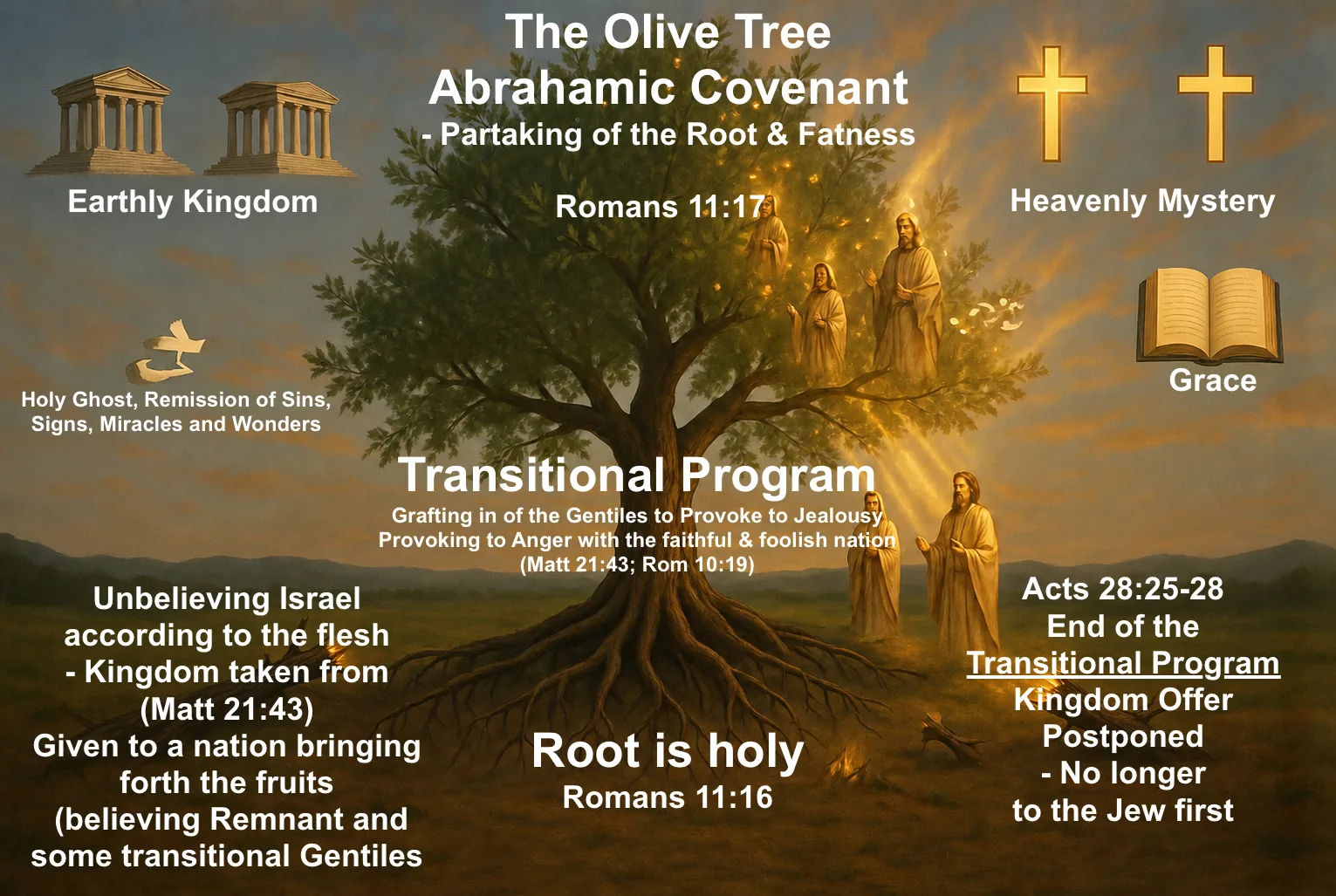






Comments
No comments yet. Be the first to share your thoughts.
Leave a comment