We are quick to guard the pulpit and slow to guard the piano. A teacher who stood up and told the Body of Christ to come to a throne of grace, to plead for showers of blessing, or to labor at bringing Christ's kingdom in on earth would be corrected before he sat down — and rightly so. Yet we will sing those very things, in four-part harmony, with our eyes closed and our hearts lifted, and never feel the jar. The tune disarms us. And that is precisely why the doctrine in our songs deserves more care, not less.
This is not a quarrel with music or with beauty. It is a plea that the Body of Christ sing what is true of the Body of Christ — and that we stop excusing error in a hymn as mere artistic license. What we sing, we are taught; and we ought to be taught the truth.
Singing Is a Teaching Ministry
Paul does not treat congregational singing as a warm-up or a mood. He files it under teaching:
"Let the word of Christ dwell in you richly in all wisdom; teaching and admonishing one another in psalms and hymns and spiritual songs, singing with grace in your hearts to the Lord." (Colossians 3:16 KJV)
"Speaking to yourselves in psalms and hymns and spiritual songs, singing and making melody in your heart to the Lord." (Ephesians 5:19 KJV)
Notice the verbs. We sing in order to teach and admonish one another, so that the word of Christ may dwell in us richly. A hymn is doctrine set to melody; a chorus is a creed we rehearse together. When the congregation sings, it is not merely worshipping — it is catechizing itself, line upon line, week upon week. Whatever the words say, that is what the Body is being taught.
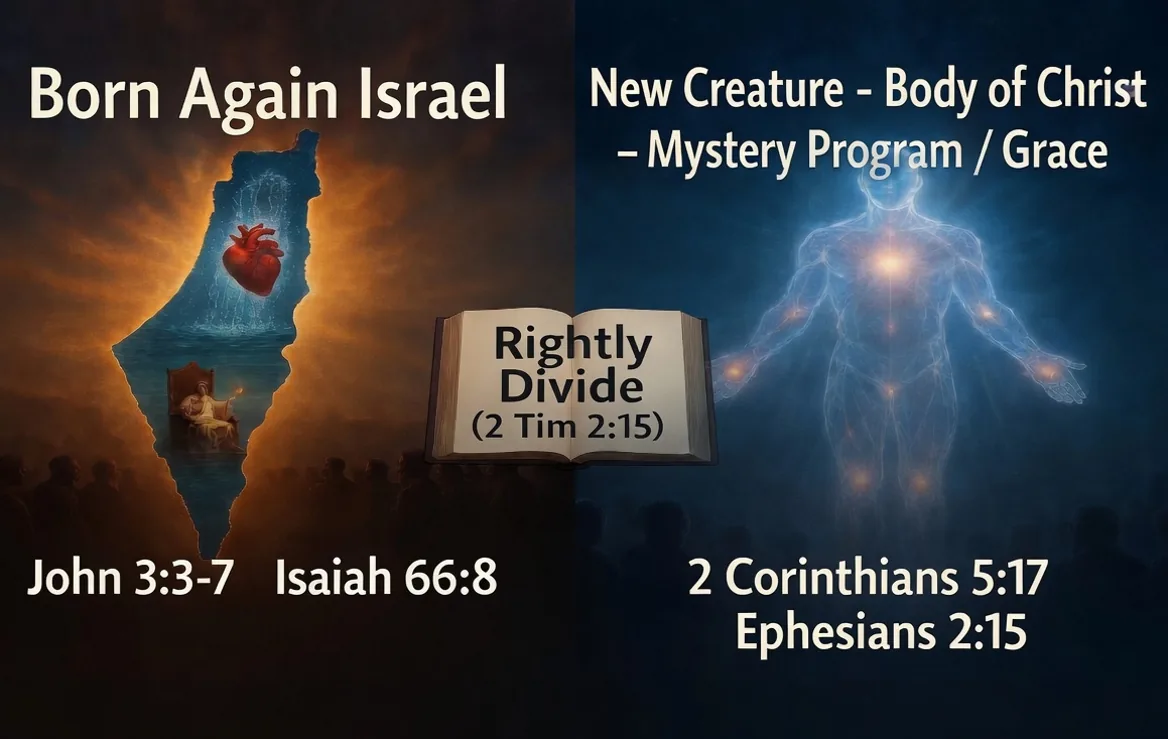
And a song teaches more durably than a sermon. Music slips past the guard of the mind and lodges in the memory and the affections; we forget the points of last Sunday's message but carry the chorus for fifty years. That is the power of singing — and its peril. A wrong line, sweetly sung, is wrong doctrine memorized for life. Hundreds of years of singing covenant promises, kingdom hopes, and priestly approaches over the Body of Christ have taught the church to confuse Israel's program with her own, one beloved hymn at a time.
There is a graver reason still to watch the music. It is no neutral thing the adversary merely seized upon; by the Scriptures' own account, music was woven into his very making. Of Lucifer before his fall the LORD says, "the workmanship of thy tabrets and of thy pipes was prepared in thee in the day that thou wast created" (Ezekiel 28:13) — instruments built into the creature who was adorned with every precious stone. The text says no more than that; it never makes him heaven's choirmaster, and we should not say more than it says. But it does tell us that melody belonged to his original glory — and it is no surprise, then, that the deceiver who would corrupt the Body's doctrine finds a tune his readiest vehicle, carrying past the ear what the mind, in plain prose, would have caught.
Three Songs, Three Borrowed Programs
A few examples will show how quietly it happens. In each, the affection is real and the writer was sincere — and in each, something that belongs to Israel's program has been lifted and laid upon the Body.
The pleading Advocate at the throne. A familiar gospel song tells the listener that the Lord "is ever interceding, to the Father for His children," and bids him "come boldly to the throne," picturing the Saviour at Calvary "crying, 'Father, please, forgive, I plead,'" to renew "the love and fellowship that we once knew." In one chorus it has stacked the ever-interceding High Priest of Hebrews, the throne of grace of Hebrews 4:16, the pleading Advocate of 1 John, and the broken-and-mended fellowship of the remnant's walk — every strand of it Israel's program — and laid the bundle on a people who are already complete in their Head, accepted, and seated in the heavenlies. The Body has no throne to travel to, no fellowship forever breaking, no Advocate pleading a standing that is already settled and sealed.
Pleading for showers that are already ours. Another favorite begins, "There shall be showers of blessing: this is the promise of love," and prays, "showers of blessing we need... but for the showers we plead." The line comes straight out of a covenant promise to the land and nation of Israel:
"...and I will cause the shower to come down in his season; there shall be showers of blessing." (Ezekiel 34:26 KJV)
That is rain promised to Israel's hills in her kingdom — a withheld blessing to be sought and waited for. But the Body of Christ is not pleading for blessings yet to fall; we were "blessed with all spiritual blessings in heavenly places in Christ" (Ephesians 1:3), already and in full. To stand and beg for showers is to sing ourselves back into a posture Paul has lifted us out of.
Building a kingdom Paul never sent us to build. A great missionary hymn rouses the church with the promise that "Christ's great kingdom shall come on earth — the kingdom of love and light." It is stirring, and it is Israel's hope, not ours. The Body of Christ was not sent to bring in Christ's kingdom upon the earth; that kingdom belongs to prophecy and to the nation to whom it was promised. We were given the gospel of the grace of God and made "ambassadors for Christ" in a ministry of reconciliation (2 Corinthians 5:20), citizens of a "conversation... in heaven" (Philippians 3:20). A song that aims the church at an earthly kingdom has handed her Israel's commission and called it her own.
In each case the same thing has happened: a truth that is real and precious in its place has been sung out of its place. The remedy is not to stop singing but to start dividing.
Beauty Is No License for Error
Here someone will object that we are pressing poetry too hard — that a hymn is art, and art may take liberties a sermon may not. There is a grain of truth in it: artistic license belongs to meter and metaphor, to the way a thing is said. It does not extend to doctrine, to whether the thing said is true. A lovely tune does not sanctify a false frame; it only smuggles it past the gate more easily. We would not tolerate from the pulpit what we sing without a blink — and what is unacceptable to preach is unacceptable to sing, for both are teaching.
This is also why feeling is no measure of soundness. A song may move us to tears and still teach us wrongly; the swelling of the heart is not the witness of the truth. The Body of Christ is edified by doctrine, not by emotion mistaken for doctrine, and we must not let a beautiful melody do our discerning for us.
Sing With Understanding
None of this is a call to gloom, or to empty the hymnal, or to sing only what is grim and exact. Much of the church's hymnody is rich and sound, and singing is one of the gladdest things the Body does. The call is simply to sing with understanding, as Paul himself resolved:
"...I will sing with the spirit, and I will sing with the understanding also." (1 Corinthians 14:15 KJV)
To sing with understanding is to know what the words are saying and to mean them truly — to sing as those "holding the mystery of the faith in a pure conscience" (1 Timothy 3:9). In practice it means we learn to hear our hymns with a dispensational ear: to enjoy what agrees with Paul, to pass over or quietly amend the lines that misframe our standing, and gladly to use songs written or revised to teach the Bible rightly divided. Grace believers have already begun this work. We use the Grace Ambassadors Hymnal — which gathers, revises, and where needed wholly rewrites familiar hymns so the church can sing grace doctrine and not law or prophecy — and we are adding our own revisions to it for the same purpose, bringing more of our favorite songs into doctrinal alignment. Its compilers state the conviction plainly: "If we preach right division in our pulpits, so should our hymnals in the pews. Words matter." That is exactly the burden of this study. The aim is never mere correctness for its own sake; it is that the word of Christ, dwelling in us richly, should be the word we hand one another when we sing.
Why This Matters
Every time the Body of Christ lifts its voice together, it is teaching and admonishing itself. That is Paul's own description of the act, and it raises the stakes of every line. If we love the people beside us in the pew, we will not put Israel's throne, Israel's covenant, and Israel's kingdom into their mouths and call it worship. We will hand them the truth of their own calling — complete in Christ, blessed with all spiritual blessings, seated in the heavenlies, ambassadors of a finished reconciliation — and we will set it to music worthy of it.
The same right division we treasure in the pulpit belongs in the pew. Let the Body of Christ sing — heartily, joyfully, and often — but let her sing what is true of herself. And if now and then we sing the wrong notes, let us at least sing the right doctrine.
© 2026 Edward R. Cross



Comments
No comments yet. Be the first to share your thoughts.
Leave a comment