Law & Grace
The believer in the Body of Christ is not under the law, but under grace. The law was given to Israel; it could condemn, but it could never justify. These articles show why the Body of Christ is not under the law, the covenants, the Sabbath or holy days, and why turning back to the law is what Paul calls falling from grace.
Start with these
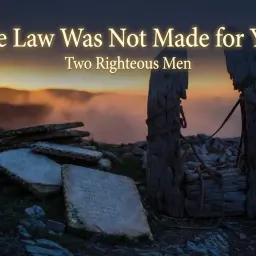
Rightly Dividing the Righteous Man
Posted by Edward Cross on
Christ is the end of the law for righteousness, not a base it is rebuilt on. The righteous man under the law kept it; the man under grace has righteousness imputed without works. Paul withstood Peter at Antioch over a walk that put the Body back under Israel's law, and to rebuild that law is to make yourself a transgressor.

Fallen from Grace: A Fall Toward Law, Not Into Sin
Posted by Edward Cross on
Paul's words fallen from grace are taken as proof the saved can be lost. In their setting they mean almost the opposite of misbehavior: a fall toward law, not into sin. Rightly divided, the standing in grace cannot be lost — what falls is the walk, when a believer trades grace as his operating principle for the law.

No Such Thing as a Christian Sabbath or Holy Day: Contradictions in Terms
Posted by Edward Cross on
The Sabbath was Israel's covenant sign — never given to the Body of Christ. This article examines Seventh-day Sabbatarians, Sunday-as-Sabbath Christians, and the church holy day calendar, showing why the unspoken requirement to observe certain days is the most oppressive form of calendar bondage. Paul settles it in Colossians 2:16.
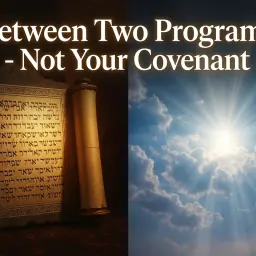
The New Covenant Was Not Made with Gentiles or the Body of Christ
Posted by Edward Cross on
The New Covenant was made with the house of Israel and the house of Judah — stated four times in Scripture. This article shows why the Body of Christ is not under it, how its terms differ from Paul's revelation, and why the mystery program is entirely separate from any covenant.
All articles on this topic
What the Gospel Is Not: The Additions Tested Against Paul
Posted by Edward R. Cross on October 30, 2026
Paul states the gospel in four verses, and every verb is something Christ did. This article tests each addition (a prayer, a surrender, a commandment, a church, a feeling) against Paul and shows why none of them is part of what saves.

He Hath Not Dealt So With Any Nation: Why Moses Was Never the Nations' Civil Code
Posted by Edward R. Cross on October 4, 2026
Should a nation take its penal code from Sinai? The law was addressed to one people, its penalties were welded to a covenant and a land, and the selection everybody makes from it is governed by a rule Scripture never supplies. Leave the law whole, learn from it, and put it back where God put it.

Redemption Is Not a Covenant Remedy — Answering a Preterist Use of Hebrews 9:15
Posted by Edward R. Cross on September 6, 2026
A graphic circulating online asks how a man never under the first covenant could be redeemed from transgressions under it. The question carries a premise it never states: that the only redemption there is, is redemption from covenant transgressions. Paul says guilt reached men who never had a covenant to break, and so does the remedy.
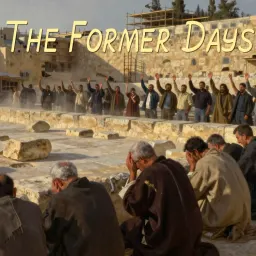
The Former Days Were Not Better — Nostalgia, the Christian Nation, and the Post You Were Given
Posted by Edward R. Cross on September 1, 2026
Believers ache for a past that was more moral and more Christian, and grieve a covenant they believe the nation broke. But the remembered age never existed as remembered, no Gentile nation was ever in covenant with God, and Scripture rebukes the longing itself. A look at nostalgia, the Christian nation, and the post God actually gave you.

Why They Fight OSAS — The Self-Righteousness Beneath the Objection
Posted by Edward R. Cross on August 30, 2026
Opposition to once saved, always saved seldom turns on the verses it quotes. This article traces the objection to its root — a righteousness a man built himself, and the distance from other men that grace erases — then divides the passages. Israel's salvation is an inheritance received at the end; the Body's was handed over at the beginning.

Reviving the Wrong Program: The Campus Revival and the Gospel It Masquerades
Posted by Edward R. Cross on August 12, 2026
A revival is being proclaimed across the nation's campuses — crowds, conversions, and a call to reclaim the nation for God. But the renewal of a nation is not the gospel of grace, a faith with no shared creed is not the faith once delivered, and a summons back to Sinai revives the wrong program. A look at what the campus revival actually revives.
Roman Catholicism Follows Neither Christ, Peter, nor Paul: The Church That Claims All Three and Keeps None
Posted by Edward R. Cross on July 2, 2026
Rome claims to follow Christ, Peter, and Paul — and by right division it follows none of the three. A stand-alone study of the papacy, the Mass, Mary, purgatory, confession, and tradition, showing that Rome, the Eastern churches, and Rome's Reformation daughters share one ancient error: works added to the finished work of Christ.

Grace Giving: What Replaces the Tithe in Practice
Posted by Edward R. Cross on June 30, 2026
The tithe was Israel's law, never laid on the body of Christ — so what replaces it? Paul gives something freer than a percentage: cheerful, purposed, proportionate giving that flows from grace already received. This study shows where grace giving comes from, what governs it, and where the gift goes.