
"That if thou shalt confess with thy mouth the Lord Jesus, and shalt believe in thine heart that God hath raised him from the dead, thou shalt be saved." (Romans 10:9)
Ask almost any pastor in almost any evangelical church how to be saved and you will land very quickly on Romans 10:9. It is the backbone of the sinner's prayer, the bedrock of altar call theology, and the verse most often offered to someone who wants to know what to do to be saved. The instruction seems straightforward: confess with your mouth, believe in your heart, and you are saved.
The problem is that adding any act to faith immediately raises a question Paul himself asked in Romans 4:4: "Now to him that worketh is the reward not reckoned of grace, but of debt." (Romans 4:4) If salvation requires an act — including the act of speaking — then it is no longer purely of grace. It is of works, and if of works, then grace is not grace. "And if by grace, then is it no more of works: otherwise grace is no more grace" (Romans 11:6). That is not a minor tension. It is a direct contradiction of the grace gospel.
So what is going on in Romans 10:9? Is verbal confession a condition of salvation? The short answer is no — salvation is by grace through faith, and confession is not listed among Paul's conditions for receiving it. But the longer answer, which right division supplies, explains what confession actually is in its proper context, why it appears in Romans 10, and what Paul meant by it in the other places he uses the language.
Romans 9–11 Is About Israel
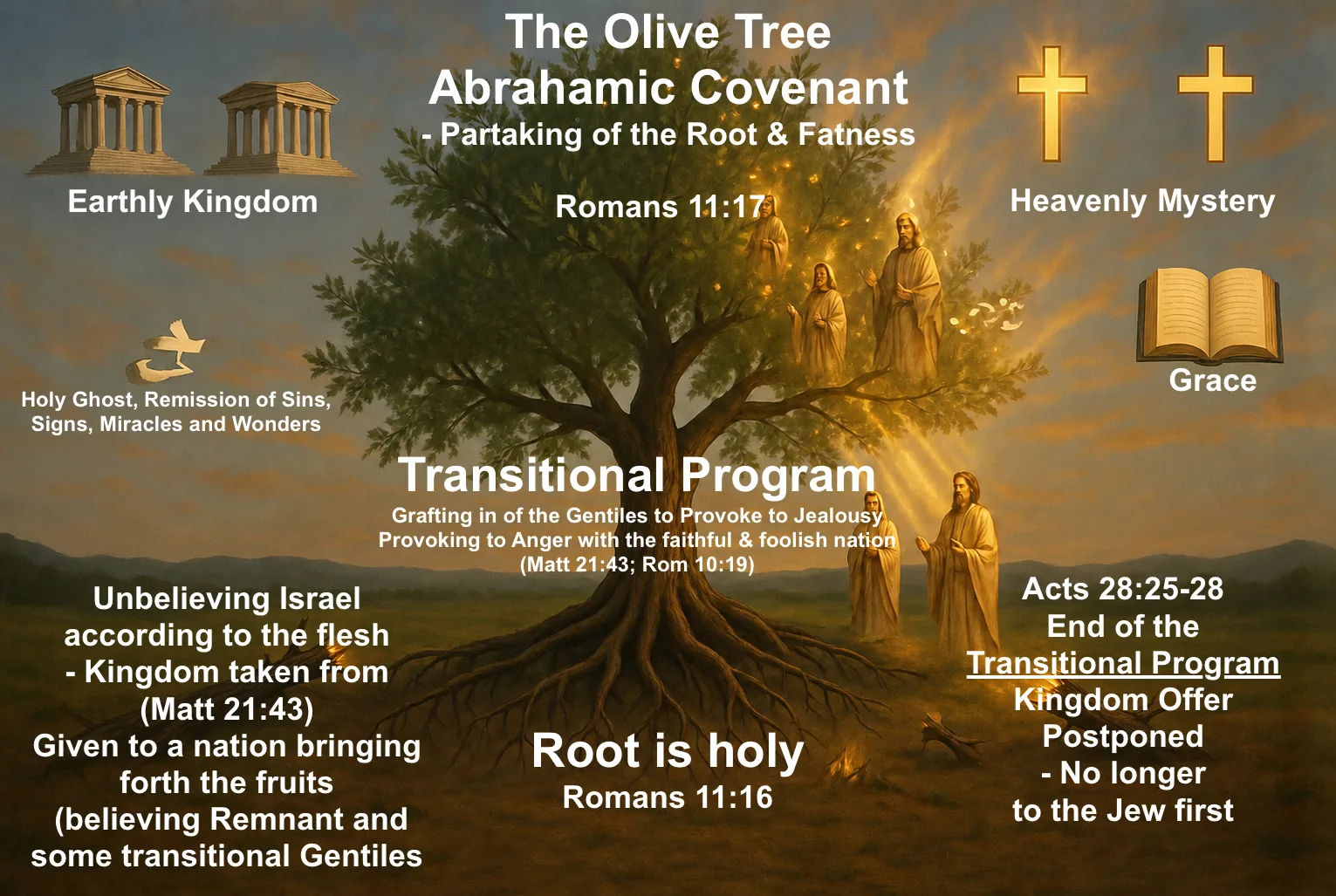
The first and most important context question is: what is Romans 10 about? The answer is sitting at the beginning of chapter 9, and it has nothing to do with how individuals today get saved. It is about why Israel stumbled.
"I say the truth in Christ, I lie not, my conscience also bearing me witness in the Holy Ghost, That I have great heaviness and continual sorrow in my heart. For I could wish that myself were accursed from Christ for my brethren, my kinsmen according to the flesh: Who are Israelites; to whom pertaineth the adoption, and the glory, and the covenants, and the giving of the law, and the service of God, and the promises." (Romans 9:1–4)
Paul is writing about the nation of Israel. His kinsmen according to the flesh. The people to whom the covenants belong. Romans 9–11 is a unit — a sustained explanation of why Israel has not obtained what it was seeking (Romans 9:31), how blindness in part has happened to Israel (Romans 11:25), and what God will yet do for the nation in the future. The burden Paul carries throughout these chapters is for the Jewish nation, not for a generic Gentile audience trying to figure out how to pray a sinner's prayer.
By the time we reach Romans 10:1, Paul restates the focus: "Brethren, my heart's desire and prayer to God for Israel is, that they might be saved." (Romans 10:1) Israel. His prayer is for Israel. He explains what went wrong: "For they being ignorant of God's righteousness, and going about to establish their own righteousness, have not submitted themselves unto the righteousness of God. For Christ is the end of the law for righteousness to every one that believeth" (Romans 10:3–4). Israel was pursuing righteousness by law-keeping rather than by faith. Paul's argument in Romans 10 is not a general formula for how any person anywhere gets saved. It is Paul explaining the stumbling of Israel and the way of salvation that was available to them — the same righteousness of God available to all through faith in Christ.
What Romans 10:9 Actually Says
With the context established, let us read the passage in full:
"That if thou shalt confess with thy mouth the Lord Jesus, and shalt believe in thine heart that God hath raised him from the dead, thou shalt be saved. For with the heart man believeth unto righteousness; and with the mouth confession is made unto salvation." (Romans 10:9–10)
Notice the structure of verse 10. Paul separates the two elements and assigns each a distinct function. The heart believes unto righteousness. The mouth confesses unto salvation. Believing and confessing are not synonyms here — they are assigned different outcomes, which is important. But notice also which one produces righteousness: the heart. Righteousness before God comes from the heart's belief. That is consistent with Paul's argument through all of Romans 3–5, where faith is credited as righteousness (Romans 4:5), where justification is by faith (Romans 3:28), and where "to him that worketh not, but believeth on him that justifieth the ungodly, his faith is counted for righteousness" (Romans 4:5).
The heart is where salvation is rooted. Verse 10 is describing two distinct elements within the kingdom program: the inward reality of faith that produces righteousness, and the outward obligation of public confession that characterized the kingdom gospel's demands. Under the kingdom program, both were indeed required — and the John 12:42–43 rulers stand condemned precisely because they had the one and refused the other. The mouth's confession in verse 10 is not a general principle about how saving faith behaves — it is the specific kingdom expectation that Israel failed to meet, which is precisely what Paul is addressing throughout Romans 9–11. That kingdom obligation — confess before men or be denied before the Father — is the frame Paul is working within.
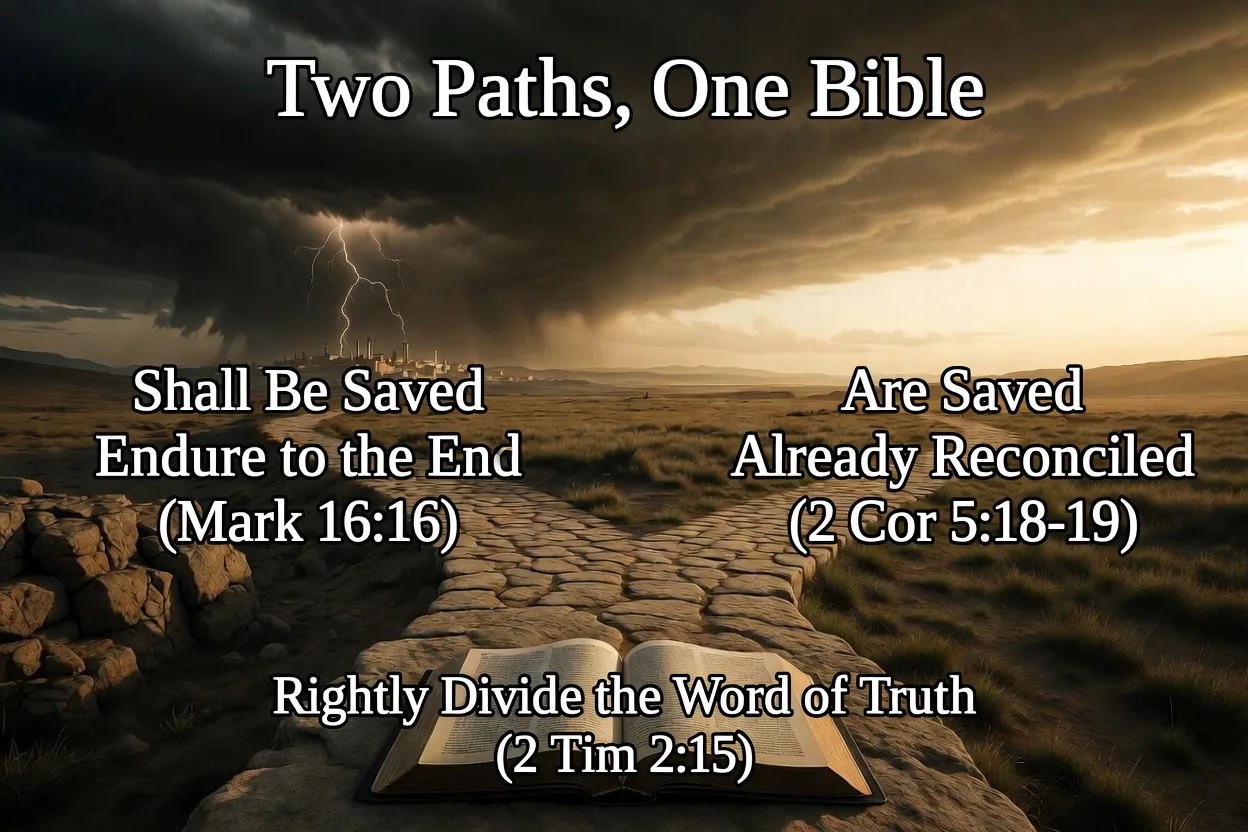
Now notice the tense of the promise in verse 9: "thou shalt be saved." Future tense. That is not incidental. For the Body of Christ, salvation is a present possession. Paul writes to the Ephesians: "by grace are ye saved" (Ephesians 2:8) — past tense, present reality, already complete. He writes to Timothy: "who hath saved us" (2 Timothy 1:9) — past tense. He tells the Romans: "we have now received the atonement" (Romans 5:11). Our salvation is not a future event we are working toward. It is a present reality we already possess.
But in the kingdom gospel, salvation was characteristically future — something to be received at the appearing of Christ, at the end. The Lord Himself said: "he that shall endure unto the end, the same shall be saved" (Matthew 24:13). Peter wrote to the believing remnant about "receiving the end of your faith, even the salvation of your souls" (1 Peter 1:9) — a future receiving, not a present possession. The call on the day of Pentecost was: "Save yourselves from this untoward generation" (Acts 2:40). The pattern is forward-looking throughout the kingdom program.
So when Romans 10:9 says "thou shalt be saved," it is using the language of the kingdom gospel — a salvation that will come at the Lord's return for those who confess Him and endure. This is entirely consistent with what Paul is doing in Romans 9–11: explaining Israel's position and what righteousness by faith in Christ means for them. The future-tense salvation matches the audience Paul has in view.
This brings us to the crucial question: what kind of confession is Paul pointing to? To answer that, we need to look at where this language comes from and how Jesus used it with His disciples.
Confession in the Kingdom Program
Long before Paul wrote Romans, the Lord Jesus taught His twelve Jewish disciples about confession — and He did it in a very specific context. In Matthew 10, Jesus sends out the twelve on their kingdom mission and warns them about what is coming. The commission includes this warning:
"But beware of men: for they will deliver you up to the councils, and they will scourge you in their synagogues; And ye shall be brought before governors and kings for my sake, for a testimony against them and the Gentiles." (Matthew 10:17–18)
And then the promise:
"But when they deliver you up, take no thought how or what ye shall speak: for it shall be given you in that same hour what ye shall speak. For it is not ye that speak, but the Spirit of your Father which speaketh in you." (Matthew 10:19–20)
Right after this, the confession command:
"Whosoever therefore shall confess me before men, him will I confess also before my Father which is in heaven. But whosoever shall deny me before men, him will I also deny before my Father which is in heaven." (Matthew 10:32–33)
Luke records the same teaching: "Also I say unto you, Whosoever shall confess me before men, him shall the Son of man also confess before the angels of God: But he that denieth me before men shall be denied before the angels of God" (Luke 12:8–9).
The setting is unmistakable. The disciples are being warned about persecution — being brought before councils, governors, and kings. In that moment of pressure, the question is whether they will confess Christ or deny Him. The Spirit will give them what to say. The confession is not a private prayer formula — it is a public declaration of allegiance to the Messiah in the face of those who would demand they deny Him.
John 12:42–43 — When Confession Was Withheld
The most illuminating passage for understanding what the kingdom confession actually meant is John 12:42–43:
"Nevertheless among the chief rulers also many believed on him; but because of the Pharisees they did not confess him, lest they should be put out of the synagogue: For they loved the praise of men more than the praise of God." (John 12:42-43)
Here is a group who believed — John says so plainly — but who did not confess. They held faith in their hearts but refused to make it public for fear of social and religious consequences. Being put out of the synagogue in that day was no small thing. It was exile from the community, from the covenant people, from the religious and social life of Israel. The rulers chose the praise of men over the praise of God.
This passage proves that in the kingdom program, belief and confession were two distinct acts, and both were expected. Faith alone was not considered sufficient to fulfill the kingdom obligation — the open confession of Christ before men was required as a demonstration of real allegiance to the King. The rulers who believed but would not confess were condemned precisely because they would not pay the cost of that public acknowledgment.
The dying thief on the cross is a striking contrast. Consider the setting: the crowd was mocking, the rulers were deriding, and the other thief was railing on Christ. In that moment of maximum hostility and public pressure, the dying thief made his public declaration: "Lord, remember me when thou comest into thy kingdom" (Luke 23:42). He acknowledged Christ as a King with a coming kingdom. He confessed his own guilt and Christ's innocence before the surrounding crowd. He did what the rulers of John 12 refused to do — at great personal cost and before hostile witnesses, he openly declared his allegiance to the Messiah. Christ's response was immediate: "To day shalt thou be with me in paradise" (Luke 23:43). That is kingdom confession in its rawest form — not a church altar call or a private prayer, but a public acknowledgment of the Lord before those who were demanding He be denied.
That is why, in the context of Romans 10, Paul links mouth-confession with salvation. He is writing to and about Israel — a nation that stumbled because it refused to submit to the righteousness of God by faith. The open confession of Jesus as Lord was the very thing Israel's leaders refused, as John 12:42–43 shows. Israel needed to do what those rulers failed to do: confess with the mouth, not merely believe in secret.
The Sinner's Prayer Is Not What Paul Had in Mind
When Romans 10:9 is lifted out of its context and turned into a universal salvation formula — "say these words to be saved" — something foreign has been imported into the verse. The sinner's prayer tradition requires the sinner to verbalize specific words as the salvific act itself, as if God is waiting for the utterance before He saves. This puts salvation in the speaking rather than in the believing, and it makes the spoken words a work performed in order to obtain grace.
But Paul's own salvation formula for the Body of Christ consistently rests on heart-faith, not vocal performance. When the Philippian jailer asked "what must I do to be saved?" Paul answered: "Believe on the Lord Jesus Christ, and thou shalt be saved" (Acts 16:31). Not confess. Believe. In Romans 4, Abraham "believed God, and it was counted unto him for righteousness" (Romans 4:3). No vocal requirement. In Ephesians 2:8–9, salvation is "by grace are ye saved through faith; and that not of yourselves: it is the gift of God: Not of works, lest any man should boast." (Ephesians 2:8-9) Not of works — and the utterance of words is a work of the body. In Galatians 2:16, "a man is not justified by the works of the law, but by the faith of Jesus Christ." (Galatians 2:16)
Paul defines his own gospel in 1 Corinthians 15:1–4: "the gospel... by which also ye are saved... how that Christ died for our sins according to the scriptures; And that he was buried, and that he rose again the third day according to the scriptures." (1 Corinthians 15:2-4) The saving content is what Christ did. The saving response is faith in that finished work. There is no vocal performance requirement in Paul's gospel formula. A person who sincerely believes in their heart that Christ died for their sins and rose again is saved — whether or not they have uttered a prayer, said specific words, or confessed it before a congregation.
Paul Does Use Confession — Just Not as a Salvation Condition
To be thorough: does Paul use confession language elsewhere in his epistles? Yes, and examining those uses confirms that confession for Paul is never a condition for receiving salvation but is always the expression of a salvation already possessed or a public declaration of what is already true.
In Philippians 2:10–11, Paul quotes Isaiah 45:23 and applies it eschatologically: "That at the name of Jesus every knee should bow, of things in heaven, and things in earth, and things under the earth; And that every tongue should confess that Jesus Christ is Lord, to the glory of God the Father." (Philippians 2:10-11) This is a future, universal, involuntary confession at the final judgment. Every tongue — including those who rejected Christ — will confess His lordship. That is not a salvation condition. It is a declaration of the inevitable acknowledgment of Christ's supremacy that all creation will make.
In 1 Timothy 6:12, Paul tells Timothy: "Fight the good fight of faith, lay hold on eternal life, whereunto thou art also called, and hast professed a good profession before many witnesses." (1 Timothy 6:12) The profession Timothy made is not what obtained eternal life — Paul says he was "called" to it. The profession was the public expression of the faith he already held before many witnesses. It is a declaration, not a prerequisite. Then in verse 13, Paul points to Christ's own example: "who before Pontius Pilate witnessed a good confession." Christ confessed His identity to Pilate — openly, publicly, at cost. The context is courage and faithfulness in public declaration, not a salvation formula.
In 2 Corinthians 9:13, Paul speaks of the Corinthians' "professed subjection unto the gospel of Christ." Their conduct in giving was a visible expression of their submission to the gospel they already believed. Again — outward expression of inward reality, not a condition for receiving grace.
In Romans 15:9, Paul quotes Psalm 18:49: "For this cause I will confess to thee among the Gentiles, and sing unto thy name." (Romans 15:9) Here confession is praise and thanksgiving to God — nothing to do with a salvation requirement.
None of these uses support the idea that oral confession is a work required before God will save. In every case, confession is public declaration of what is already true, acknowledgment of who Christ is, or future involuntary submission at the judgment.
The Heart Is Where Salvation Lives
Romans 10:10 gives us the proper order and the proper locus: "For with the heart man believeth unto righteousness." Righteousness — right standing before God — comes from the heart's belief. You do not speak your way into righteousness. You believe your way into it. The mouth-confession Paul adds is not what produces the righteousness — the heart's faith already does that. The confession is the kingdom program's additional public obligation, the outward declaration that Israel was required to make before men, which is exactly what the rulers of John 12 refused to pay the cost of. Both elements belong to the kingdom framework Paul is addressing for Israel in Romans 9–11. Neither constitutes Paul's salvation formula for the Body of Christ.
Paul's great statement in Romans 4:5 stands as the definition of how the grace gospel works: "But to him that worketh not, but believeth on him that justifieth the ungodly, his faith is counted for righteousness." To him that worketh not. Salvation is counted to the one who does nothing but believe. Any act added to that — including the act of vocal confession — moves salvation from the category of grace into the category of debt.
Why the Confusion Exists
The confusion stems largely from reading Romans 10:9 as a generic, dispensation-less instruction when it is embedded in a chapter that is specifically about Israel's stumbling and the accessibility of the righteousness of God. Paul quotes Deuteronomy 30:14 in Romans 10:8 — "But what saith it? The word is nigh thee, even in thy mouth, and in thy heart: that is, the word of faith, which we preach" (Romans 10:8) — drawing on Moses' words to Israel about the nearness of the covenant word. He quotes Isaiah 28:16 in verse 11: "Whosoever believeth on him shall not be ashamed." He quotes Joel 2:32 in verse 13: "For whosoever shall call upon the name of the Lord shall be saved." (Romans 10:13) These are Old Testament passages addressed to Israel about Israel's covenant God.
Paul's point is that this same righteousness, this same accessibility of God through faith, has now been extended to all without distinction — "there is no difference between the Jew and the Greek: for the same Lord over all is rich unto all that call upon him" (Romans 10:12). The righteousness of God is not locked behind Israel's national privilege. It is available to all who believe. The confession-unto-salvation he describes is the public acknowledgment of Christ as Lord that was the kingdom obligation — belonging to the same framework as Matthew 10:32–33, John 12:42–43, and the dying thief. Under the kingdom program, heart-belief was foundational but not alone sufficient — confession before men was also required, as John 12:42–43 proves. For the Body of Christ, Paul's grace gospel rests on heart-faith alone in the finished work of Christ. That is the distinction this passage is not addressing, because Paul here is speaking to and about Israel — not prescribing a vocal formula for the Body of Christ.
Is Confessing with the Mouth Necessary?
For the Body of Christ — no. Verbal confession of Christ is not a condition of salvation in Paul's gospel. It was a requirement of the kingdom program, as this article has shown. It is not the condition Paul lays down for us.
Paul's formula for the Body of Christ is consistent from one end of his epistles to the other. When the Philippian jailer asked what he must do to be saved, Paul gave no confession requirement: "Believe on the Lord Jesus Christ, and thou shalt be saved" (Acts 16:31). Abraham was justified without any vocal performance: "Abraham believed God, and it was counted unto him for righteousness" (Romans 4:3). The definitive statement of how the grace gospel works is Romans 4:5: "But to him that worketh not, but believeth on him that justifieth the ungodly, his faith is counted for righteousness." To him that worketh not. Paul defines his gospel in 1 Corinthians 15:3–4 — Christ died for our sins, was buried, and rose again — and the saving response is believing it, not declaring it.
Ephesians 2:8–9 closes the case: "For by grace are ye saved through faith; and that not of yourselves: it is the gift of God: Not of works, lest any man should boast." (Ephesians 2:8-9) Not of works. Verbal confession is an act of the body performed in order to obtain grace. If it is required, grace is no longer grace. "And if by grace, then is it no more of works: otherwise grace is no more grace" (Romans 11:6).
The kingdom program required the public confession of Christ as Lord. That was Israel's obligation — to acknowledge the Messiah openly before men, at cost, as the dying thief did and the rulers of John 12 refused to do. That is the confession Paul has in view in Romans 10. For the Body of Christ, the saving transaction takes place in the heart, at the point of believing the gospel. "For with the heart man believeth unto righteousness." That is where Paul plants the flag. That is where salvation lives.
© 2026 Edward R. Cross






Comments
No comments yet. Be the first to share your thoughts.
Leave a comment