"For by grace are ye saved through faith; and that not of yourselves: it is the gift of God." (Ephesians 2:8)— Ephesians 2:8 KJV
"But he that shall endure unto the end, the same shall be saved."— Matthew 24:13 KJV
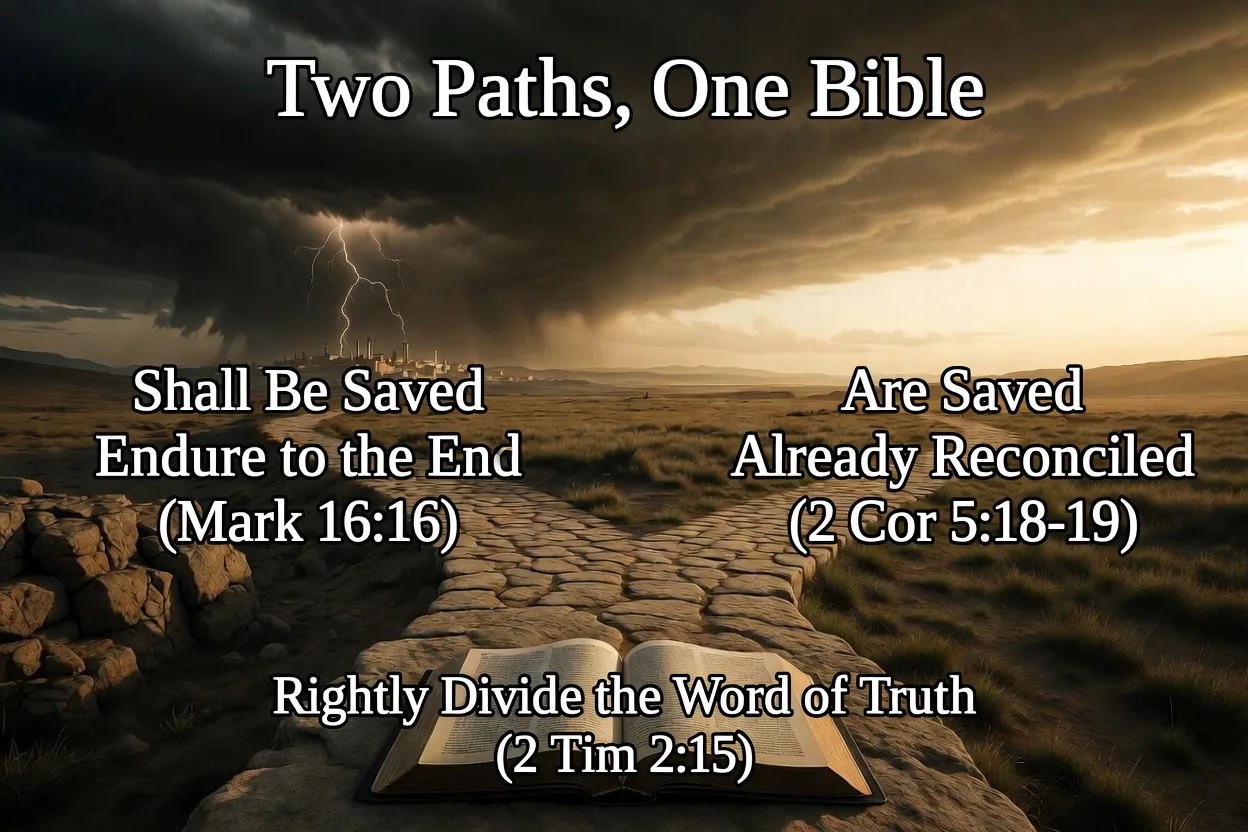
Both of those verses are in your Bible. Both are true. They are not in conflict — but they are not talking to the same people about the same salvation in the same program. One is the present-tense possession of the Body of Christ. The other is a future-tense promise tied to Israel's kingdom. Read them both as if they apply equally to you, and you will spend your Christian life confused about what you actually have in Christ.
This article lays out the difference. The tense is not incidental. The tense is everything.
The Kingdom Program: Salvation Is Coming
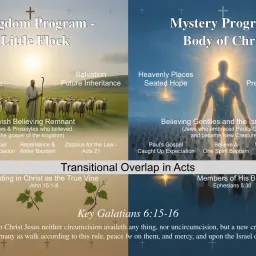
When the Lord Jesus walked the earth, He preached to Israel. He offered them the kingdom. He called the nation to repent and receive their King. And mixed in with that offer was a condition. Salvation under the kingdom gospel was not described as a present possession — it was described as something to be received at the end. Something that required endurance to obtain.
Matthew 10:22 is plain: "And ye shall be hated of all men for my name's sake: but he that endureth to the end shall be saved." (Matthew 10:22) Matthew 24:13 repeats it with identical language. These words are addressed to Jews in a tribulation context. The Lord is describing what it will take for the remnant of Israel to receive their promised redemption. It is future. It is conditional. It is tied to endurance.
The Lord was not confused. He was speaking to people under the kingdom program, with a kingdom hope, whose full salvation awaits the arrival of the King.
Mark 16:16 carries the same structure: "He that believeth and is baptized shall be saved; but he that believeth not shall be damned." (Mark 16:16) Future tense. Salvation promised to those who believe and act on that belief within the context of Israel's program — belief with baptism, as required under that commission.
None of these statements describe what Paul calls the present-tense reality of the Body of Christ. They describe what Israel shall receive when the kingdom comes.
The Jewish Epistles Confirm It: Salvation Is Still Future for the Little Flock
The non-Pauline New Testament epistles — James, Peter, Hebrews, John — are not written to the Body of Christ. They are written to the little flock, the believing Jewish remnant who accepted Jesus as Messiah under the kingdom gospel. Read them carefully, and you will find that salvation is consistently described as something ahead of them, not yet in hand.
Peter could not be clearer:
"Receiving the end of your faith, even the salvation of your souls." (1 Peter 1:9 KJV)
They receive the salvation of their souls at "the end of your faith" (1 Peter 1:9) — a future event, tied to the appearing of Jesus Christ. Peter had already told them in verse 5 that this salvation was "ready to be revealed in the last time." Ready to be revealed. Not already possessed. Not yet fully theirs.
The entire tenor of 1 Peter is endurance-oriented. Peter tells the little flock to rejoice in their fiery trials so that when Christ's glory is revealed, "ye may be glad also with exceeding joy." (1 Peter 4:13 KJV) The joy is coming. The glory is coming. The full salvation is coming — when He comes.
The book of Hebrews carries this same future-looking posture at every turn:
"But Christ as a son over his own house; whose house are we, if we hold fast the confidence and the rejoicing of the hope firm unto the end." (Hebrews 3:6 KJV)
"If we hold fast... unto the end." The inheritance is conditioned on endurance. The writer of Hebrews is not undermining assurance for the sake of it — he is telling Jewish believers in the kingdom program that their promised salvation requires they stay the course until the King arrives. He warns them with devastating severity:
"For it is impossible for those who were once enlightened, and have tasted of the heavenly gift, and were made partakers of the Holy Ghost, And have tasted the good word of God, and the powers of the world to come, If they shall fall away, to renew them again unto repentance." (Hebrews 6:4-6 KJV)
James writes to "the twelve tribes which are scattered abroad." (James 1:1 KJV) He tells them: "Be patient therefore, brethren, unto the coming of the Lord." (James 5:7 KJV) Patient. Enduring. Waiting. Kingdom language for people whose full salvation is tied to the Lord's coming.
This is the consistent voice of the Jewish epistles. Salvation is a future promise. Hold fast. Endure. It shall come.
Acts Confirms It: "Shall Be Saved" in the Transition
Open the book of Acts and watch the tense.
Acts 2:21 quotes Joel directly: "And it shall come to pass, that whosoever shall call on the name of the Lord shall be saved." (Acts 2:21) Future tense. Peter is preaching to Israel at Pentecost within the framework of Joel's prophecy — the same prophecy that speaks of the Spirit poured out on all flesh in the kingdom age. The salvation in view is connected to that coming day.
Acts 2:47 tells us: "And the Lord added to the church daily such as should be saved." (Acts 2:47) Should be saved — those being brought into the company of those who will receive that kingdom salvation.
At the Jerusalem council in Acts 15, Peter himself makes a remarkable statement. After years of preaching the kingdom gospel, he acknowledges the grace that Paul is preaching — but watch what he says about himself and the Jewish remnant:
"But we believe that through the grace of the Lord Jesus Christ we shall be saved, even as they." (Acts 15:11 KJV)
We shall be saved. Peter is not saying the little flock already possesses what Paul's Gentile converts possess. He is saying the Jewish remnant will be saved by the same grace. Future tense. The "we" — Israel's believing remnant — shall be saved. The "they" — Paul's Gentile converts — are already there in a way that Peter acknowledges the circumcision has not yet entered. The tense is not accidental.
Acts 16:30-31 records the Philippian jailer asking Paul directly: "Sirs, what must I do to be saved?" Paul answers: "Believe on the Lord Jesus Christ, and thou shalt be saved." (Acts 16:31) The future tense here is not kingdom-program language — it is the offer before the condition is met. The salvation is future to the jailer because he has not yet believed. The moment he believes, it becomes present possession. That is exactly how Paul's gospel works. There is no endurance required. No baptism commanded. No national program to enter. One condition — belief — and the salvation that was "shall be" instantly becomes "are." The jailer's question and Paul's answer show the grace gospel in its simplest form: believe, and you have it.
The Mystery Program: Salvation Is Already Yours
Now step into Paul's prison epistles and watch everything change.
Not "shall be saved." Not "ready to be revealed." Not "receiving the end of your faith." Paul drops the future tense entirely when describing the salvation of the Body of Christ. He shifts to past and present tense — and he does it deliberately and repeatedly.
"For by grace are ye saved through faith; and that not of yourselves: it is the gift of God." (Ephesians 2:8 KJV)
Are ye saved. Present tense. Done. Possessed.
"Even when we were dead in sins, hath quickened us together with Christ, (by grace ye are saved;)" (Ephesians 2:5 KJV)
Ye are saved. Not "ye shall be saved when you endure." Not "ye shall receive it at the end." Ye are saved. A completed action with ongoing results. God did it. It stands.
"And ye are complete in him, which is the head of all principality and power." (Colossians 2:10 KJV)
Complete. Right now. Not "working toward completeness." Not "complete if you abide." Complete in Him as a present, settled reality.
Paul stacks these realities in Ephesians 1. The Body of Christ has been blessed with all spiritual blessings in heavenly places — past tense (verse 3). We have redemption through His blood — present possession (verse 7). We have been sealed with the Holy Spirit of promise — past tense (verse 13). The Spirit Himself is the earnest, the down payment, guaranteeing everything to come (verse 14).
There is no "if ye hold fast." There is no "unto the end." There is no trial of faith to be refined before the salvation is received. It is received the moment a person believes Paul's gospel. Nothing more is required because Christ has already done everything that was required.
Paul tells the Romans:
"Therefore being justified by faith, we have peace with God through our Lord Jesus Christ." (Romans 5:1 KJV)
We have peace. Present possession. The enmity is already resolved. The court case is already settled. There is "therefore now no condemnation to them which are in Christ Jesus." (Romans 8:1 KJV) No condemnation — not "very little," not "none as long as you keep walking in the Spirit." None. The verdict stands because Christ settled it.
Why the Tense Difference Is Not a Minor Detail
Here is what happens when you flatten these two programs into one continuous Bible truth. You take a Jewish remnant believer under the kingdom gospel, whose salvation is genuinely a future promised hope tied to endurance — and you paste that onto a Body of Christ member whose salvation is a present sealed possession. The result is a believer who cannot rest. A conscience that cannot be stilled. An assurance that is always one bad week away from being questioned.
Peter is writing to people who should endure to the end. That is their program. That is their call. They are a little flock waiting for their Shepherd to return and deliver what He promised. Their salvation is "ready to be revealed in the last time." That is real truth for real people in a real program.
Paul is writing to people who already have what they need. Their sins are forgiven. Their conscience is cleared. Their position is secure. They are seated already in heavenly places. They are not waiting for a kingdom to arrive before they can call themselves saved.
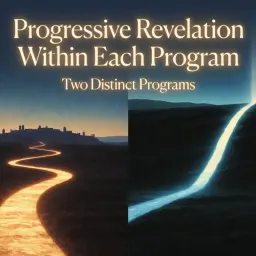
Both programs are true. Neither program is to be imported into the other.
"All Israel Shall Be Saved" — The Future Kingdom Promise in Plain View
The most sweeping future-tense salvation statement in the entire New Testament belongs to Israel's program. Paul himself writes it — not as doctrine for the Body of Christ, but as a declaration of what God will yet do for His covenant people:
"For I would not, brethren, that ye should be ignorant of this mystery, lest ye should be wise in your own conceits; that blindness in part is happened to Israel, until the fulness of the Gentiles be come in. And so all Israel shall be saved: as it is written, There shall come out of Sion the Deliverer, and shall turn away ungodliness from Jacob." (Romans 11:25-26 KJV)
All Israel shall be saved. Future tense. National scope. Tied to the Deliverer's coming out of Sion. This is not describing what happens the moment an individual Israelite believes Paul's gospel. This is the national restoration God promised through the prophets — the covenant fulfillment, the times of refreshing, the day when God takes away their sins as He covenanted to do.
Peter preached toward this day when he stood in Acts 3 and called Israel to repent so that "the times of refreshing shall come from the presence of the Lord." (Acts 3:19 KJV) The times of refreshing had not yet come. The sins of the nation had not yet been blotted out. That remains a future event — the culmination of Israel's prophetic program when the King returns.
The Body of Christ is not part of that national salvation. We are not waiting for a Deliverer to come out of Sion to secure what we need. We already have redemption through His blood, the forgiveness of sins, according to the riches of His grace. (Ephesians 1:7 KJV) The future national salvation of Israel and the present personal salvation of the Body of Christ run on entirely different tracks.
The Verb Tells You Which Program You Are Reading
Here is a simple tool for reading your Bible with rightly divided eyes. Watch the tense of salvation language.
When you read "shall be saved" — ask who is being addressed. Is it Israel? Is it the remnant being called to endure? Is it a kingdom context, a tribulation context, a Jewish epistle? Then leave it there. That promise belongs to that program.
When you read "are saved" — you are in Paul's letters. You are in the mystery program. You are reading truth addressed directly to the Body of Christ in this present dispensation of grace. Take it. Hold it. Rest in it.
The kingdom believer was told what he shall receive. The mystery believer is told what he already has. Both are true. They are not interchangeable.
Stop Borrowing From Israel's Program
The single most practical consequence of this distinction is the end of false assurance problems. Millions of believers in this dispensation of grace are told to look at passages like Hebrews 6, Matthew 24, and 1 Peter 1 as if those warnings and conditions apply to their standing before God. They are told to measure their assurance by their endurance. They are told their salvation could be in jeopardy if they fall away. They are told to hope they receive the end of their faith.
That is not Paul. That is the kingdom program applied to people who are not in the kingdom program.
Paul tells the Body of Christ they are sealed with the Holy Spirit of promise until the day of redemption. (Ephesians 4:30 KJV) That seal is not conditional on performance. It is the earnest of the inheritance — God's own guarantee. Nothing can separate us from the love of God which is in Christ Jesus. (Romans 8:38-39 KJV) Nothing. Not failure. Not sin. Not falling short. The work is finished because Christ finished it.
Stop enduring toward a salvation you already possess. Stop waiting to receive what God already gave you the moment you believed. The tense of Paul's gospel is not a grammatical accident. It is the declaration that the finished work of Christ is exactly that — finished.
Believe it. Rest in it. That is the position of the Body of Christ in the present dispensation of grace.
"For by grace are ye saved through faith; and that not of yourselves: it is the gift of God: Not of works, lest any man should boast." (Ephesians 2:8-9) — Ephesians 2:8-9 KJV
© 2026 Edward R. Cross






Comments
No comments yet. Be the first to share your thoughts.
Leave a comment