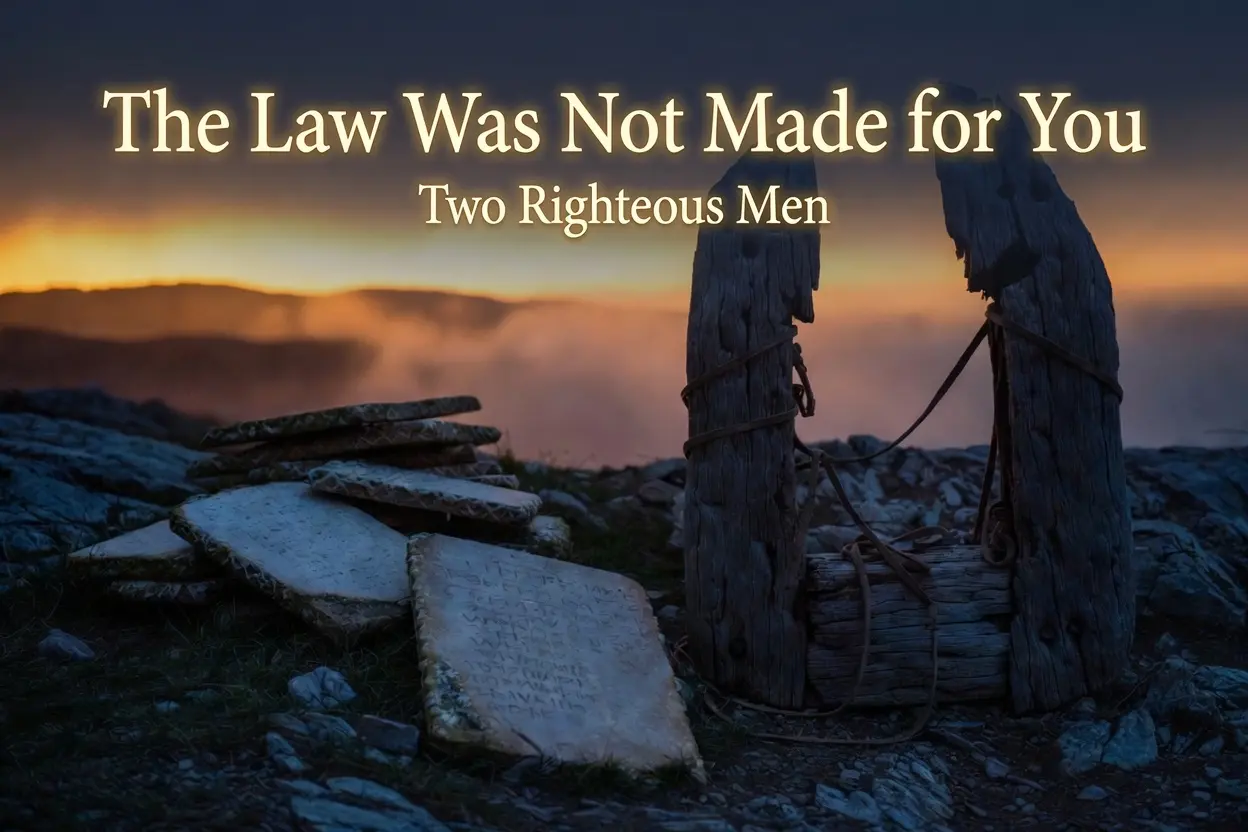
There is a teaching going about that sounds careful and sounds scriptural, and that is exactly what makes it dangerous. It says that Christ was the end of the law for righteousness — that is, He satisfied the law's demand so that we could be counted righteous before God — but that, having been justified, we are still obligated to keep that law as the rule of our lives. The cross handled our standing, they say; the law still governs our walk. It is offered as a safeguard against loose living, and to the sincere it feels like reverence for the Scriptures. But it collapses the moment we ask one rightly divided question — what kind of man is the law made for? — because the Bible speaks of a righteous man in two utterly different programs, and they are not the same man at all. There is the righteous man under the law, and there is the righteous man under grace, and everything turns on telling them apart.
The verse they quote, and the words they leave off
The phrase comes from Romans, and it is worth setting down exactly as the Holy Ghost gave it:
"For Christ is the end of the law for righteousness to every one that believeth." (Romans 10:4 KJV)
Notice what the verse does not say. It does not say Christ is the end of the law's penalty only, leaving the law itself in force as our standard. It says Christ is the end of the law — and the words "for righteousness" tell us in what respect He is its end: as the way of being righteous before God. The whole point of the passage is the contrast Paul has just drawn. He says of Israel that "they have a zeal of God, but not according to knowledge" (Romans 10:2 KJV), and then names their exact error: "For they being ignorant of God's righteousness, and going about to establish their own righteousness, have not submitted themselves unto the righteousness of God." (Romans 10:3 KJV)
That is the very thing the modern teaching reintroduces. It grants that Christ provides the righteousness — and then sends the believer back to the law to keep, which is "going about to establish their own righteousness" wearing the clothes of grace. When a man says, I am righteous in Christ, but I must still keep the law, he has not submitted himself to the righteousness of God; he has accepted it with one hand and gone back to building his own with the other. Christ is the end of the law for righteousness. Not the middle of it. Not the foundation of it with the law built back on top. The end of it.
The righteous man under the law was the man who kept it
To see why the believer is not under the law, we have to first see clearly what the law's righteous man actually was — and the Scriptures given to Israel are not the least bit shy about it. Under the law, the righteous man was the man who kept the law. His doing was his righteousness. Moses said it in so many words:
"And it shall be our righteousness, if we observe to do all these commandments before the LORD our God, as he hath commanded us." (Deuteronomy 6:25 KJV)
That is not a stray verse. It is the law's own definition of a righteous man, and the rest of the Scriptures given to Israel say the same thing in every key. The terms were do and live: "Ye shall therefore keep my statutes, and my judgments: which if a man do, he shall live in them." (Leviticus 18:5 KJV) Paul himself, when he wants to state the righteousness of the law plainly, quotes exactly this: "For Moses describeth the righteousness which is of the law, That the man which doeth those things shall live by them." (Romans 10:5 KJV) The principle stands all through: "for not the hearers of the law are just before God, but the doers of the law shall be justified" (Romans 2:13 KJV). Ezekiel draws the very portrait of the law's righteous man — one who walks in the statutes and keeps the judgments — and pronounces the law's verdict on him: "he is just, he shall surely live, saith the Lord GOD." (Ezekiel 18:9 KJV) And when the Gospels open, there stand Zacharias and Elisabeth, righteous men of the law to the last: "And they were both righteous before God, walking in all the commandments and ordinances of the Lord blameless." (Luke 1:6 KJV)
Read those passages together and the matter is settled beyond argument. Under the law dispensation the righteous man was the man whose obedience was counted his righteousness. The law was his righteousness — his doing of it was the thing that made him just and kept him alive before God. This was no error on Israel's part; it was the program God Himself gave them through Moses, and it was right for that program. Whoever insists the justified believer must still keep the law as his rule has, whether he sees it or not, reached back and picked up this man's definition of righteousness — the man whose standing rests on his own keeping.
Two classes of men under the law: the righteous and the ungodly
Because the law made a man's righteousness depend on his keeping of it, the old covenant ran a sharp line straight through mankind. There were two classes of men, and the line between them was the law: the righteous man who kept it, and the ungodly man, the sinner, who broke it. This is not a distinction read into the Scriptures given to Israel; it is the air the law and the prophets breathe, and nowhere does it stand out more plainly than in the Psalms. The very first one is built on it. The righteous man is defined by his relation to the law — "But his delight is in the law of the LORD; and in his law doth he meditate day and night" (Psalm 1:2 KJV) — and he is set in flat opposition to the other class: "Blessed is the man that walketh not in the counsel of the ungodly, nor standeth in the way of sinners, nor sitteth in the seat of the scornful." (Psalm 1:1 KJV) The two are not merely different; they are kept apart, and judged apart: "Therefore the ungodly shall not stand in the judgment, nor sinners in the congregation of the righteous. For the LORD knoweth the way of the righteous: but the way of the ungodly shall perish." (Psalm 1:5-6 KJV)
That same fault line runs the length of the Psalter. God upholds the one and sets His face against the other — "The eyes of the LORD are upon the righteous, and his ears are open unto their cry. The face of the LORD is against them that do evil" (Psalm 34:15-16 KJV); "The LORD trieth the righteous: but the wicked and him that loveth violence his soul hateth" (Psalm 11:5 KJV). And Malachi states the division as a thing the faithful will one day see vindicated: "Then shall ye return, and discern between the righteous and the wicked, between him that serveth God and him that serveth him not." (Malachi 3:18 KJV) Under the law, in other words, "the righteous" and "the ungodly" were two standing companies of men, told apart by whether they kept God's commandments or broke them.
Hold that distinction, because Paul takes up these exact words. When he says the law is not made for a righteous man "but for the lawless and disobedient, for the ungodly and for sinners," (1 Timothy 1:9) he is using the Psalms' own categories — the ungodly, the sinner, set over against the righteous. The difference is that Paul tells us which of these men the law was ever made for, and it was never the righteous one.
The new covenant did not lay the law down
And here we must answer something the teaching leans on, because it is true as far as it goes: the law was not abolished when Israel's program moved from the old covenant toward the new. The new covenant promised to Israel does not throw the law out — it writes it deeper:
"But this shall be the covenant that I will make with the house of Israel; After those days, saith the LORD, I will put my law in their inward parts, and write it in their hearts; and will be their God, and they shall be my people." (Jeremiah 31:33 KJV)
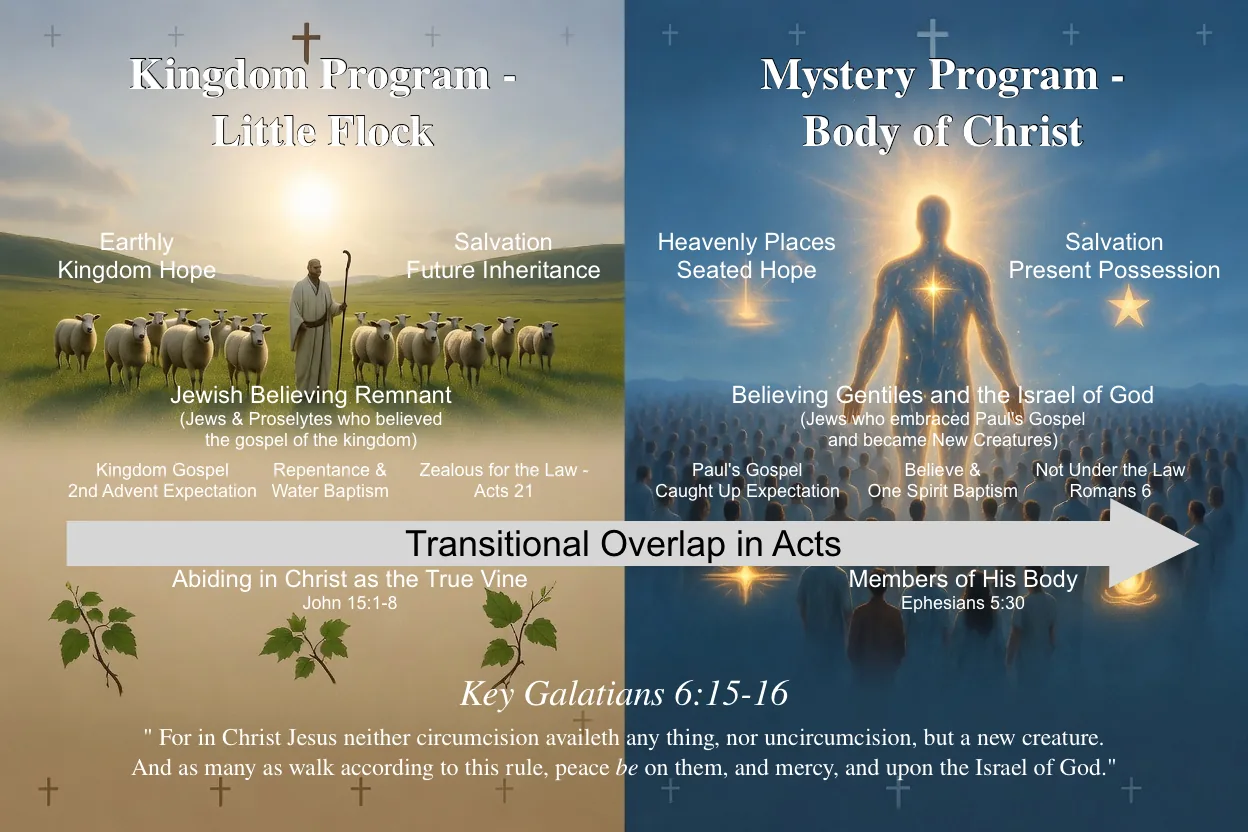
The same word is repeated when that covenant is rehearsed: "I will put my laws into their mind, and write them in their hearts" (Hebrews 8:10 KJV), and the Spirit's part in it is named: "And I will put my spirit within you, and cause you to walk in my statutes, and ye shall keep my judgments, and do them." (Ezekiel 36:27 KJV) Under the new covenant the law is not on tables of stone but on the heart — yet it is still the law, still kept, still required. The same holds across the whole of Israel's program. In His earthly ministry the Lord was Himself "made under the law" (Galatians 4:4 KJV), and far from loosening it for the kingdom He pressed it home: "Think not that I am come to destroy the law, or the prophets: I am not come to destroy, but to fulfil" (Matthew 5:17 KJV), and "except your righteousness shall exceed the righteousness of the scribes and Pharisees, ye shall in no case enter into the kingdom of heaven" (Matthew 5:20 KJV). The kingdom program keeps the law from first to last — under the law in the Lord's earthly ministry, and under the new covenant written on the heart — and the whole of it belongs to Israel.
This matters because it shows the law-rule the modern teaching wants to put on us is not nothing — it is real, it is biblical, and it belongs to a program God built. It simply is not ours. The covenant of the law written on the heart was made "with the house of Israel", never with the Body of Christ. To take Israel's covenant righteousness and lay it on the church is not to obey the Bible; it is to refuse to divide it.
The righteous man under grace has righteousness imputed without works
Set beside Israel's righteous man stands a different man entirely — the man the gospel of the grace of God produces, and he is righteous in a way the law could never make him. He is not righteous by his doing but by imputation; his righteousness is reckoned to him apart from the law altogether. Paul could not have drawn the line more sharply:
"But to him that worketh not, but believeth on him that justifieth the ungodly, his faith is counted for righteousness. Even as David also describeth the blessedness of the man, unto whom God imputeth righteousness without works." (Romans 4:5-6 KJV)
There is the whole difference in one stroke. Israel's righteous man worked — "the man which doeth those things shall live by them." Grace's righteous man is the man "that worketh not, but believeth," to whom God "imputeth righteousness without works." One earns and keeps; the other receives. This is the man Paul longed to be found as: "And be found in him, not having mine own righteousness, which is of the law, but that which is through the faith of Christ, the righteousness which is of God by faith." (Philippians 3:9 KJV) And the exchange is total — "For he hath made him to be sin for us, who knew no sin; that we might be made the righteousness of God in him." (2 Corinthians 5:21 KJV) The believer does not merely have his sins forgiven so he can try again at righteousness; he is made the righteousness of God in Christ. That is a finished standing, not a probation — never his own performance holding it up, and so never lost when his performance fails.
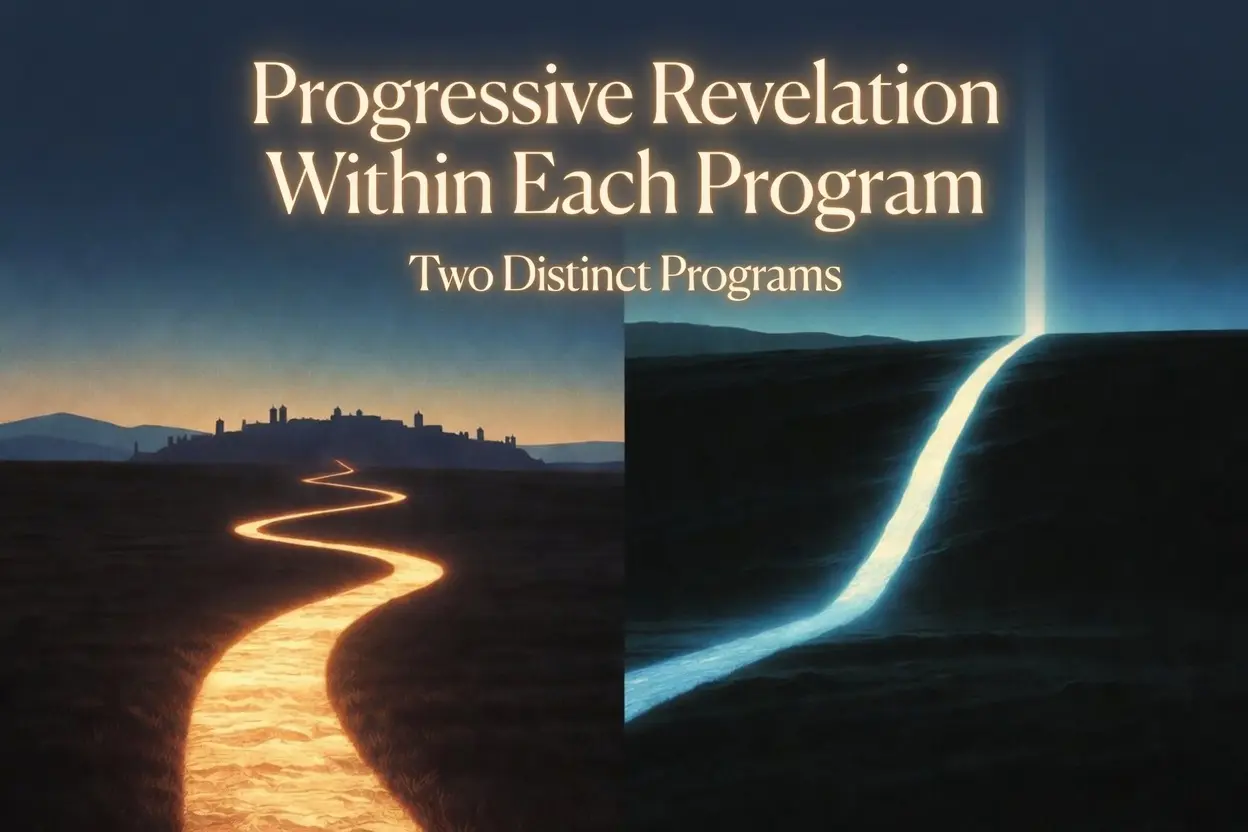
It is so settled a thing that Paul can name believers by it. When he calls the saints away from unequal yokes he asks, "for what fellowship hath righteousness with unrighteousness? and what communion hath light with darkness?" (2 Corinthians 6:14 KJV) Mark the word: the believer simply is "righteousness" — that is what grace has made him, a righteousness imputed without the deeds of the law. The unbeliever is "unrighteousness." Paul does not say the man who keeps the law well and the man who keeps it poorly; he says righteousness and unrighteousness, because under grace a man's righteousness is not a score he is running up but a standing he has been given. These two righteous men — Israel's, who works and keeps, and the Body's, who believes and is reckoned righteous without works — are not the same man with two job descriptions. They are two different men in two different programs, and the whole question of the law comes down to which one you are.
"The law is not made for a righteous man"
Now Paul lays down the rule for using the law, and it answers our question in words so plain that the only way around them is to pretend they are not there:
"But we know that the law is good, if a man use it lawfully; Knowing this, that the law is not made for a righteous man, but for the lawless and disobedient, for the ungodly and for sinners, for unholy and profane, for murderers of fathers and murderers of mothers, for manslayers, For whoremongers, for them that defile themselves with mankind, for menstealers, for liars, for perjured persons, and if there be any other thing that is contrary to sound doctrine." (1 Timothy 1:8-10 KJV)
Read the list — the lawless, the disobedient, the ungodly, the sinner: the very company the Psalms set opposite the righteous. Every category is a category of sinner. The law is made for the lawless, to stop their mouths and convict them — that is its lawful use. It is not made for the righteous man, because there is nothing in his case for the law to do. He is already, in Christ, the righteousness of God, imputed without works. You cannot convict of unrighteousness a man who has been made righteousness itself; you cannot threaten with the law a man for whom Christ is the law's end. The law has no jurisdiction over him — not because he is lawless, but because he is righteous with a righteousness the law did not give and cannot take away.
So the teaching we are answering has it exactly backwards. It says: Christ made you righteous, therefore now keep the law. Paul says the law is not made for a righteous man at all. To put the justified believer under the law as his rule of life is not to honor the law; it is to use it unlawfully — to aim it at the one man it was never made for. "For ye are not under the law, but under grace." (Romans 6:14 KJV)
Not under the law: the issue is the old man, not merely how we are justified
It is worth seeing exactly why Paul says we are not under the law, because the context is not narrowly about how a man is first justified — it is about the old man, the old nature, to whom the law was bound. The law had a rightful claim, but it had that claim on a particular man, and that man has died. "Knowing this, that our old man is crucified with him, that the body of sin might be destroyed, that henceforth we should not serve sin." (Romans 6:6 KJV) It is in that setting — the old man crucified, sin's dominion broken — that Paul says "sin shall not have dominion over you: for ye are not under the law, but under grace" (Romans 6:14 KJV). The law is not removed because God lowered His standard; it is removed because the man it held is dead.
Paul says it again as plainly as language allows: "Wherefore, my brethren, ye also are become dead to the law by the body of Christ; that ye should be married to another, even to him who is raised from the dead, that we should bring forth fruit unto God." (Romans 7:4 KJV) The believer was bound to the law as a wife to a husband; that old man died with Christ, and the bond died with him, leaving the believer free to be joined to the risen Christ. "But now we are delivered from the law, that being dead wherein we were held; that we should serve in newness of spirit, and not in the oldness of the letter." (Romans 7:6 KJV) This is why putting the believer back under law is not a small adjustment of his walk — it is a denial of his death and resurrection with Christ. It hauls a living standard onto a man who died to it, and binds to the law a man whose old nature, the only thing the law could ever grip, was crucified.
But does this not make void the law?
Here the teaching plays its strongest card. Does not Paul himself forbid this very conclusion? — "Do we then make void the law through faith? God forbid: yea, we establish the law." (Romans 3:31 KJV) And does he not require the law's righteousness to be kept in us — "That the righteousness of the law might be fulfilled in us" (Romans 8:4 KJV)? If Paul establishes the law and would have its righteousness fulfilled in us, how can it not be our rule?
Read each in its place, and neither says what is wanted. To establish the law is not to put the believer back under it as a rule of life; it is to uphold the law in its rightful office. Paul has just been proving that the law's own testimony witnesses to a righteousness apart from itself — "the righteousness of God without the law is manifested, being witnessed by the law and the prophets" (Romans 3:21 KJV) — and that its proper work is to give "the knowledge of sin" (Romans 3:20 KJV). A gospel that justifies the ungodly by faith does not discard the law; it lets the law be exactly what God made it, the schoolmaster that convicts and points to Christ. That is establishing the law, not re-enthroning it.
And Romans 8:4 says the opposite of what the teaching needs. Mark that it does not say that we might fulfill the righteousness of the law; it says "that the righteousness of the law might be fulfilled in us, who walk not after the flesh, but after the Spirit." (Romans 8:4 KJV) The law's righteousness is fulfilled in the believer — wrought in him by Christ through the Spirit — not performed by him as his rule. The verse before it tells us why: this is "what the law could not do, in that it was weak through the flesh" (Romans 8:3 KJV). What the law was powerless to produce, God produced in Christ; to hand the work back to the law is to undo the very verse. So the believer is not lawless and the law is not void — but it stands where Paul set it: convicting the sinner, witnessing to Christ, and fulfilled in the saint by the Spirit, never reinstalled as the righteous man's master.
Peter at Antioch: a minister of the kingdom, reverting to his own law
Now we come to where this very issue was fought out in life, not in theory — the scene at Antioch in Galatians 2 — and it is one of the plainest answers in all of Scripture to the man who says righteous in Christ, but still bound to keep the law.
We must be precise about who Peter was. Peter was not a preacher of the gospel of the grace of God; he was the apostle of the circumcision, a minister of the gospel of the kingdom, and that gospel was a law-keeping program. His commission, his message, and his manner of life all belonged to Israel's covenant. That is the plain agreement struck at Jerusalem — "the gospel of the uncircumcision was committed unto me, as the gospel of the circumcision was unto Peter" (Galatians 2:7 KJV) — the same God working in both men (Galatians 2:8), with James, Cephas, and John giving Paul and Barnabas the right hands of fellowship that they should go to the heathen and they to the circumcision (Galatians 2:9). Two messengers, two messages, two programs. So when Peter kept the law, he was not sinning against his own gospel; he was keeping it. Years after Pentecost the believing remnant of his program were still described in just these terms — "how many thousands of Jews there are which believe; and they are all zealous of the law" (Acts 21:20 KJV). The law belonged to his program.
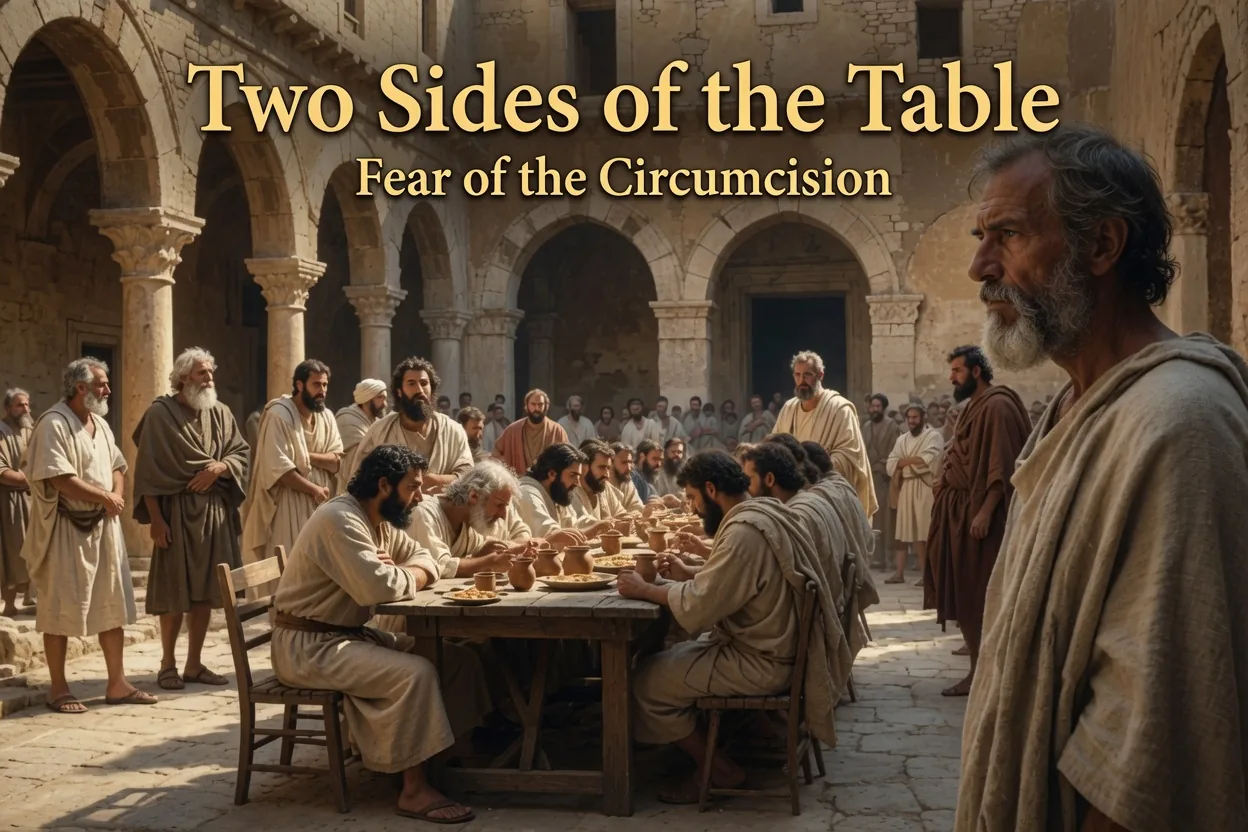
What happened at Antioch is therefore not that Peter preached something false to the Gentiles. It is that he carried his own law-keeping into the midst of Paul's grace assembly and let it govern the table. He had been eating freely with the Gentile believers; then men came down from James, and his nerve failed:
"For before that certain came from James, he did eat with the Gentiles: but when they were come, he withdrew and separated himself, fearing them which were of the circumcision. And the other Jews dissembled likewise with him; insomuch that Barnabas also was carried away with their dissimulation." (Galatians 2:12-13 KJV)
Notice what was at stake. Peter changed his behavior — pulled back from the Gentiles' table and resumed living as a Jew under the law that was rightly his own. It was conduct, not a sermon. And that is precisely why this passage is so deadly to the teaching we are answering, for the error here is not in what a man confesses about how men are saved but in how he, by his walk, puts the law back on those who are not under it.
It was the walk that compelled them to live as Jews
Paul did not let it pass as a minor lapse of table manners. He saw straight to the root and named it before them all:
"But when I saw that they walked not uprightly according to the truth of the gospel, I said unto Peter before them all, If thou, being a Jew, livest after the manner of Gentiles, and not as do the Jews, why compellest thou the Gentiles to live as do the Jews?" (Galatians 2:14 KJV)
There is the whole matter. Peter, by his actions — not by any doctrine he preached at Antioch — was compelling the Gentiles to live as Jews. He never said a word requiring it; he simply withdrew, and the withdrawal preached its own sermon. If the leading apostle of the circumcision will not eat with uncircumcised believers, then plainly the way to be acceptable is to take up the Jews' manner of life under the law. Peter's conduct laid the law back on the necks of men for whom Christ was the law's end — and it did so not by a false statement but by a Jewish walk carried into a Gentile assembly. The pressure came through the practice.
This is the point the modern teaching never reckons with. A man's walk can compel others back under the law just as surely as a false sermon can. To tell a justified believer that he is now obligated to keep the law as his rule of life is to do in doctrine exactly what Peter did in conduct: to compel the Gentiles to live as do the Jews. Paul called that not walking uprightly according to the truth of the gospel. He did not call it a safeguard; he withstood Peter to the face "because he was to be blamed" (Galatians 2:11 KJV). And he closed the matter with the principle that ends the whole debate: "I do not frustrate the grace of God: for if righteousness come by the law, then Christ is dead in vain." (Galatians 2:21 KJV) The two systems will not be married. Either righteousness comes by grace through Christ and the law has no claim on the righteous man, or it comes by law-keeping and the cross was needless. There is no arrangement in which Christ supplies the righteousness and the law supplies the rule.
To rebuild the law is to become the transgressor
Paul did not stop at rebuking the conduct; in the same breath he laid bare the doctrine beneath it, and the doctrine finishes the case. He reminds Peter that even they — Jews by birth, law-keepers from the cradle — had to abandon the law as the way of righteousness and flee to Christ: "Knowing that a man is not justified by the works of the law, but by the faith of Jesus Christ, even we have believed in Jesus Christ, that we might be justified by the faith of Christ, and not by the works of the law: for by the works of the law shall no flesh be justified." (Galatians 2:16 KJV) If the very Jews who had the law could not be justified by it, there is no sense in laying it on Gentiles who never had it.
Then Paul turns the charge of sin clean around. The objector says a gospel that frees men from the law makes Christ the minister of sin — an open door to transgress. Paul answers that the transgressor is not the man who leaves the law but the man who goes back and rebuilds it: "For if I build again the things which I destroyed, I make myself a transgressor." (Galatians 2:18 KJV) Read it slowly, for it stands the modern teaching on its head. The law was destroyed as a way of righteousness when Christ became its end. To build it again — to lay it back on the justified believer as his rule — is not obedience; it is to make oneself a transgressor. The man pressing the law on free men is not the careful one in the room; he is the lawbreaker, raising a ruin God tore down.
And how did Paul come to be free of the law at all? Not by ignoring it, but through it: "For I through the law am dead to the law, that I might live unto God." (Galatians 2:19 KJV) The law itself, having condemned him and driven him to the cross, brought him to its own end; he died to it that he might live unto God. That is the righteous man under grace — dead to the law by the law, alive to God by grace, and a transgressor only if he tries to raise the dead law again.
"We shall be saved even as they": present salvation, not inheritance after endurance
But someone will bring forward Peter's own words at the Jerusalem council and say they prove the two programs are really one: "But we believe that through the grace of the Lord Jesus Christ we shall be saved, even as they." (Acts 15:11 KJV) Does this not flatten everything to a single salvation? It does not. Grace is indeed the ground for both — no man in any program was ever saved by anything but the grace of God, and Peter rightly says the believing Jews "shall be saved, even as they." The difference was never in the grace; it is in the way that salvation is administered. The future tense alone does not settle it — the Body too awaits a redemption yet to come — but Peter's program does not merely defer the salvation; it conditions it on endurance. For the kingdom saint, salvation was an inheritance to be received at the end, after enduring faithfulness under the power of the Holy Ghost.
That is Peter's own gospel everywhere you read him. The Lord had said it: "But he that shall endure unto the end, the same shall be saved." (Matthew 24:13 KJV) And Peter writes to his scattered tried believers of a salvation still future, the prize at the end of a proven faith: "Receiving the end of your faith, even the salvation of your souls." (1 Peter 1:9 KJV) The salvation of the soul is the end of their faith — received after the trial, held out to those who endure. Peter even names it an inheritance in so many words: "To an inheritance incorruptible, and undefiled, and that fadeth not away, reserved in heaven for you" (1 Peter 1:4 KJV). That is the salvation Peter means by "we shall be saved": an inheritance secured by enduring, in a program where the law is written on the heart and the Spirit causes them to walk in the statutes.
Set the Body's salvation beside it and the difference is unmistakable. Ours, too, is an inheritance — but not one held out at the end of endurance. It is sealed to us the moment we believe, and the Spirit Himself is the guarantee of it: "ye were sealed with that holy Spirit of promise, Which is the earnest of our inheritance until the redemption of the purchased possession" (Ephesians 1:13-14 KJV). Our standing is present and accomplished — righteousness imputed now, without works, to him that worketh not but believeth. We are not enduring our way toward a salvation of the soul; we are already made the righteousness of God in Christ, complete in Him, sealed the moment we believed. "Even as they" tells us both groups owe everything to the same grace. It does not tell us the salvation is administered the same way, any more than "the gospel of the circumcision" tells us the message was the same. One people endured toward a coming inheritance; one people was given a finished righteousness on the spot. Same grace, two programs.
The same program, the same water: what Paul did not bring
One more mark of Peter's program seals the matter, and it is the very thing the objector likes to raise: at Pentecost Peter told Israel, "Repent, and be baptized every one of you in the name of Jesus Christ for the remission of sins." (Acts 2:38 KJV) Here is water baptism bound to remission of sins — and it belongs to the same kingdom program as the law. It is the continuation of John's "baptism of repentance for the remission of sins" (Mark 1:4 KJV) preached to Israel, not a feature of the gospel Paul received from the risen Christ.
This is why the apostle of grace can say there is now but one: "One Lord, one faith, one baptism." (Ephesians 4:5 KJV) That one baptism is not water but the Spirit's work that places the believer into the Body of Christ — "For by one Spirit are we all baptized into one body." (1 Corinthians 12:13 KJV) Paul, who was sent "not to baptize, but to preach the gospel" (1 Corinthians 1:17 KJV), put no water between the sinner and his standing. So when Peter required baptism for remission, he was no more preaching Paul's gospel than he was preaching freedom from the law; the law and the water alike belonged to Israel's kingdom program, and neither was laid upon the Body of Christ. This is worth seeing, because the man who would put us back under the law usually carries a list, and water is often the next item on it. The answer runs the same down the whole list: that is Israel's program, not ours.
The same error, in our day
What Peter carried in on his feet at Antioch is carried in today by an argument, but it is the same freight: Christ is the end of the law for righteousness — but you still have to keep it. It wears the language of grace and the look of holiness, and it presses on free men a yoke their Savior already removed. It reaches back and takes up Israel's definition of a righteous man — the man whose keeping is his righteousness — and lays it on men whose righteousness was imputed without works. It aims the law at the one man Paul says the law was never made for. And it does by teaching exactly what Peter did by his withdrawal: it compels the Gentiles to live as do the Jews.
The righteous man under grace does not live carelessly — far from it. The charge that grace breeds license is as old as grace itself, and Paul raised it only to crush it: "What shall we say then? Shall we continue in sin, that grace may abound? God forbid. How shall we, that are dead to sin, live any longer therein?" (Romans 6:1-2 KJV) He lives righteously, but from a wholly different spring. He was created in Christ unto good works: "For we are his workmanship, created in Christ Jesus unto good works, which God hath before ordained that we should walk in them." (Ephesians 2:10 KJV) What teaches him to walk is not the law but the grace that saved him: "For the grace of God that bringeth salvation hath appeared to all men, Teaching us that, denying ungodliness and worldly lusts, we should live soberly, righteously, and godly, in this present world." (Titus 2:11-12 KJV) We do not keep the law to become righteous, nor keep it to prove we are righteous. We are the righteousness of God in Christ, and we walk in newness of life because of what we already are.
Conclusion
Rightly dividing the righteous man settles the whole question. Ask of any command laid upon the believer: which man is being addressed — Israel's righteous man, whose keeping of the law is his righteousness, or the Body's righteous man, to whom righteousness is imputed without the deeds of the law? For the one made the righteousness of God in Christ, the law is not his rule, his ruler, or his judge. Christ is the end of it. To put him back under it is to do Peter's deed and earn Paul's rebuke. Let the believer stand instead where his apostle left him:
"I am crucified with Christ: nevertheless I live; yet not I, but Christ liveth in me: and the life which I now live in the flesh I live by the faith of the Son of God, who loved me, and gave himself for me." (Galatians 2:20 KJV)
That is the righteous man under grace — not a man kept righteous by the law he keeps, but a man made righteous by the Christ who keeps him.
So do not take up again the yoke your Savior lifted off. You are not Israel's righteous man, held by your own keeping; you are the Body's righteous man, made the righteousness of God in Christ and kept by Him. Refuse the teaching that would hand you back to the law, however reverent it sounds, and stand where Paul charged you to stand: "Stand fast therefore in the liberty wherewith Christ hath made us free, and be not entangled again with the yoke of bondage." (Galatians 5:1 KJV)
© 2026 Edward R. Cross


Comments
No comments yet. Be the first to share your thoughts.
Leave a comment