
Most Bible readers have never heard the term "Remnant Epistles." They read James, Peter, John, Jude, and Hebrews as if they are just more letters addressed to the same audience as Paul's epistles, teaching the same gospel to the same people. They blend everything together, assume it all says the same thing, and then wonder why large portions of the Bible seem to contradict each other. James says a man is justified by works and not by faith only. Paul says a man is justified by faith without works. Peter says baptism saves us. Paul says we are saved by grace through faith, not of works. Hebrews warns that if you sin willfully there remains no more sacrifice for sins. Paul declares that we are already forgiven of all trespasses. Are these contradictions? Not at all. They are different messages to different people in different programs.
The Remnant Epistles are the key to unlocking the confusion. Once you see who wrote them, who they were written to, and what program they address, the apparent contradictions dissolve. Every word makes perfect sense. And once you understand that these epistles are not written to the Body of Christ, you will stop building your doctrine on ground that was never given to you.
Not All Scripture Was Written to You — But All Scripture Was Written for You
Before we identify which epistles are the Remnant Epistles, we need a principle that most Christians were never taught. All Scripture is for you, but not all Scripture is written to you. Paul established this clearly:
"All scripture is given by inspiration of God, and is profitable for doctrine, for reproof, for correction, for instruction in righteousness." (2 Timothy 3:16 KJV)
Every word of the Bible is God-breathed. Every word is profitable. The Remnant Epistles are Scripture. James, Peter, John, Jude, and Hebrews are inspired and authoritative. They belong in your Bible. Rightly understanding them will make you a better student of the whole counsel of God. What they are not is the specific revelation given to the Body of Christ for this present dispensation of grace. That is Paul's thirteen epistles, and Paul alone.
The principle is this: you read all of Scripture to understand what God has done and is doing across every age and program. But you go to your specific epistles — Romans through Philemon — for the doctrine, the standing, the hope, and the commandments that belong directly to you. That is not ignoring the rest of Scripture. That is handling it honestly.
God addressed the children of Israel in the wilderness as well. Their instructions are in the Old Testament. You do not offer animal sacrifices today. You are not obligated to observe the Sabbath. You understand that those instructions were given to a specific people in a specific program. The Remnant Epistles operate on the same principle — only inside the post-resurrection Scriptures.
The Remnant of Israel: A Biblical Reality, Not a Theological Construct
To understand the Remnant Epistles you must understand what the "remnant" is. The term comes straight from the Old Testament and runs like a thread through the post-resurrection Scriptures as well.
Throughout Israel's history, God always preserved a believing minority within the nation. When the majority of Israel went into apostasy, a remnant remained faithful. Isaiah spoke of it plainly:
"Except the LORD of hosts had left unto us a very small remnant, we should have been as Sodom, and we should have been like unto Gomorrah." (Isaiah 1:9 KJV)
"For though thy people Israel be as the sand of the sea, yet a remnant of them shall return: the consumption decreed shall overflow with righteousness." (Isaiah 10:22 KJV)
The concept carried forward without interruption. When the nation of Israel largely rejected Jesus as her Messiah, the same pattern held. A minority within Israel believed. Paul referenced this directly:
"Even so then at this present time also there is a remnant according to the election of grace." (Romans 11:5 KJV)
That remnant — believing Jews who received Jesus as their Messiah during His earthly ministry and the early Acts period — is the audience of the Remnant Epistles. They were the "little flock" the Lord spoke to directly:
"Fear not, little flock; for it is your Father's good pleasure to give you the kingdom." (Luke 12:32 KJV)
This little flock was promised an earthly kingdom. Their hope was prophetic — spoken of by the mouth of all the holy prophets since the world began. Their program involved repentance from dead works, water baptism, endurance through tribulation, and ultimately the physical return of Christ to establish the promised kingdom on earth. That program is distinct from the mystery program God revealed to Paul, which was kept secret since the world began.
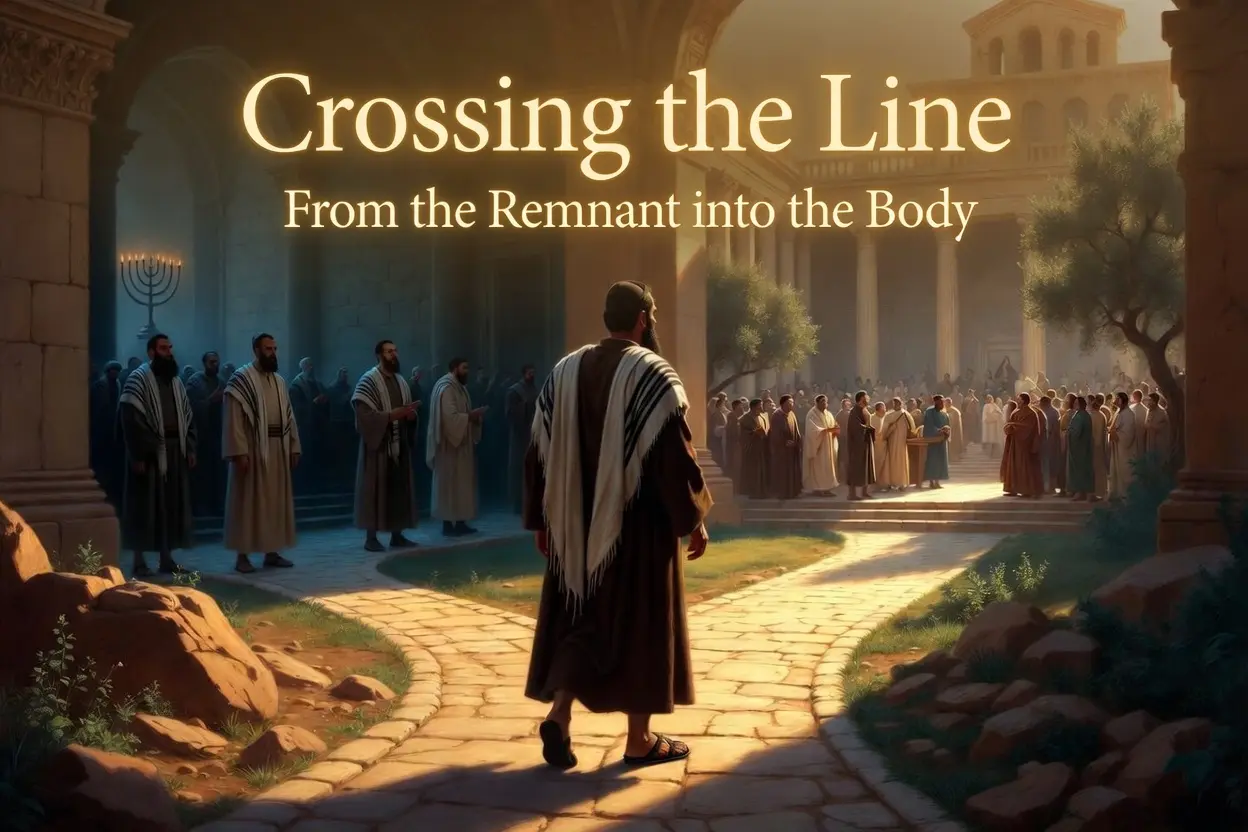
The Remnant Epistles are the epistles written to this people. They address believing Jews — the remnant of Israel — in their specific program. They do not address the Body of Christ.
Two Programs, Two Sets of Apostles, Two Sets of Epistles
Before going any further, there is a labeling problem we need to address — because it sits at the root of nearly every confusion about the Remnant Epistles.
Open most printed Bibles and you will see the pages divided into two halves. The first is labeled "The Old Testament." The second is labeled "The New Testament." That label was placed there by Bible publishers. It is an organizational convenience, not a doctrinal statement. And it has caused enormous confusion, because it gives readers the impression that everything from Matthew through Revelation belongs to one program under one covenant for one people. It does not.
Here is the problem. The "new testament" — or new covenant — is not a program for the Body of Christ. It was a specific promise God made to Israel. Jeremiah recorded it:
"Behold, the days come, saith the LORD, that I will make a new covenant with the house of Israel, and with the house of Judah." (Jeremiah 31:31 KJV)
The writer of Hebrews quoted it again, confirming who it belongs to:
"For finding fault with them, he saith, Behold, the days come, saith the Lord, when I will make a new covenant with the house of Israel and with the house of Judah." (Hebrews 8:8 KJV)
The New Covenant was made with the house of Israel and the house of Judah. Not with Gentiles. Not with the Body of Christ. It is Israel's covenant — the fulfillment of the Abrahamic and Davidic promises, the writing of God's law on their hearts, the restoration of their kingdom, the taking away of their sins. The Lord Jesus instituted it at the last supper with His Jewish disciples:
"Likewise also the cup after supper, saying, This cup is the new testament in my blood, which is shed for you." (Luke 22:20 KJV)
He was speaking to Israelites, in fulfillment of Israel's prophetic program.
The Body of Christ is not under the New Covenant. We are in the dispensation of the mystery — a separate program kept secret since the world began, not revealed in the Old Testament, not promised through the prophets, not included in the covenant promises made to the fathers. Our standing before God is not covenant-based at all. It is mystery-based — grounded in the revelation committed to Paul by the risen Christ, revealed in his thirteen epistles.
When Bible publishers labeled everything from Matthew through Revelation as "The New Testament," they were using a historical and organizational convention. The effect, however, has been to place all of those books under one umbrella in the reader's mind — as if they all address the same people, the same program, and the same covenant. They do not. Matthew through John record the ministry of Christ to Israel under the prophetic program. The early chapters of Acts continue that same ministry. The Remnant Epistles address the scattered Jewish remnant still in that prophetic program. And Paul's thirteen epistles address the Body of Christ in the mystery — which stands entirely distinct from both the old and the new covenant arrangements.
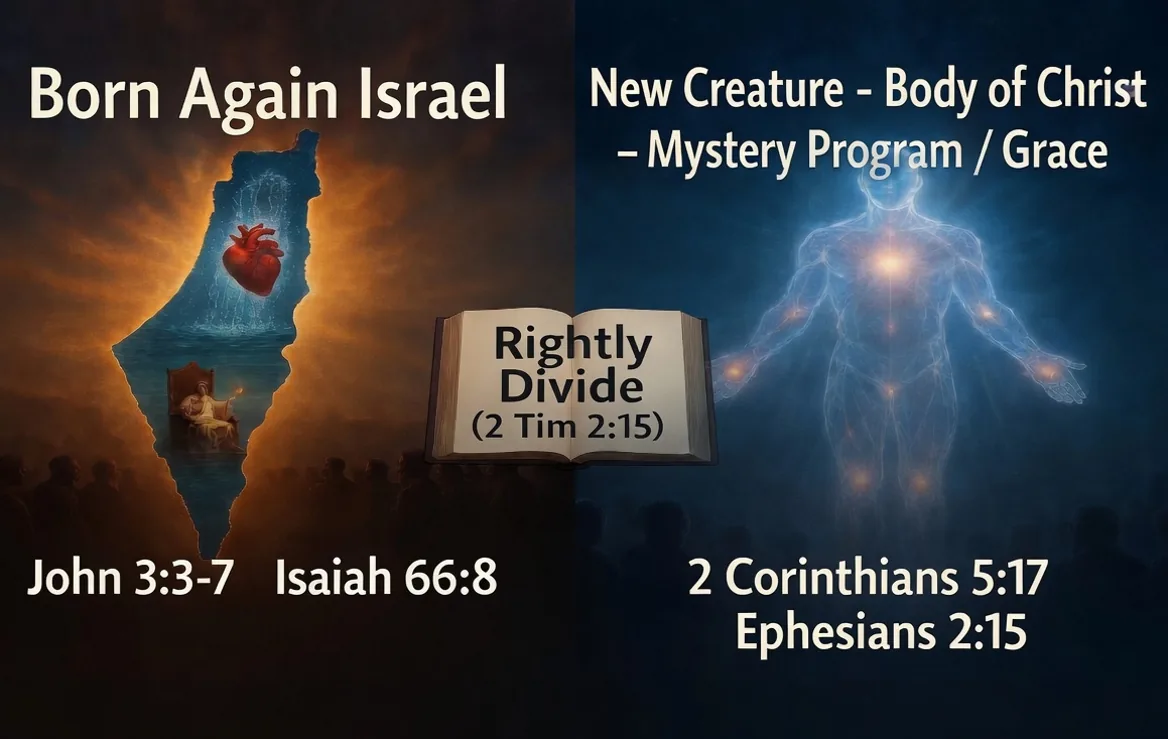
The more accurate frame is this: there are two programs in the inspired Scripture written after the cross, addressed to two different peoples, by two different sets of apostles, for two different ends. Paul stated the distinction plainly:
"But contrariwise, when they saw that the gospel of the uncircumcision was committed unto me, as the gospel of the circumcision was unto Peter; (For he that wrought effectually in Peter to the apostleship of the circumcision, the same was mighty in me toward the Gentiles:) And when James, Cephas, and John, who seemed to be pillars, perceived the grace that was given unto me, they gave to me and Barnabas the right hands of fellowship; that we should go unto the heathen, and they unto the circumcision." (Galatians 2:7-9 KJV)
Two apostleships. Two gospels — the gospel of the circumcision and the gospel of the uncircumcision. Two target audiences — the circumcision and the heathen (Gentiles). This is not Paul's opinion. This is the formal agreement reached between Paul and the Jerusalem apostles.
The apostles of the circumcision — Peter, James, and John — went to the circumcision. The apostle of the uncircumcision — Paul — went to the Gentiles. When those men wrote letters, their letters reflect their audiences, their commissions, and their programs. This is exactly what we find.
Paul wrote thirteen epistles. They are Romans, 1 and 2 Corinthians, Galatians, Ephesians, Philippians, Colossians, 1 and 2 Thessalonians, 1 and 2 Timothy, Titus, and Philemon. These are the Body of Christ epistles. They contain the specific doctrine, standing, hope, and instruction that belongs to the Body of Christ in this present dispensation of grace.
The Remnant Epistles are these nine: Hebrews, James, 1 Peter, 2 Peter, 1 John, 2 John, 3 John, Jude, and Revelation. Written by the apostles of the circumcision for the Jewish remnant and their program.
The Addresses Do Not Lie
The simplest proof of who these epistles were written to is found right at the opening of each one. The authors told us who they were writing to. We simply need to believe what they said.
James could not have been more direct:
"James, a servant of God and of the Lord Jesus Christ, to the twelve tribes which are scattered abroad, greeting." (James 1:1 KJV)
To the twelve tribes. James was not writing to Gentiles. He was not writing to a mixed congregation where there is neither Jew nor Greek. He was writing to the twelve tribes of Israel — specifically those scattered outside of the land. This is the Jewish diaspora, the dispersed remnant of Israel that had received Jesus as Messiah and were now scattered by persecution.
Peter did the same:
"Peter, an apostle of Jesus Christ, to the strangers scattered throughout Pontus, Galatia, Cappadocia, Asia, and Bithynia, Elect according to the foreknowledge of God the Father, through sanctification of the Spirit, unto obedience and sprinkling of the blood of Jesus Christ." (1 Peter 1:1-2 KJV)
"Strangers scattered." This language belongs to the Jewish world. These were Jewish believers who had been scattered abroad from Jerusalem and Judaea. The phrase "elect according to the foreknowledge of God" is drawing on Israel's identity as God's elect nation — the same vocabulary the Old Testament uses for Israel throughout. Peter is writing to the scattered little flock.
2 John opens with:
"The elder unto the elect lady and her children, whom I love in the truth." (2 John 1:1 KJV)
3 John is addressed to Gaius, a member of the same remnant community. Jude writes to those "sanctified by God the Father, and preserved in Jesus Christ, and called." (Jude 1:1 KJV)
Revelation is written by John — the same John named in Galatians 2:9 as one of the pillars of the circumcision. His opening address removes all ambiguity:
"John to the seven churches which are in Asia: Grace be unto you, and peace, from him which is, and which was, and which is to come; and from the seven Spirits which are before his throne." (Revelation 1:4 KJV)
Seven assemblies in Asia. Asia was the very region Peter addressed in 1 Peter 1:1. These were circumcision-connected assemblies, not Body of Christ congregations assembled under Paul's mystery revelation. Revelation is not strictly an epistle — it is a prophetic book, the consummation of all that the Old Testament prophets spoke concerning Israel's future. But it was written by a circumcision apostle, addressed to circumcision assemblies, and its entire content — the Tribulation, the judgments, the beast, the redemption of the 144,000, the return of Christ to the earth, the establishment of the millennial kingdom and the new Jerusalem — is the fulfillment of Israel's prophetic program. None of it describes the Body of Christ's calling, position, or hope. Revelation belongs with the remnant writings.
Hebrews is addressed to Hebrews. Its very title declares the audience. The opening moves immediately into the language of the prophetic program:
"God, who at sundry times and in divers manners spake in time past unto the fathers by the prophets, Hath in these last days spoken unto us by his Son, whom he hath appointed heir of all things, by whom also he made the worlds." (Hebrews 1:1-2 KJV)
"spake in time past unto the fathers by the prophets" (Hebrews 1:1) — this is the language of the prophetic program. The writer is addressing Hebrews who are being called to recognize that the Son has superseded the prophets, the angels, Moses, the Levitical priesthood, and the old covenant. Every argument in Hebrews is built on the Hebrew Scriptures and addressed to a Hebrew audience. It is not written to Gentile believers in the mystery.
When Paul wrote to the Body of Christ, he did not say "to the twelve tribes scattered abroad." He said things like:
"Paul, called to be an apostle of Jesus Christ through the will of God, and Sosthenes our brother, Unto the church of God which is at Corinth, to them that are sanctified in Christ Jesus, called to be saints, with all that in every place call upon the name of Jesus Christ our Lord." (1 Corinthians 1:1-2 KJV)
"Paul, an apostle of Jesus Christ by the will of God, to the saints which are at Ephesus, and to the faithful in Christ Jesus." (Ephesians 1:1 KJV)
The addresses are entirely different because the audiences are entirely different. The Remnant Epistles are addressed to Jewish believers in the prophetic program. Paul's epistles are addressed to members of the Body of Christ in the mystery program.
The Doctrinal Distinctives That Mark the Remnant Epistles
Identifying the audience by address alone would be enough. But God gave us even more confirmation. The content of the Remnant Epistles is doctrinally distinct from Paul's epistles in ways that perfectly match the prophetic program for Israel's remnant.
Works alongside faith for justification. This is the doctrinal point that has caused more confusion than almost any other in the post-resurrection Scriptures. James states:
"Ye see then how that by works a man is justified, and not by faith only." (James 2:24 KJV)
Paul states just as plainly:
"Therefore we conclude that a man is justified by faith without the deeds of the law." (Romans 3:28 KJV)
"Now to him that worketh is the reward not reckoned of grace, but of debt. But to him that worketh not, but believeth on him that justifieth the ungodly, his faith is counted for righteousness." (Romans 4:4-5 KJV)
Is this a contradiction? Not when you rightly divide. James is writing to the twelve tribes — Jewish believers in the remnant program where their justification before one another and before their Jewish community was demonstrated through visible works of faith. The context of James 2 is Abraham offering up Isaac and Rahab receiving the spies. Both were justified by demonstrated, active faith. Paul, writing to the Body of Christ, is dealing with the question of how a sinner stands justified before God — and the answer is faith without works, full stop. Different programs, different aspects of justification, different audiences. Both are true in their proper context.
Water baptism connected to salvation. Peter states:
"The like figure whereunto even baptism doth also now save us (not the putting away of the filth of the flesh, but the answer of a good conscience toward God,) by the resurrection of Jesus Christ." (1 Peter 3:21 KJV)
Paul, writing to the Body of Christ, says:
"For Christ sent me not to baptize, but to preach the gospel: not with wisdom of words, lest the cross of Christ should be made of none effect." (1 Corinthians 1:17 KJV)
"For by grace are ye saved through faith; and that not of yourselves: it is the gift of God: Not of works, lest any man should boast." (Ephesians 2:8-9 KJV)
Water baptism was part of the Jewish remnant's program during the Acts period. The kingdom gospel of the circumcision included repentance and baptism for the remission of sins (Acts 2:38). Peter's audience is the same scattered little flock that had received that message. That ordinance belongs to their program. It does not belong to the Body of Christ in this age of the mystery.
Salvation as a future possession requiring endurance. This pattern runs throughout the Remnant Epistles and is one of their most striking characteristics. Peter writes:
"Who are kept by the power of God through faith unto salvation ready to be revealed in the last time." (1 Peter 1:5 KJV)
"Receiving the end of your faith, even the salvation of your souls." (1 Peter 1:9 KJV)
Salvation for Peter's audience is still ahead of them. They will receive it at the end of their faith — when Christ appears. The writer of Hebrews says the same:
"So Christ was once offered to bear the sins of many; and unto them that look for him shall he appear the second time without sin unto salvation." (Hebrews 9:28 KJV)
Paul, writing to the Body of Christ, speaks in the past and present tense about salvation:
"Who hath saved us, and called us with an holy calling, not according to our works, but according to his own purpose and grace, which was given us in Christ Jesus before the world began." (2 Timothy 1:9 KJV)
"In whom we have redemption through his blood, the forgiveness of sins, according to the riches of his grace." (Ephesians 1:7 KJV)
We have redemption. Past tense. Present possession. The remnant waited for salvation at the end. The Body of Christ already has it.
The falling-away warnings that require endurance. Some of the strongest warnings in all of Scripture appear in the Remnant Epistles:
"For it is impossible for those who were once enlightened, and have tasted of the heavenly gift, and were made partakers of the Holy Ghost, And have tasted the good word of God, and the powers of the world to come, If they shall fall away, to renew them again unto repentance." (Hebrews 6:4-6 KJV)
"For if we sin wilfully after that we have received the knowledge of the truth, there remaineth no more sacrifice for sins, But a certain fearful looking for of judgment and fiery indignation, which shall devour the adversaries." (Hebrews 10:26-27 KJV)
"For if after they have escaped the pollutions of the world through the knowledge of the Lord and Saviour Jesus Christ, they are again entangled therein, and overcome, the latter end is worse with them than the beginning." (2 Peter 2:20-21 KJV)
These warnings match the pattern of the kingdom program — a program that required faithfulness and endurance to the end to receive the promise. Jesus Himself taught this to His disciples:
"But he that shall endure unto the end, the same shall be saved." (Matthew 24:13 KJV)
That is kingdom program language. It is connected to the Tribulation period, the time of Jacob's trouble, the period during which the remnant of Israel will need to endure to inherit the kingdom. It is not directed at the Body of Christ, whose salvation and security are grounded entirely in the finished work of Christ and sealed by the Holy Spirit until the day of redemption (Ephesians 1:13-14).
Commandment-keeping as the measure of knowing God. John writes:
"And hereby we do know that we know him, if we keep his commandments. He that saith, I know him, and keepeth not his commandments, is a liar, and the truth is not in him." (1 John 2:3-4 KJV)
"If we confess our sins, he is faithful and just to forgive us our sins, and to cleanse us from all unrighteousness." (1 John 1:9 KJV)
John is writing to a remnant community where the keeping of commandments confirmed one's standing. His conditional forgiveness — "if we confess" — fits a program where sins needed ongoing acknowledgment before God as part of the kingdom walk. Paul, by contrast, tells the Body of Christ:
"And be ye kind one to another, tenderhearted, forgiving one another, even as God for Christ's sake hath forgiven you." (Ephesians 4:32 KJV)
"Blotting out the handwriting of ordinances that was against us, which was contrary to us, and took it out of the way, nailing it to his cross." (Colossians 2:14 KJV)
The Body of Christ is already forgiven of all trespasses (Colossians 2:13). There is no treadmill of confession to get back into standing. The standing is complete in Christ, settled at the cross, not maintained by ongoing performance. That is the difference between the remnant program and the mystery.
The prophetic future is immediate and looming. The Remnant Epistles are written with a sense of urgency about coming judgment. Peter says:
"But the end of all things is at hand: be ye therefore sober, and watch unto prayer." (1 Peter 4:7 KJV)
"For the time is come that judgment must begin at the house of God." (1 Peter 4:17 KJV)
James adds:
"Be ye also patient; stablish your hearts: for the coming of the Lord draweth nigh." (James 5:8 KJV)
This is the language of the Jewish remnant bracing for tribulation and awaiting the Lord's return to establish the kingdom. It is not the language of Paul, who writes to the Body of Christ about being "caught up together" to meet the Lord in the air (1 Thessalonians 4:17) — an entirely different event and hope from the earthly kingdom manifestation the remnant awaited.
The Remnant Epistles Are Profitable — But They Are Not Your Epistles
Let's be very clear about something, because people sometimes misunderstand what it means to call these the Remnant Epistles. It does not mean they are unimportant. It does not mean they are wrong. It does not mean you should skip them. Paul declared that all Scripture is profitable. Every word in those nine writings is God-breathed, true, and worth your careful study.
The Remnant Epistles reveal the nature, suffering, and hope of the Jewish remnant through the Acts period and into the Tribulation ahead. They show you how God deals with His earthly people. They demonstrate the character of genuine faith. They expose the nature of false teachers and ungodliness. They point to the coming kingdom with a vividness and urgency that is genuinely stirring.
What you must not do is pull their doctrine into your standing before God as a member of the Body of Christ. You do not apply their works-for-justification standard to yourself. You do not take their conditional salvation language and import it into your security in Christ. You do not substitute 1 John 1:9 for Paul's declaration that you are already forgiven of all trespasses. You do not build your hope on enduring to the end when Paul has told you that nothing shall separate you from the love of God which is in Christ Jesus.
Read those epistles. Learn from them. Thank God that they are in your Bible. And then go to Paul for your doctrine.
Peter Himself Acknowledged That Paul Was Saying Something Different
One of the most significant moments in the entire post-resurrection Scriptures is found in 2 Peter. Peter is writing to the same scattered remnant he always addresses. Near the close of his letter, he makes a remarkable comment about Paul:
"And account that the longsuffering of our Lord is salvation; even as our beloved brother Paul also according to the wisdom given unto him hath written unto you; As also in all his epistles, speaking in them of these things; in which are some things hard to be understood, which they that are unlearned and unstable wrest, as they do also the other scriptures, unto their own destruction." (2 Peter 3:15-16 KJV)
Peter knew Paul was writing something distinct. He called it wisdom "given unto him" — special revelation. He acknowledged that Paul's epistles contained things "hard to be understood." He was referring to the mystery revelation — the distinctive truths of the Body of Christ that were not part of Peter's prophetic program and were, from his vantage point, difficult to fully grasp.
This is a kingdom apostle acknowledging that the mystery apostle received something beyond what he himself had been given. That acknowledgment from Peter's own pen is one of the clearest confirmations in Scripture that Paul's epistles occupy a unique and separate category from the Remnant Epistles.
And yet how does Christendom typically handle this? They mix it all together. They take Peter's baptism-for-salvation and mix it with Paul's grace-through-faith. They take James's works-plus-faith and mix it with Paul's justification by faith without works. They take Hebrews's falling-away warnings and apply them to the sealed, secure Body of Christ. The result is a gospel that is neither fully kingdom nor fully mystery — a confused hybrid that robs believers of the specific riches Christ revealed to Paul.
What Happens When You Misapply the Remnant Epistles
The consequences of ignoring this distinction are not minor. They strike at the heart of the gospel of grace.
Take James 2:24 applied to the Body of Christ. The moment you bring "by works a man is justified, and not by faith only" (James 2:24) into the mystery program, you have added something to the cross. You have told a believer that faith alone is not enough. The gospel Paul preached — that Christ died for our sins, was buried, and rose again (1 Corinthians 15:1-4), and that whoever believes on Him is justified freely by His grace — gets diluted with performance. That is a different gospel.
Take Hebrews 6:4-6 applied to the Body of Christ. Now the sealed, forgiven, secured believer in Christ is told that if he falls away, it is impossible to renew him to repentance. The sealing of the Holy Spirit (Ephesians 1:13-14), the fact that nothing can separate us from the love of God (Romans 8:38-39), the declaration that we are complete in Him (Colossians 2:10) — all of it gets undermined by a warning that was never addressed to us.
Take 1 John 1:9 applied to the Body of Christ. Now the believer is put on a treadmill — confessing sins daily to stay in fellowship, maintaining his position, managing his standing before God through performance. Paul says the opposite. He says God is not imputing trespasses to the world (2 Corinthians 5:19). He says we are already forgiven of all trespasses (Colossians 2:13). He says there is no condemnation to them which are in Christ Jesus (Romans 8:1). Mixing 1 John 1:9 into that framework creates a believer who never fully rests in the finished work of Christ.
Take 1 Peter 3:21 applied universally. Suddenly water baptism is being added to the gospel of grace as a condition of salvation. Paul's clear statement that Christ sent him not to baptize but to preach the gospel gets buried under a kingdom ordinance that was not for the Body of Christ. Churches split over it. People are told they are not fully saved without water. The simplicity of the grace gospel gets buried.
Every major doctrinal error in mainstream Christendom — baptismal regeneration, works-based justification, conditional security, sin-maintenance theology — can be traced to misapplying the Remnant Epistles to the Body of Christ. Right division is not a theological luxury. It is the wall that protects the gospel of the grace of God.
Other Names for These Epistles
You may encounter the Remnant Epistles referred to by different names in different circles. They are commonly called the General Epistles or the Catholic Epistles in traditional church and scholarly settings — "catholic" simply meaning universal, referring to their broad rather than congregation-specific addresses. This terminology, while historically common, doesn't help us understand the significance of who received them.
Among those who rightly divide the Word of truth, these same letters are often called the Circumcision Epistles — a term that emphasizes their connection to the apostleship of the circumcision (Galatians 2:7-9) and their Jewish audience. This is an accurate and useful designation.
The term Remnant Epistles is another designation used in Mid-Acts circles to highlight not just the Jewish audience but the specific identity of that audience: the believing remnant of Israel, the little flock, the scattered twelve tribes who had received their Messiah and were awaiting the fulfillment of the kingdom promises. Both terms — Circumcision Epistles and Remnant Epistles — capture the truth that these letters belong to a specific people in a specific program.
The Remnant Has a Future — And These Epistles Speak to It
There is one more dimension to the Remnant Epistles that is worth understanding. The scattered Jewish believers Peter and James wrote to in the Acts period were not the last remnant of Israel. The Bible speaks of a future remnant who will go through the Tribulation period — the time of Jacob's trouble — and come out the other side into the kingdom. The endurance language of the Remnant Epistles speaks directly to that future generation as well.
When Hebrews warns about falling away, when Peter urges the scattered believers to endure through fiery trials, when James tells them to be patient until the coming of the Lord, when Jude calls them to earnestly contend for the faith — all of this has forward-looking relevance for the faithful remnant who will face the worst persecution in human history during the Tribulation. The Remnant Epistles serve a timeless function for the believing remnant of Israel across both the Acts period and the Tribulation to come.
This is why these epistles contain such intense language about endurance, about not falling away, about the Lord's return being near, about judgment beginning at the house of God. They are calibrated for people who will be going through fire to inherit the kingdom. They are not calibrated for the Body of Christ, who are caught up before that day and whose standing before God is already complete in Christ.
The Answer Paul Gives to the Question These Epistles Raise
Here is perhaps the most striking truth to take away. The Remnant Epistles raise questions that only Paul answers. They paint the picture of a Jewish remnant scattered, suffering, waiting, enduring — and Paul tells us what God did with Israel's rejection of their Messiah.
"I say then, Have they stumbled that they should fall? God forbid: but rather through their fall salvation is come unto the Gentiles, for to provoke them to jealousy." (Romans 11:11 KJV)
"For I would not, brethren, that ye should be ignorant of this mystery, lest ye should be wise in your own conceits; that blindness in part is happened to Israel, until the fulness of the Gentiles be come in. And so all Israel shall be saved: as it is written, There shall come out of Sion the Deliverer, and shall turn away ungodliness from Jacob." (Romans 11:25-26 KJV)
While the little flock waited, God opened a new program — the mystery — through Paul. The remnant of Israel was not abandoned. Their promises stand. Their kingdom will come. Their Deliverer will come out of Sion. But in the meantime, God is doing something they did not see coming — calling out a Body of Christ composed of Jews and Gentiles equally, with a heavenly position, already forgiven, already complete, already sealed. That is Paul's gospel. The Remnant Epistles do not reveal it. They stand alongside it, addressing a different people and a different hope.
When you see how the two programs run together and complement each other, the Bible opens up in a way no amount of tradition-driven theology ever produces. The Remnant Epistles belong to God's Word. They just don't belong in your doctrinal house.
Follow Paul — and Let the Remnant Epistles Sit in Their Proper Place
So what do you do with all of this? You study the Remnant Epistles with gratitude and clarity. You read James and see the standard of a living faith that produces visible works — and you honor that for what it is. You read 1 Peter and see the heart of a shepherd writing to suffering, scattered believers and you are moved by it. You read Hebrews and see the glory of Christ as the fulfillment of every type and shadow in the Old Testament — and you worship. You read Jude and see the urgency of contending for the faith — and you are stirred.
And then you go back to Paul, because Paul is your apostle.
"For I speak to you Gentiles, inasmuch as I am the apostle of the Gentiles, I magnify mine office." (Romans 11:13 KJV)
"Be ye followers of me, even as I also am of Christ." (1 Corinthians 11:1 KJV)
"Study to shew thyself approved unto God, a workman that needeth not to be ashamed, rightly dividing the word of truth." (2 Timothy 2:15 KJV)
Paul is the one commissioned to reveal the mystery of the Body of Christ. His thirteen epistles are the specific revelation committed to us in this dispensation of grace. The Remnant Epistles are not the wrong word. They are just not the right word for your program.
The question is not whether the Remnant Epistles are true. They are. The question is whether you will handle them honestly. If you keep mixing them into your standing in Christ, you will never fully rest in what Paul declared — that you are complete in Him, sealed, forgiven, secure, and seated in heavenly places with the full riches of the mystery already yours by grace through faith.
Stop building your doctrine on someone else's mail. Open Paul's thirteen epistles with both hands. The riches there are unsearchable — and they belong to you.
© 2026 Edward R. Cross



Comments
No comments yet. Be the first to share your thoughts.
Leave a comment