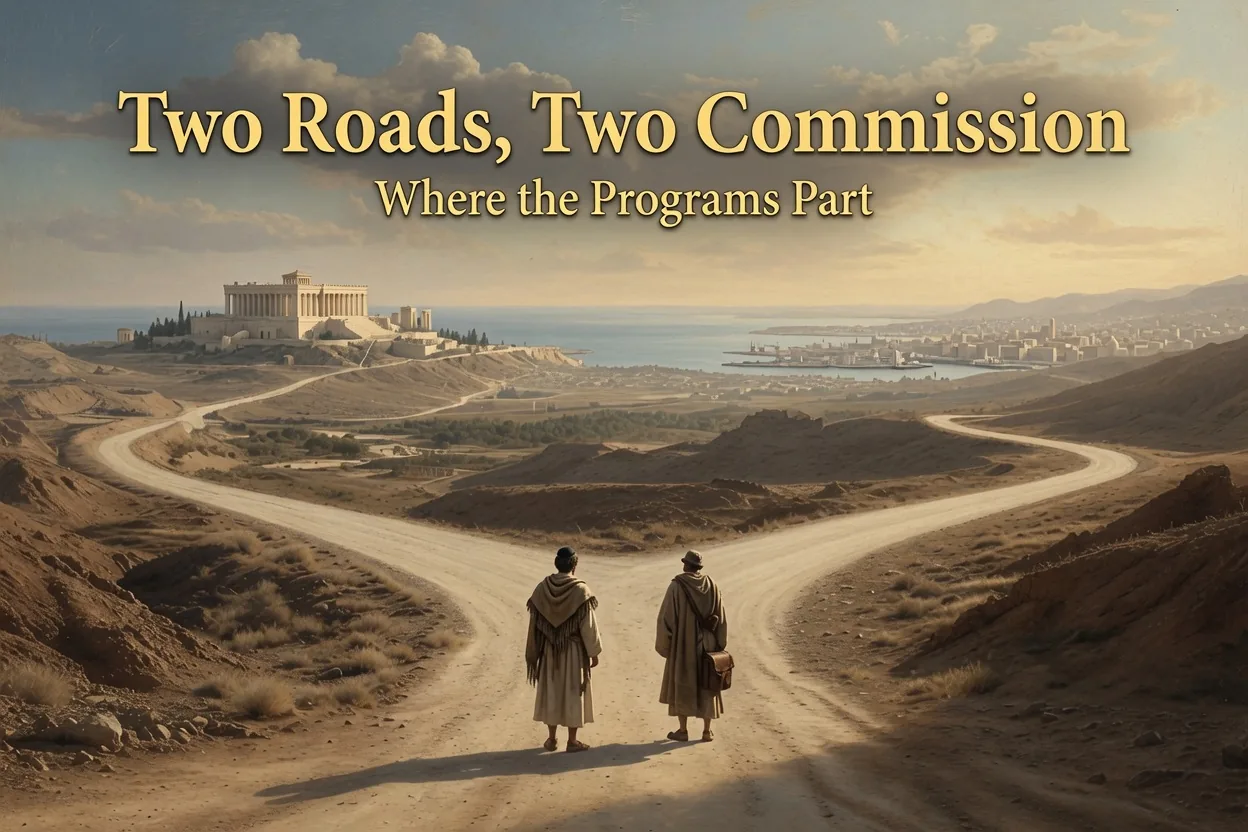
There is a verse in Ephesians that regularly trips up students of Paul's letters, and it does so in two directions at once. Some read it and conclude that the mystery Paul describes in Ephesians 3 must have been known before Paul, since apostles and prophets already possessed it. Others read it and worry that naming these apostles undermines the uniqueness of Paul's revelation. Both concerns dissolve under careful right division, but doing that work reveals something more important than resolving a textual puzzle: it reveals that the Bible distinguishes between two entirely separate apostleships operating in two entirely separate programs — and that understanding this distinction is the key to reading a substantial portion of Paul's letters correctly.
The verse is Ephesians 3:5.
"Which in other ages was not made known unto the sons of men, as it is now revealed unto his holy apostles and prophets by the Spirit;" (Ephesians 3:5 KJV)
Who are these holy apostles and prophets? They are not the twelve apostles of Israel. They are not the prophets of the Old Testament. They are apostles and prophets belonging to the Body of Christ — men raised up after Paul's conversion to lay the foundational work of the mystery program as it spread among the Gentiles and the blinded of Israel during the transitional Acts period. Understanding who they are, how they differ from the Twelve, and why that difference explains Paul's otherwise puzzling references to Peter in letters written to his own Gentile churches — that is the work of this article.
The Verse in Its Context
To read Ephesians 3:5 correctly, you must read it in light of the verses directly surrounding it. Paul has just described the mystery — the hidden secret that God kept from all previous ages and generations:
"How that by revelation he made known unto me the mystery; (as I wrote afore in few words, Whereby, when ye read, ye may understand my knowledge in the mystery of Christ)" (Ephesians 3:3-4 KJV)
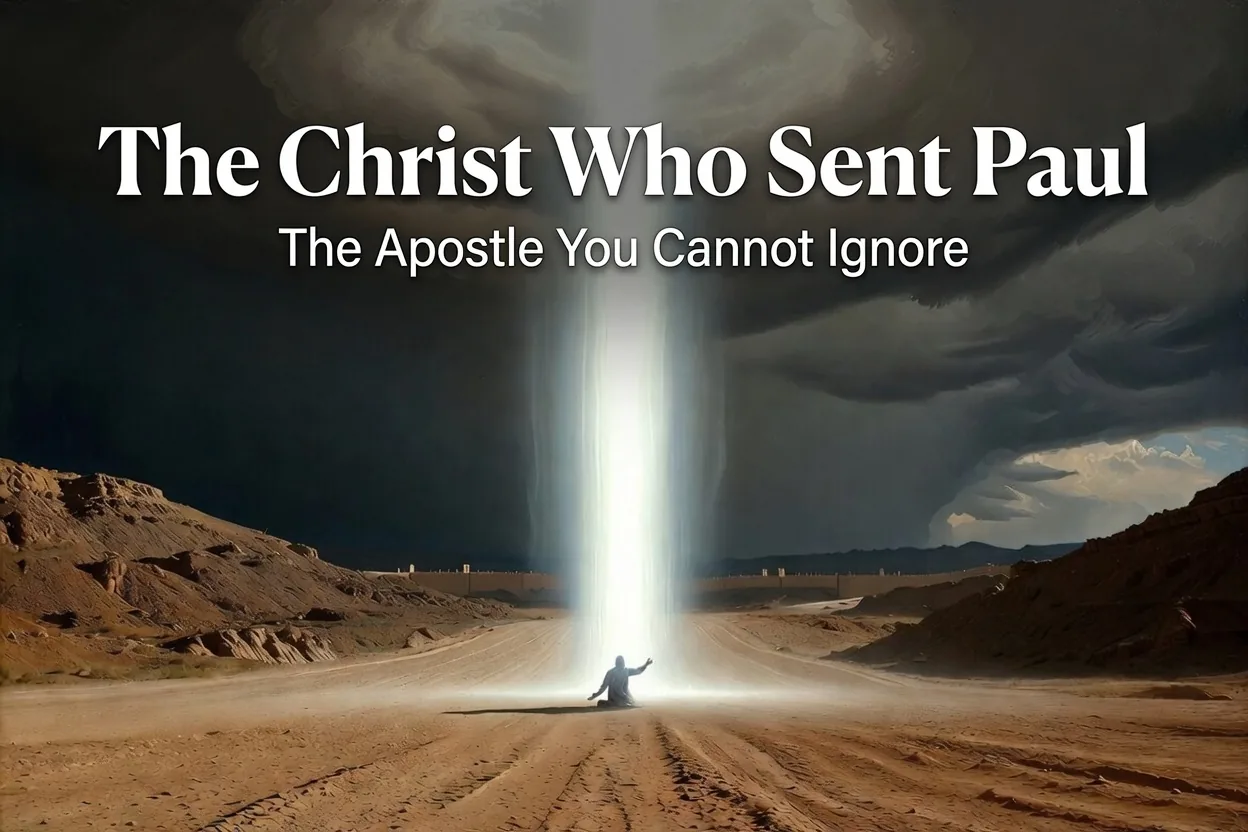
The mystery was made known to Paul by revelation. That is not a small claim. Paul did not learn it from the Twelve. He did not piece it together from the prophets. He received it directly from the risen Christ by divine disclosure. This is the same ground he defends at length in Galatians:
"But I certify you, brethren, that the gospel which was preached of me is not after man. For I neither received it of man, neither was I taught it, but by the revelation of Jesus Christ." (Galatians 1:11-12 KJV)
Paul was first. He was the pioneer. The mystery reached humanity through him — and him alone — by the direct act of the risen, glorified, ascended Lord Jesus Christ. Ephesians 3:5 does not dispute that. Notice carefully what it says: the mystery was not made known in other ages, as it is now revealed unto his holy apostles and prophets by the Spirit. The adverb as is doing critical work. The comparison is not between what the Twelve knew and what Paul knew. It is between the previous ages of concealment and the present age of revelation. Paul received the mystery first; the holy apostles and prophets of verse 5 received it from Paul, through the Spirit, as the mystery was being established in the early churches. They received it as it is now revealed — that is, in this present age of revelation that Paul opened.
This reading is confirmed by verses 2 and 3: the dispensation of grace was given to Paul. The mystery was made known to him. Then, from Paul outward, it spread — through the Spirit's work in the apostles and prophets who were given to the Body of Christ as foundational gifts.
What "Holy" Signals
Paul does not call the twelve apostles "holy apostles" anywhere. He does not call the Old Testament prophets "holy apostles." The phrase is specific. The word translated "holy" carries the sense of set apart — consecrated for a particular purpose. These apostles and prophets were set apart specifically for the mystery program. They were not apostles of the kingdom gospel preached since the world began. They were apostles of the mystery that had been kept secret since the world began.
This is why the word functions as a marker. When Paul writes "holy apostles and prophets" in Ephesians 3:5, he is signaling that these are distinct from every previous apostle or prophet in the history of Scripture. No one before Paul received the mystery. The mystery was hidden from ages and from generations (Colossians 1:26). That means it was hidden from the patriarchs, from Moses, from the prophets, from the Twelve, from John the Baptist, from everyone who lived and ministered in any prior age. The holy apostles and prophets of Ephesians 3:5 are therefore a category that could not have existed before Paul's conversion on the Damascus road. They are a post-Acts-9 phenomenon — men raised up after the mystery was first given, to help lay its foundation as Paul's ministry spread outward.
Paul Was First — But Not the Only
That Paul was first is beyond dispute. He says so explicitly in the very passage where he describes these other apostles:
"If ye have heard of the dispensation of the grace of God which is given me to you-ward: How that by revelation he made known unto me the mystery; (as I wrote afore in few words," (Ephesians 3:2-3 KJV)
To the Corinthians he is even more direct:
"For I delivered unto you first of all that which I also received, how that Christ died for our sins according to the scriptures;" (1 Corinthians 15:3 KJV)
First of all. Paul received it first. He delivered it first. But having received it first, he did not hold it alone. Paul was one man. He could not be in every city at once. He could not write to every church simultaneously or personally plant every congregation. As Paul's ministry expanded and the mystery began to take root among the Gentiles and the blinded of Israel, the Spirit equipped others to labor alongside him — to go where Paul could not go, to strengthen what he had planted, to proclaim the same mystery gospel to those who had not yet heard it.
This is precisely what Paul describes when he writes of gifts given to the Body of Christ:
"And God hath set some in the church, first apostles, secondarily prophets, thirdly teachers, after that miracles, then gifts of healings, helps, governments, diversities of tongues." (1 Corinthians 12:28 KJV)
And again in Ephesians:
"And he gave some, apostles; and some, prophets; and some, evangelists; and some, pastors and teachers; For the perfecting of the saints, for the work of the ministry, for the edifying of the body of Christ:" (Ephesians 4:11-12 KJV)
These gifts — including the apostolic gift — were given to the Body for the purpose of building it up until the complete revelation of the mystery was in hand. Once the foundation was fully laid and the word of God was fulfilled through Paul's completed epistles, the foundational gifts were no longer needed. But during the formative period of the mystery church, the Spirit placed apostles and prophets within the Body who received and proclaimed the mystery truths that Paul first received and who helped establish those truths in the early congregations.
The Men Paul Named
Paul identifies several of his co-laborers in terms that make their apostolic standing explicit. These are not the Twelve. These are mystery-age apostles, raised up for the Body of Christ.
Barnabas. Acts 14:14 is unambiguous: "Which when the apostles, Barnabas and Paul, heard of, they rent their clothes." (Acts 14:14) Barnabas is called an apostle — not one of the Twelve (he is never listed among them), but an apostle sent by the Spirit alongside Paul in the mystery ministry. His commission came out of Antioch, not Jerusalem, and it was given by the Holy Ghost specifically for the Gentile mission:
"As they ministered to the Lord, and fasted, the Holy Ghost said, Separate me Barnabas and Saul for the work whereunto I have called them." (Acts 13:2 KJV)
Timothy and Silvanus. In 1 Thessalonians 2:6, Paul writes in the first person plural — "we" — and then identifies that "we" as having been apostles: "Nor of men sought we glory, neither of you, nor yet of others, when we might have been burdensome, as the apostles of Christ." (1 Thessalonians 2:6) The "we" throughout that letter's opening is Paul, Silvanus, and Timotheus (1 Thessalonians 1:1). Timothy and Silvanus are included in this apostolic identification. They were not apostles of Israel — they were apostles of the mystery, sent with Paul for the Gentile mission.
Epaphroditus. Philippians 2:25 calls him "your messenger" — but the word translated "messenger" is the same word translated "apostle" elsewhere. It is the word behind the concept, though the KJV renders it by its meaning rather than transliterating it. Epaphroditus functioned as a sent one — an apostolic messenger serving the Body's ministry.
Apollos. Apollos is named more carefully, but the same standing emerges. He came to Ephesus an Alexandrian Jew "mighty in the scriptures," yet "knowing only the baptism of John" (Acts 18:24-25) — still standing in Israel's preparation. Paul's own grace co-workers, Aquila and Priscilla, "expounded unto him the way of God more perfectly" (Acts 18:26), and from that point he labored among those "which had believed through grace" (Acts 18:27), watering in the same field where Paul had planted (1 Corinthians 3:6). He is plainly in the Body. And Paul does not leave him merely a minister: the first person plural runs unbroken through 1 Corinthians 3 and 4 — Paul and Apollos the ministers of 3:5, the "stewards of the mysteries of God" of 4:1, the figure of the planting and watering "transferred to myself and to Apollos" in 4:6, and that same "we" named at the last "us the apostles" in 4:9. Because the pronoun is fixed to Apollos by name in verse 6, he stands inside the apostles when verse 9 arrives. That the word minister is also used of him is no obstacle — Paul stands in that same company of ministers and is himself an apostle; the two name one office here, not two ranks. And the very mark that includes Apollos excludes Cephas, who appears in these chapters only among the things the saints possess (1 Corinthians 3:22): the apostles of chapter four are stewards of the mystery, and Cephas was never a steward of what the Twelve did not know.
These men are the "holy apostles and prophets" of Ephesians 3:5. They are Body-of-Christ apostles who received the mystery through the Spirit as it was being proclaimed through Paul, and who laid foundational work in the early churches as the mystery program expanded from its starting point in Paul's ministry.
Not one of them — Paul, Barnabas, Timothy, Silvanus, Epaphroditus, or Apollos — could have had any part in the specific ministry of the Twelve. Acts 1 makes the nature of that ministry explicit. Speaking of Judas, Peter said: "For he was numbered with us, and had obtained part of this ministry." (Acts 1:17). And of Matthias: "That he may take part of this ministry and apostleship, from which Judas by transgression fell, that he might go to his own place." (Acts 1:25). This ministry — the ministry Judas held and Matthias was chosen to fill — was the specific apostolic office of the twelve witnesses who had companied with Christ from the baptism of John through the ascension. It was a numbered, bounded, historically grounded office. It had exactly twelve seats. Judas vacated one; Matthias filled it. The ministry was complete.
Paul could not be numbered with the Twelve — he had persecuted them during the very years that would have qualified him. Barnabas was never among the Twelve; his commission came from Antioch, not Jerusalem. Timothy was the son of a Greek father, born after the earthly ministry of Christ had ended. Silvanus came into the mission after Paul's second journey began. Epaphroditus was a Philippian believer sent to serve Paul in his imprisonment. Apollos knew only the baptism of John as a teaching and had companied with the Lord not at all — an Alexandrian Jew who first heard the way of God more perfectly from Paul's co-workers. None of them had companied with the Lord from the baptism of John. None of them had witnessed the whole of the earthly ministry. None of them could take part in this ministry — the kingdom apostleship of Israel's Twelve — because that ministry had been filled, completed, and closed.
The Twelve: Apostles of a Different Program
The contrast with the Twelve is the other side of the coin — and it must be stated clearly, because a great deal of confusion in Christianity flows from blending these two apostleships as if they were variants of the same thing.
The twelve apostles were chosen by Christ during His earthly ministry to Israel. Their commission was explicitly bounded by Israel's prophetic program:
"These twelve Jesus sent forth, and commanded them, saying, Go not into the way of the Gentiles, and into any city of the Samaritans enter ye not: But go rather to the lost sheep of the house of Israel." (Matthew 10:5-6 KJV)
Their qualification for the apostleship was specific and non-negotiable. When Judas had to be replaced, Peter articulated the standard:
"Wherefore of these men which have companied with us all the time that the Lord Jesus went in and out among us, Beginning from the baptism of John, unto that same day that he was taken up from us, must one be ordained to be a witness with us of his resurrection." (Acts 1:21-22 KJV)
The requirement was physical presence throughout Christ's earthly ministry, from the baptism of John to the ascension. This was the credential of the kingdom apostleship. They had walked with the Lord in the flesh. They were eyewitnesses from the beginning of His public ministry. They were specifically positioned to be witnesses to Israel of the resurrection of the promised Messiah-King.
This ministry was a numbered and defined office. Acts 1:17 describes what Judas had held — "For he was numbered with us, and had obtained part of this ministry" — and Acts 1:25 names what Matthias was chosen to fill — "That he may take part of this ministry and apostleship, from which Judas by transgression fell." The phrase this ministry and apostleship is precise. It is not apostolic ministry in general. It is the specific numbered ministry of the Twelve, grounded in eyewitness companionship with Christ from the baptism of John. Matthias qualified. He had been present. He was numbered in. The office was restored to its full complement of twelve — and then it was closed. There was no thirteenth seat in the ministry Judas had obtained and Matthias recovered.
Paul met none of these qualifications. He had not companied with the Lord from the baptism of John. He had not followed the Twelve through the years of the earthly ministry. During those years he was in the opposite camp — persecuting the disciples, consenting to their deaths, breathing out threatenings against the church. He himself acknowledges this:
"For I am the least of the apostles, that am not meet to be called an apostle, because I persecuted the church of God." (1 Corinthians 15:9 KJV)
Paul was not a thirteenth member of the Twelve. He was not an extension of their apostleship. He was the first member of an entirely different apostleship — the apostleship of the mystery, commissioned by the risen and ascended Christ rather than by the earthly Christ who walked with Israel.
The Twelve were apostles of prophecy — things spoken since the world began (Acts 3:21). Paul was the apostle of the mystery — things kept secret since the world began (Romans 16:25). These are two different programs, and they produced two different apostleships.
The Two Apostleships Side by Side
The clearest biblical statement of the division comes from Paul's own account in Galatians. When he finally met with the leadership of the Jerusalem church — Peter, James, and John, the recognized pillars — the outcome was a formal division of jurisdictions:
"But contrariwise, when they saw that the gospel of the uncircumcision was committed unto me, as the gospel of the circumcision was unto Peter; (For he that wrought effectually in Peter to the apostleship of the circumcision, the same was mighty in me toward the Gentiles:) And when James, Cephas, and John, who seemed to be pillars, perceived the grace that was given unto me, they gave to me and Barnabas the right hands of fellowship; that we should go unto the heathen, and they unto the circumcision." (Galatians 2:7-9 KJV)
This is one of the most carefully worded passages in Paul's letters. The Galatians 2 agreement is not a polite handshake between colleagues who happen to have slightly different audiences. It is the formal recognition of two distinct apostleships with two distinct gospels, two distinct jurisdictions, and two distinct programs — both authorized by God, but authorized for entirely different purposes.
The gospel of the circumcision was Peter's. It was rooted in the prophetic program — the fulfillment of the promises made to the fathers, the covenants given to Israel, the kingdom offered to the nation through its promised Messiah-King. Peter's message at Pentecost was the proclamation of fulfilled prophecy and the call to national repentance: "Repent, and be baptized every one of you in the name of Jesus Christ for the remission of sins" (Acts 2:38). This was Israel's program, addressed to the circumcision, requiring the national response that the kingdom demanded.
The gospel of the uncircumcision was Paul's. It was the mystery hidden from ages — the death, burial, and resurrection of Christ as the complete and sufficient basis for the forgiveness of all sins and the position of every believer in Christ Jesus, received by faith alone apart from any works, law, or national identity. This was Paul's gospel, addressed to the Gentiles and to all those reckoned as uncircumcision, offered freely to any who would believe.
The pillars recognized both. They gave the right hand of fellowship — the formal acknowledgment of Paul's distinct, divinely-given commission. And they agreed on territories: Paul to the uncircumcision, the Twelve to the circumcision. Two programs. Two apostleships. One Bible.
Why the Twelve Cannot Be the Holy Apostles of Ephesians 3:5
This distinction makes clear why the "holy apostles and prophets" of Ephesians 3:5 cannot possibly be the Twelve. The argument is straightforward.
The mystery was hidden from all ages and generations before Paul (Colossians 1:26). It was hidden from every previous man of God, including every Old Testament prophet and every one of the Twelve. The Twelve were given understanding of the prophets at Pentecost — "Then opened he their understanding, that they might understand the scriptures" (Luke 24:45) — but understanding the prophets is understanding prophecy, not the mystery. The two are explicitly contrasted in Romans 16:25-26:
"Now to him that is of power to stablish you according to my gospel, and the preaching of Jesus Christ, according to the revelation of the mystery, which was kept secret since the world began, But now is made manifest, and by the scriptures of the prophets, according to the commandment of the everlasting God, made known to all nations for the obedience of faith:" (Romans 16:25-26 KJV)
The mystery was kept secret — that is, hidden — while the prophetic scriptures were spoken since the world began. The mystery was not in those scriptures. It was hidden from them. The prophets wrote of the kingdom program — the covenants, the nation, the coming King — and the Twelve received illumination of those prophetic scriptures at Pentecost. But the mystery entered written Scripture only when the risen Christ gave it to Paul by direct revelation and Paul wrote his epistles. The holy apostles and prophets who received it in Ephesians 3:5 received it through Paul — not through any prior scripture, because no prior scripture contained it.
Peter himself confirms this from his own side. He calls Paul's letters scripture — placing them on the same level as the other holy scriptures — and acknowledges that they contain things "hard to be understood." If Peter had received the same mystery revelation as Paul, Paul's letters would not be hard for Peter to understand. He would have known the content already. His acknowledgment of difficulty is an honest concession that Paul's revelation came from a source and through a channel that the Twelve did not share:
"And account that the longsuffering of our Lord is salvation; even as our beloved brother Paul also according to the wisdom given unto him hath written unto you;" (2 Peter 3:15 KJV)
The wisdom given unto him — unto Paul, not unto Peter and the Twelve. The distinction is Peter's own.
Two Programs in One Geography — The Acts Period Collision
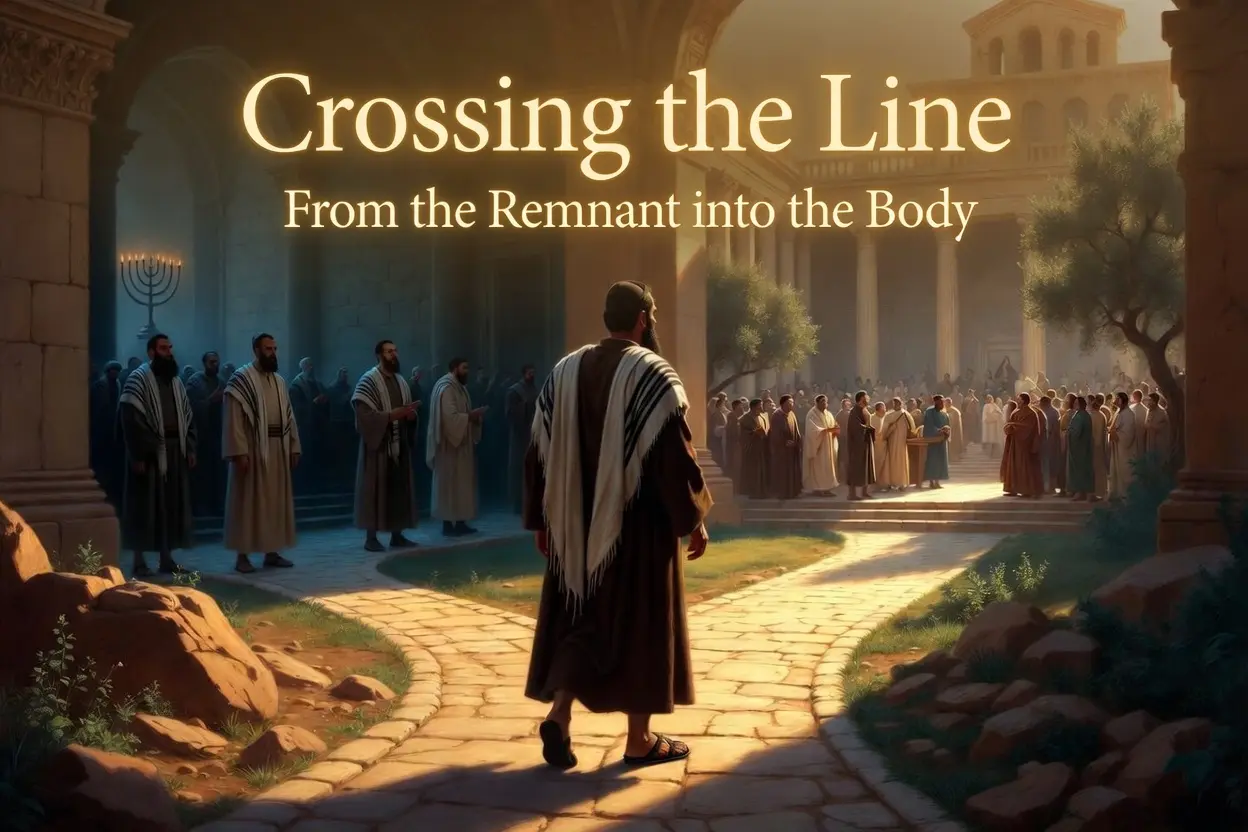
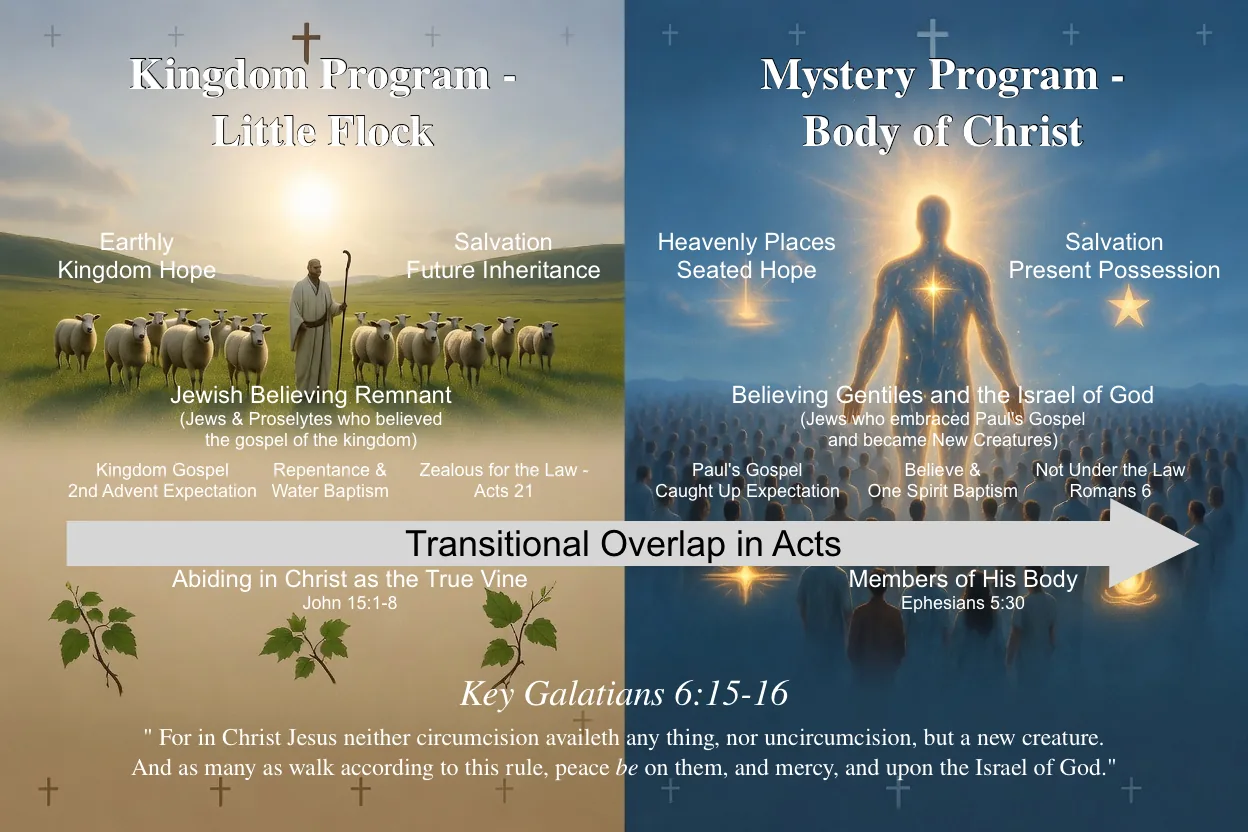
Here is the point that unlocks the most puzzling feature of Paul's letters: throughout the book of Acts, the two programs — Peter's circumcision gospel and Paul's mystery gospel — were operating simultaneously in the same geographic world. They were doctrinally distinct, but they were not geographically separated. The cities Paul visited already had synagogues. Jewish believers from Jerusalem, converts of Peter's Pentecost preaching and the early Acts ministry, were present in many of the places Paul went. The believing Jewish remnant — the little flock, Israel's elect — existed in and around the same communities where Paul was planting mystery-program churches.
This overlap was not an accident. God orchestrated it as part of His plan for the Acts period — to provoke Israel to jealousy through the Gentiles receiving Paul's gospel (Romans 11:11, 14), and to confirm Paul's apostleship through signs and wonders in the presence of Jewish observers who required signs. But the overlap also created a collision. Where two programs operate in the same physical space with the same population, the risk of doctrinal contamination is severe. And that contamination is precisely what Paul deals with throughout his letters — most explicitly and at greatest length in Galatians, but also in Romans, Corinthians, Philippians, and Colossians.
The reality of this simultaneous operation is nowhere more vivid than in Acts 21, when Paul returned to Jerusalem late in the Acts period. James and the elders reported to him: "Thou seest, brother, how many thousands of Jews there are which believe; and they are all zealous of the law:" (Acts 21:20). Thousands of Jewish believers in Jerusalem — still zealous for the law. They were not wrong to be so. The law remained operative within the circumcision program. The believing Jewish remnant was still the little flock in their own program, and the ordinances of that program — circumcision, the law, the temple observances — remained the structure of their covenantal life. What James was reporting to Paul was not a theological error among the Jerusalem believers. It was the legitimate circumcision program running its course alongside Paul's mystery program, in the same city, at the same time. Two programs, two sets of obligations, two apostleships — and both were of God.
The same was true of Jewish remnant assemblies scattered throughout Gentile territory. The diaspora — Jewish believers dispersed across Pontus, Galatia, Cappadocia, Asia, and Bithynia — remained under the teaching of the Twelve. Peter, James, and John continued shepherding those communities through their epistles, which is precisely what those letters are: apostolic instruction to the little flock in their dispersion. These assemblies were not in error. They were in their program, under their apostles, awaiting either the arrival of the kingdom or the end — whether their own deaths or the deaths of those appointed to lead them. Their program had given them no promise of a pre-tribulation exit. It had given them a kingdom and a command: "But he that shall endure unto the end, the same shall be saved." (Matthew 24:13). They were a remnant people called to hold fast through persecution, trial, and death if necessary, trusting the promise of the kingdom their Messiah had pledged to establish. Their existence alongside Paul's Gentile churches in the same geographic regions was not a theological problem — it was the Acts-period reality in plain view, with two programs operating in overlapping territory, each under its own appointed apostleship.
The circumcision party — often called Judaizers — was the visible form of this collision. These were men who came out of the Jewish believing community and followed Paul's missionary circuits, entering his newly planted Gentile churches and teaching that Gentile believers needed to be circumcised and keep the law of Moses in order to be fully and properly saved:
"And certain men which came down from Judaea taught the brethren, and said, Except ye be circumcised after the manner of Moses, ye cannot be saved." (Acts 15:1 KJV)
These men were not pagans. They were not enemies of Jesus. They were believers — part of the circumcision community — who had never been given the mystery revelation that justified Gentile inclusion apart from the law. From within their own program, their teaching was internally coherent: Israel's covenant always included circumcision as the entry requirement for Gentile inclusion. The mystery that Gentiles are full members of the Body of Christ on the same terms as Jewish believers, without circumcision and without law, was precisely the thing that had been hidden from them. They did not know what Paul knew. And they were teaching his converts accordingly — with devastating effect on the doctrine of grace.
This is the crisis of the Galatian letter. Paul's language in Galatians is the most forceful in all his epistles precisely because the doctrinal stakes were absolute:
"I marvel that ye are so soon removed from him that called you into the grace of Christ unto another gospel: Which is not another; but there be some that trouble you, and would pervert the gospel of Christ. But though we, or an angel from heaven, preach any other gospel unto you than that which we have preached unto you, let him be accursed." (Galatians 1:6-8 KJV)
The Galatians had not abandoned Christ. They had allowed the mixing of two programs — the circumcision gospel and the mystery gospel — in a way that perverted the gospel of grace. And the tool being used to achieve that mixing was the authority of the Jerusalem apostles.
Before pressing further, a critical question must be answered: does Paul's curse in Galatians 1:8-9 fall on Peter and the Twelve for preaching the gospel of the circumcision? The answer is no — and understanding why is essential for reading both the anathema and the two-program distinction correctly.
The Galatian anathema is addressed to Paul's own audience. The Galatians were Gentile believers whom Paul had won to the mystery gospel of grace. The curse falls on anyone who preaches a different gospel to them — to Paul's people, in Paul's jurisdiction. The offense of the Judaizers was not that they held to the circumcision gospel. Their offense was that they crossed jurisdictional lines and preached a circumcision-program message to people who had been called by Paul's gospel. They took a message that was true for its own audience and delivered it to the wrong audience — and in doing so, they perverted the gospel of grace for those who had received it.
Peter preaching the circumcision gospel to the circumcision — to the believing Jewish remnant, to the little flock of Israel — was not a violation of Paul's warning. It was Peter's God-ordained commission, confirmed by the right-hand-of-fellowship agreement of Galatians 2:7-9. The Twelve going to the lost sheep of the house of Israel with the message of the risen Messiah-King and calling for national repentance was the prophetic program running its proper course to its proper audience. God authorized it. Paul never condemned it. The Jerusalem conference of Acts 15 affirmed it — Peter had his program, Paul had his, and the division of jurisdictions held them apart.
The anathema lands where the programs are crossed. It is only a curse when the circumcision gospel is brought to those to whom Paul was sent — the Gentiles and the unbelieving Jews who were not part of the believing remnant, the ones reckoned as uncircumcision in God's accounting. Those people had been called by Paul's gospel of grace. To tell them they must be circumcised and keep the law was to add to grace, and adding to grace destroys grace entirely:
"And if by grace, then is it no more of works: otherwise grace is no more grace." (Romans 11:6 KJV)
The Judaizers were not simply preaching the circumcision gospel in its own territory. They were importing it into Paul's territory and demanding that his converts receive it. That is the violation. That is what drew the curse. The geographic and jurisdictional overlap of the Acts period is precisely what made this collision possible — and made Paul's forceful defense of the mystery gospel in Galatians necessary.
Why Paul References Peter — The Doctrinal Stakes
It is the right question to press. Why does Paul name Peter in letters written to Gentile churches in Galatia and Corinth? Peter was not Paul's apostle. Peter was not the apostle of the Gentiles. His commission ran in the opposite direction. What is Peter doing in Paul's letters?
The answer is precise: Paul references Peter because Peter's authority was being used — and sometimes Peter's own behavior warranted — to undermine the mystery gospel in Paul's churches.
The Galatian situation is the clearest case. After Paul establishes the independent origin of his gospel in Galatians 1, he moves in chapter 2 to his biographical account — and Peter is central to both parts of it.
First, Paul's Jerusalem visit (Galatians 2:1-10). Paul went up to Jerusalem by revelation and laid before the pillar apostles the gospel he preached among the Gentiles. The result was the right-hand-of-fellowship agreement already cited. Peter, James, and John added nothing to Paul's message and accepted the formal division of jurisdictions. This account serves a critical doctrinal purpose in the Galatian letter: it establishes that even the Jerusalem apostles, when given the full account of Paul's gospel, confirmed it and added nothing to it. The pillars of the circumcision program did not require Paul's converts to be circumcised. They did not insist that Gentiles come under the law. They recognized that Paul's commission was genuinely of God and that his gospel was distinct and complete. If the Judaizers in Galatia were appealing to the authority of Jerusalem to justify their teaching, Paul's account of Jerusalem's actual position destroys that appeal at its root.
Second, the Antioch incident (Galatians 2:11-14). This is where the matter becomes painfully concrete:
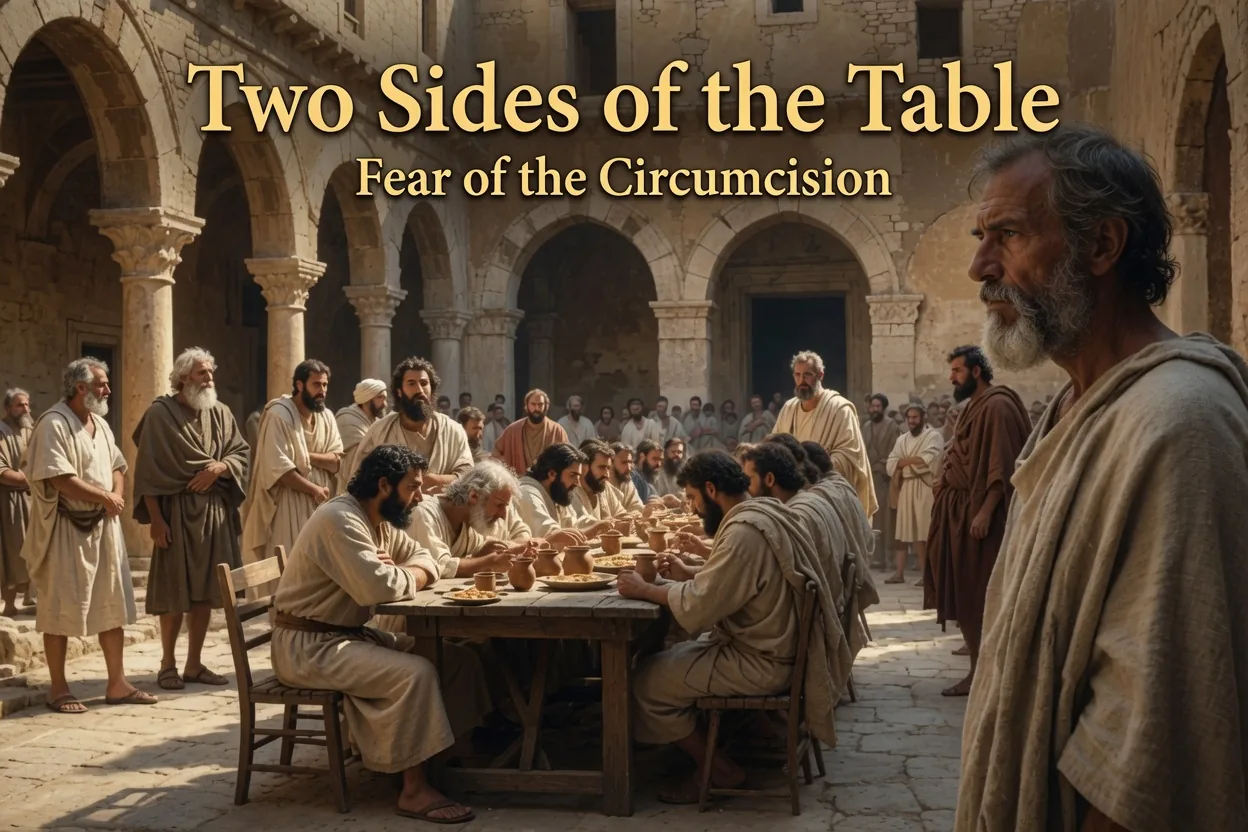
"But when Peter was come to Antioch, I withstood him to the face, because he was to be blamed. For before that certain came from James, he did eat with the Gentiles: but when they were come, he withdrew and separated himself, fearing them which were of the circumcision. And the other Jews dissembled likewise with him; insomuch that Barnabas also was carried away with their dissimulation. But when I saw that they walked not uprightly according to the truth of the gospel, I said unto Peter before them all, If thou, being a Jew, livest after the manner of Gentiles, and not as do the Jews, why compellest thou the Gentiles to live as do the Jews?" (Galatians 2:11-14 KJV)
What happened at Antioch exposes exactly how the two-program collision worked in practice. Peter was eating with the Gentile believers — acting in accordance with what God had shown him at Caesarea in Acts 10. He was not operating under the mystery program. He was acting on the enlarged understanding Christ had given him within his own circumcision program: that God is no respecter of persons, that Gentiles who feared God were acceptable to Him, and that the old ceremonial wall of separation between Jew and Gentile table fellowship was not to be called common or unclean. That was the lesson of the sheet let down from heaven and the Spirit falling on Cornelius's household without circumcision. Peter knew it. He had defended it before the circumcision brethren in Jerusalem (Acts 11:1-18). When he arrived at Antioch and ate with the Gentiles, he was behaving consistently with what Christ had already taught him.
Then men came from James in Jerusalem — from the circumcision program's center — and Peter withdrew. He separated himself from the Gentiles. He stopped eating with them. He behaved as though Acts 10 had never happened — as though the old distinction still governed the table in a way that God Himself had set aside. And because Peter was who he was — the recognized pillar of the Jerusalem church, the man whose ministry stood behind every circumcision-believing Jewish convert in every room — his reversal carried doctrinal weight whether he intended it or not. Even Barnabas was swept along.
Peter's failure was therefore a double violation. He was acting against the truth Christ had already revealed to him in his own program — that God had cleansed what Peter was now calling unclean again by his withdrawal. And his behavior in a setting where Gentile believers of Paul's churches were present was simultaneously violating the mystery truth that those Gentiles were fully accepted members of the Body of Christ, complete in Him, with no wall of partition remaining. Peter was not confused about either truth. He knew what Acts 10 had taught him. He knew the Jerusalem agreement had formally recognized Gentile acceptance. His sin was not ignorance — it was fear. He feared the circumcision party and let that fear override both what God had shown him and the practical implications it carried for his conduct in a mixed assembly.
Paul's rebuke is not personal anger at Peter. It is a doctrinal intervention. Peter's withdrawal was not just socially awkward — it was preaching a message. It was demonstrating to the Gentile believers at Antioch that they were somehow less than fully accepted, that their fellowship with Jewish believers was conditional on factors neither program had authorized, that the table separation God had abolished at Caesarea was still in force. The behavior was compelling the Gentiles to live as Jews. It was doing with social pressure what the Judaizers were doing with theological argument — and it was inexcusable precisely because Peter, of all men, had the least ground to stand on. God had already shown him the answer.
"For he is our peace, who hath made both one, and hath broken down the middle wall of partition between us;" (Ephesians 2:14 KJV)
Paul withstood Peter publicly because the error was public and the audience — the Galatian churches — needed to see clearly that Peter's momentary compromise was not consistent with the truth of the gospel Paul had delivered to them. If Paul had said nothing, or had addressed it privately, the Galatians would have been left with the impression that even their own apostle tacitly agreed with what Peter's behavior implied. The public rebuke was the necessary doctrinal correction. It was not a condemnation of the circumcision program itself — Acts 21:20 records thousands of Jewish believers in Jerusalem still zealous for the law late in the Acts period, and neither Paul nor James treated that as anything but right and proper within their program.
Paul's Reference to Peter at Corinth — Another Angle
Galatians is not the only place Peter appears in Paul's letters. In 1 Corinthians, Peter (called by his Aramaic name Cephas) appears in the context of the factional divisions that were tearing the Corinthian church apart:
"Now this I say, that every one of you saith, I am of Paul; and I of Apollos; and I of Cephas; and I of Christ." (1 Corinthians 1:12 KJV)
A faction at Corinth was claiming Peter as its banner — not Paul, not Apollos, but Cephas. The presence of a Cephas party in a Pauline church in Corinth is exactly what we should expect given the Acts-period overlap. Peter's ministry touched areas in which Paul also ministered. Jewish believers from the circumcision program, or those who had come under Peter's influence, were present in Paul's churches and were apparently using Peter's authority as a badge of doctrinal distinction — setting themselves apart from those who followed Paul's mystery revelation.
Paul's response to the Cephas party in 1 Corinthians is not to attack Peter. It is to attack the very concept of sectarian division built on apostolic names:
"Is Christ divided? was Paul crucified for you? or were ye baptized in the name of Paul?" (1 Corinthians 1:13 KJV)
The point is that no apostle's name — not Paul's, not Peter's — is the proper banner for a member of the Body of Christ. The Body is one body, with one Head, and the divisions being created by apostolic factionalism were carnal, not spiritual. But the fact that a Cephas faction existed at Corinth tells us something real about the Acts-period situation: the two programs were producing competing loyalties within the same congregations, and Paul had to address that directly.
Later in 1 Corinthians, Paul explicitly references Peter in a list of resurrection witnesses:
"And that he was buried, and that he rose again the third day according to the scriptures: And that he was seen of Cephas, then of the twelve:" (1 Corinthians 15:4-5 KJV)
This is not Paul deferring to Peter's authority. It is Paul marshaling the evidence for the resurrection — the very foundation of his gospel. Peter's witness to the resurrection is one point in a chain of evidence that culminates in Paul's own Damascus road encounter with the risen Christ (1 Corinthians 15:8). Paul cites Peter here as a resurrection witness, not as a doctrinal authority over his churches.
The Jerusalem Conference — The Formal Settlement
The Acts-period collision between the two programs came to its most visible institutional expression at the Jerusalem conference of Acts 15. The precipitating event was the Judaizer teaching in Antioch (Acts 15:1) — the same issue Paul addresses theologically in Galatians. The church at Antioch sent Paul and Barnabas to Jerusalem to resolve the question: must Gentile believers be circumcised and keep the law of Moses?
The conference involved the apostles and elders of Jerusalem in deliberation. Peter himself spoke, and his contribution is worth noting carefully:
"And when there had been much disputing, Peter rose up, and said unto them, Men and brethren, ye know how that a good while ago God made choice among us, that the Gentiles by my mouth should hear the word of the gospel, and believe. And God, which knoweth the hearts, bare them witness, giving them the Holy Ghost, even as he did unto us; And put no difference between us and them, purifying their hearts by faith. Now therefore why tempt ye God, to put a yoke upon the neck of the disciples, which neither our fathers nor we were able to bear?" (Acts 15:7-10 KJV)
Peter is here appealing to his own experience at Cornelius's house (Acts 10) — the moment when the Spirit fell on Gentiles without circumcision, without law-keeping, on the basis of faith alone. He argues from that experience that imposing circumcision and law on Gentile believers is putting a yoke on them that God Himself had not required. This is Peter, within the Acts period, recognizing that God had done something with Gentiles that the law of Moses did not account for.
James then gave the definitive ruling:
"Wherefore my sentence is, that we trouble not them, which from among the Gentiles are turned to God:" (Acts 15:19 KJV)
The ruling was that Gentile believers were not to be troubled with circumcision. A letter was sent to the Gentile churches stating this plainly (Acts 15:23-29). The Jerusalem church formally separated itself from the Judaizer position. The two programs were declared doctrinally distinct at the institutional level.
But — and this is critical for reading Acts correctly — the Jerusalem conference did not resolve the collision entirely. The Judaizers continued operating. The circumcision party continued following Paul's missionary circuits. The issues Paul addresses in Galatians almost certainly post-date Acts 15, because the behavior at Antioch (Galatians 2:11-14) reflects a continued blurring of the two programs even after the formal Jerusalem ruling. The problem was not merely institutional — it was the unavoidable result of two programs operating in overlapping geography during a transitional period when the mystery was still being established and the full revelation was not yet complete.
The Acts 28 Turning Point
The overlap between the two programs had a definitive end point. When Paul arrived in Rome and presented the gospel to the Jewish leaders there, and they largely rejected it, Paul pronounced a decisive word:
"Be it known therefore unto you, that the salvation of God is sent unto the Gentiles, and that they will hear it." (Acts 28:28 KJV)
This moment — Acts 28 — marks the effective close of the transitional period. The offer of the kingdom to Israel through Paul's synagogue ministry came to its final expression. After Acts 28, the mystery program is fully and unambiguously the operating program for this dispensation. The prison epistles — Ephesians, Philippians, Colossians, and Philemon — are written after Acts 28, from Rome. They are the most completely developed expression of the mystery in Paul's letters, written now that the transitional overlaps are behind him.
This is reflected in the content of those letters. The Acts-period transitional elements — signs, water baptism, synagogue ministry, the Judaizer controversy at its most acute — recede from view. What comes to the foreground is the Body of Christ's full, heavenly, grace-only position in Christ. The one baptism of Ephesians 4:5. The complete forgiveness of Colossians 2:13. The heavenly blessings of Ephesians 1:3. This is the mystery fully revealed and fully stated — no longer in the heat of the Acts-period collision, but in the settled clarity of the dispensation Paul was appointed to establish.
What the Two Apostleships Tell Us Now
The distinction between the holy apostles of Ephesians 3:5 and the twelve apostles of the little flock is not merely a historical curiosity. It carries direct implications for how the Body of Christ reads the Bible today.
First, it establishes the canonical boundary of your doctrine. Your apostles are Paul and those he identifies as apostles of the mystery — Barnabas, Silvanus, Timothy, Apollos, the holy apostles and prophets of Ephesians 3:5. The Twelve — Peter, James, John, and the rest — were apostles of Israel's circumcision program. Their letters are Scripture, and all Scripture is profitable (2 Timothy 3:16). But the Remnant Epistles — James, 1 and 2 Peter, 1, 2, and 3 John, Jude, Hebrews, and Revelation — were written to the believing Jewish remnant in their program, addressing their program's doctrine and concerns. They are not Paul's doctrine for the Body of Christ.
Second, it explains why Paul's references to Peter in Galatians and Corinthians are not endorsements of Peter's authority over Paul's churches. Every time Peter appears in Paul's letters, something doctrinal is at stake: the independence of Paul's revelation (Galatians 1-2), the division of jurisdictions (Galatians 2:7-9), the correction of program-blurring behavior (Galatians 2:11-14), or the warning against apostolic factionalism (1 Corinthians 1:12). Paul cites Peter not as his superior or his colleague in the same mission, but as evidence in a doctrinal argument — either to show that even Jerusalem confirmed his gospel, or to show the danger of letting the circumcision program's behavioral patterns bleed into the mystery program's churches.
Third, it protects the uniqueness of Paul's revelation. The holy apostles and prophets of Ephesians 3:5 received the mystery through Paul — not independently, not from a separate source. Paul was the masterbuilder (1 Corinthians 3:10). His co-laborers built on the foundation he laid. The mystery program has one originating revelation, given to one man by the risen Christ, and everything that followed was an extension and confirmation of that original disclosure. There is no secondary tradition, no parallel revelation through Peter or the Twelve that supplements or corrects what Paul received. The right hand of fellowship in Galatians 2 is the theological proof: the pillars of Jerusalem added nothing to Paul.
"But of these who seemed to be somewhat, (whatsoever they were, it maketh no matter to me: God accepteth no man's person:) for they who seemed to be somewhat in conference added nothing to me:" (Galatians 2:6 KJV)
Fourth, it grounds the believer's confidence in Paul's letters as the complete and authoritative word of God for this dispensation. Paul's command is not modesty — it is a statement of doctrinal fact:
"Wherefore I beseech you, be ye followers of me." (1 Corinthians 4:16 KJV)
"Be ye followers of me, even as I also am of Christ." (1 Corinthians 11:1 KJV)
Follow Paul — not because Paul is greater than Christ, but because Paul is the channel through whom the risen Christ speaks to the Body of Christ in this dispensation. The holy apostles of Ephesians 3:5 received and proclaimed what Paul first received. The mystery was not distributed equally among twelve men — it was concentrated in one apostle, confirmed by a circle of mystery-age co-laborers, and is now preserved in thirteen epistles that form the doctrinal core for every member of the Body of Christ.
The Foundation That Cannot Be Laid Again
Both Ephesians 2:20 and 1 Corinthians 3:10-11 describe the apostles and prophets of the mystery program as laying a foundation. A foundation is laid once. Once it is in, the building is constructed on top of it — but the foundation itself is not relaid with every new story of the structure.
"And are built upon the foundation of the apostles and prophets, Jesus Christ himself being the chief corner stone;" (Ephesians 2:20 KJV)
The apostles and prophets of this verse are the mystery apostles and prophets of Ephesians 3:5 — the same group, described now in their architectural function. They laid the foundation of the mystery church during the Acts period. That foundation is Paul's epistles — the completed word of God for this dispensation. It cannot and does not need to be relaid. There are no apostles of the Body of Christ today, because the foundational work is finished. The word of God is complete. The mystery has been fully revealed. What remains is what Paul commissioned Timothy to do — teach faithful men to teach others also (2 Timothy 2:2), and hold fast the form of sound words received from Paul (2 Timothy 1:13).
The men who claim apostleship today are claiming a foundational office that is no longer operative, for a foundation that has already been laid. Paul's own epistles are our apostolic authority — the direct written record of the mystery given by the risen Christ through His chosen vessel, confirmed by the holy apostles and prophets who served alongside him, and now preserved complete in the canon as the sufficient and final word for the Body of Christ.
Conclusion
Ephesians 3:5 is not a problem for mid-Acts right division — it is a confirmation of it. The holy apostles and prophets Paul names are not the Twelve. They are mystery-age apostles and prophets, raised up after Paul received the mystery, equipped by the Spirit to lay the foundational work of the mystery church as it spread outward from Paul's ministry during the transitional Acts period. Paul was first and unique in receiving the revelation. These men were given it through the Spirit as it was established in the early congregations.
The Twelve were apostles of a different program entirely — the circumcision program, rooted in the prophetic Scriptures spoken since the world began, addressing the believing Jewish remnant of Israel. Their apostleship is distinguished from Paul's by commission, qualification, message, jurisdiction, and purpose. The right hand of fellowship in Galatians 2 is the formal biblical record of that distinction, acknowledged by both sides.
Paul references Peter in his letters not because Peter held authority over his churches, but because the Acts-period geographic overlap between the two programs created real doctrinal collisions that required direct address. The circumcision party was using Jerusalem's authority to undermine the mystery gospel in Paul's churches. Peter's own behavior at Antioch gave that confusion a face. Paul's response — withstanding Peter to the face, documenting the incident, and using it as the opening of his fullest treatment of the grace gospel in Galatians — was the necessary doctrinal intervention that preserved the mystery gospel from being absorbed back into Israel's circumcision program.
Two apostleships. Two programs. One Bible — rightly divided.
That division is not a diminishment of either program. God authorized both. Both are Scripture. Both are true. But they are for different people in different programs at different times, and the member of the Body of Christ who understands the distinction will never again be confused by why Paul and Peter sound so different — or by why Paul, the apostle of the Gentiles, spent so much of his energy drawing the line between what was his and what was theirs.
© 2026 Edward R. Cross


Comments
No comments yet. Be the first to share your thoughts.
Leave a comment