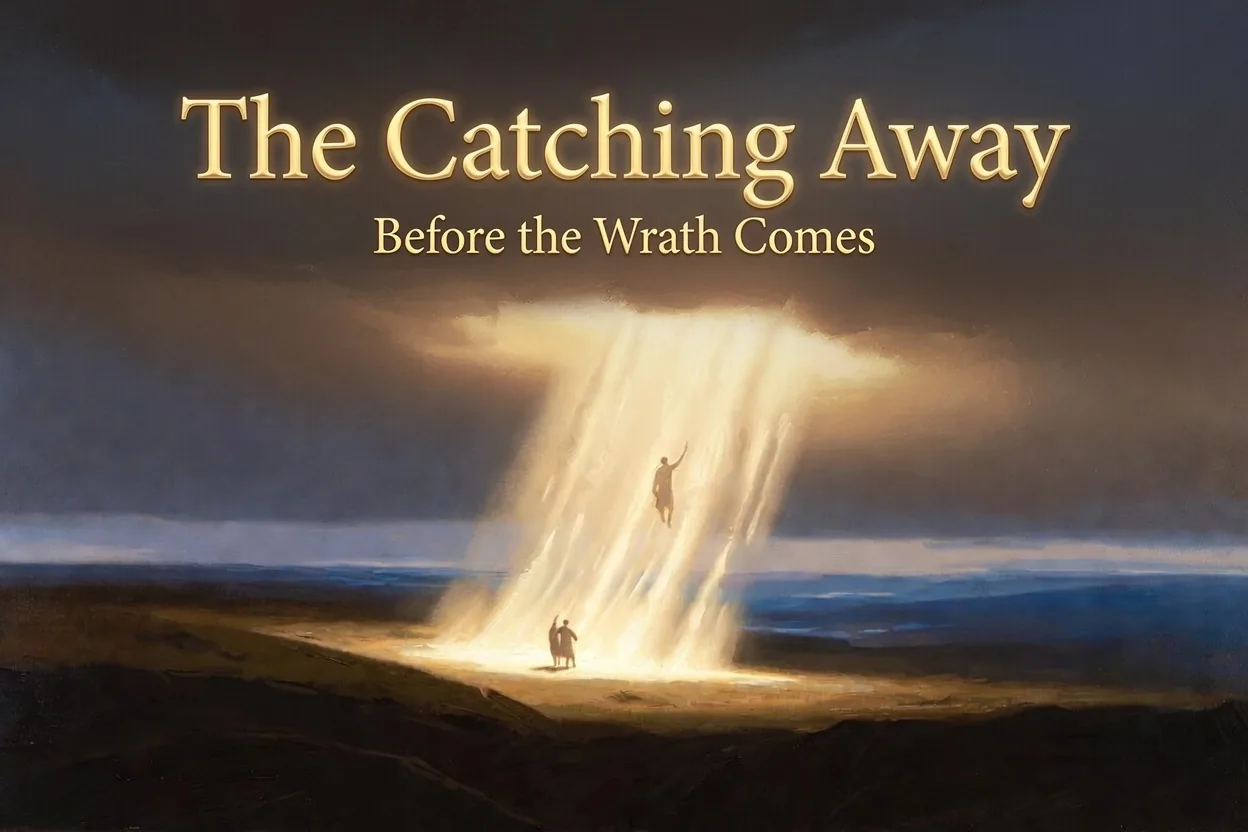
Most people who believe in a rapture can point you to 1 Thessalonians 4. Fewer can tell you why that passage exists at all — why it appears where it does, addressed to whom it is addressed, and why nothing like it appears anywhere before Paul writes it. That question matters. Because if the rapture is simply another name for the prophesied return of Christ, it belongs to a long chain of Old Testament prophecy. But if it is something God kept entirely hidden until He revealed it through the apostle Paul, then it belongs to the mystery — and that changes everything about who it applies to, when it happens, and what it means for the Body of Christ today.
The answer the Scriptures give is the second one. The rapture is part of the mystery. Paul calls it that himself. It was kept secret since the world began. The prophets did not see it. Israel is not waiting for it. The Body of Christ is.
A Hope Not Found in the Prophets
The prophetic Scriptures are rich with end-time expectation. The Old Testament speaks of resurrection, of the Lord coming in judgment, of a kingdom established on the earth, of Israel's restoration and the nations' reckoning. These things were not hidden. They were declared openly through the mouth of prophets for centuries.
But none of the prophets described the Body of Christ being caught up bodily into heaven to meet the Lord in the air before any of that unfolds. None of them spoke of a heavenly people, distinct from Israel, whose citizenship is in heaven, whose hope is not an earthly kingdom but a heavenly calling, and whose departure from this world is not through death or tribulation but through a catching away to meet the Lord Himself.
Search the prophets. Search Moses, Isaiah, Jeremiah, Ezekiel, Daniel, Zechariah. You will find resurrection for Israel's faithful, you will find the Lord coming in power and great glory, you will find judgment on the nations and the restoration of the twelve tribes. What you will not find is the Body of Christ being called up to meet the Lord in the air at a shout and a trump, before the day of wrath overtakes the world. That is not because the prophets failed to mention it. It is because it was not given to them to reveal it.
This is exactly what Paul says. Romans 16:25 puts it plainly:
"Now to him that is of power to stablish you according to my gospel, and the preaching of Jesus Christ, according to the revelation of the mystery, which was kept secret since the world began." (Romans 16:25 KJV)
Since the world began. That is not a missing footnote in the prophets. That is something God sealed up entirely until the moment He chose to reveal it — and the man He chose to reveal it through was Paul.
Paul Calls It a Mystery
In 1 Corinthians 15, Paul is making the case for bodily resurrection. He walks through the fact of Christ's resurrection, the witnesses who saw Him, and the implications for all who are in Christ. Then, near the close of the chapter, he introduces something he explicitly labels as previously unknown.
"Behold, I shew you a mystery; We shall not all sleep, but we shall all be changed, In a moment, in the twinkling of an eye, at the last trump: for the trumpet shall sound, and the dead shall be raised incorruptible, and we shall be changed." (1 Corinthians 15:51–52 KJV)
"Behold, I shew you a mystery." That is not a dramatic opener for something everyone already knew. In Paul's doctrinal vocabulary, a mystery is something God kept secret and then revealed. Colossians 1:26 defines it: "Even the mystery which hath been hid from ages and from generations, but now is made manifest to his saints." (Colossians 1:26) Ephesians 3:9 says it was "hid in God." Ephesians 3:5 says it "was not made known unto the sons of men, as it is now revealed unto his holy apostles and prophets by the Spirit" (Ephesians 3:5) — not the Old Testament prophets who spoke Israel's prophetic program, nor the twelve Jewish apostles of the circumcision, but the apostles and prophets given as gifts to the Body of Christ itself (Ephesians 4:11), who received this mystery through Paul's ministry. And the one to whom the mystery was first and chiefly committed is named plainly in the very next verses:
"Unto me, who am less than the least of all saints, is this grace given, that I should preach among the Gentiles the unsearchable riches of Christ; And to make all men see what is the fellowship of the mystery, which from the beginning of the world hath been hid in God, who created all things by Jesus Christ." (Ephesians 3:8–9 KJV)
Unto me. Not unto the twelve. Not unto Israel's prophets. Unto Paul — by the specific grace given to him for this purpose.
When Paul says "we shall not all sleep," he is using the same word he uses in 1 Thessalonians 4 for those who have died in Christ — "concerning them which are asleep." Sleep, in Paul's letters, is his consistent term for physical death among members of the Body of Christ. The declaration that we shall not all sleep is the declaration that some members of the Body of Christ will be alive when the catching away comes. They will not die first — they will be changed without passing through death.
A question often comes up about the "last trump." Some connect it to the seventh trumpet of Revelation, which sounds during the tribulation period. But the trumpets of Revelation are judgment trumpets — seven of them, each unleashing a wave of wrath connected with Israel's prophetic program and God's judgment upon an unbelieving world. If the "last trump" of 1 Corinthians 15 is that seventh trumpet, the catching away of the Body of Christ does not happen until deep into the tribulation — which makes Paul's entire framing collapse. A comfort is not a comfort if it comes after years of wrath the Body of Christ was told it was not appointed to. The "trump of God" in 1 Thessalonians 4 and the "last trump" of 1 Corinthians 15 are the trump of the Body of Christ's catching away. Right division suggests it is called "last" not because it is the final entry in a numbered prophetic series belonging to Israel's program, but because it is the last signal before the mystery saints are removed from this earth — the final trump of this present dispensation of grace. Placing it in Revelation's sequence is like concluding that because Noah was present during the flood, he was subject to the same judgment as those the flood destroyed. The whole point of the ark was that he was not.
So when Paul says "I shew you a mystery" — that we shall not all die, but shall all be changed in a moment — he is telling his readers that this specific event, this catching away, this transformation of the living saints without dying, was not known before. It is fresh revelation. It was revealed to him by the risen, ascended, glorified Lord Jesus Christ. Galatians 1:11–12 confirms the source: "For I neither received it of man, neither was I taught it, but by the revelation of Jesus Christ." (Galatians 1:12)
The rapture is mystery truth. It belongs to the dispensation of grace, not to Israel's prophetic program. And that is not a small distinction.
What Paul Says Will Happen
The clearest and most complete description of the rapture is in 1 Thessalonians 4. The Thessalonian believers were concerned about members of their assembly who had already died. Would those who died before the Lord came be left behind? Paul writes to comfort them.
"For the Lord himself shall descend from heaven with a shout, with the voice of the archangel, and with the trump of God: and the dead in Christ shall rise first: Then we which are alive and remain shall be caught up together with them in the clouds, to meet the Lord in the air: and so shall we ever be with the Lord." (1 Thessalonians 4:16–17 KJV)
Three things stand out in this passage.
First, the Lord Himself descends. This is not an angelic messenger, not a vision, not a spiritual event. Christ personally comes. Second, the dead in Christ rise first. Those who died in this present dispensation — sealed by the Spirit, justified by grace through faith — are raised before anything else happens. Third, the living saints are caught up together with them in the clouds to meet the Lord in the air. The meeting place is not the earth. It is the air. The saints do not wait for Him to land. They are caught up.
Paul ends by saying: "Wherefore comfort one another with these words." That word — comfort — is the key to the whole passage. It marks the audience and the program. Compare it to the Lord's words in Matthew 24:13: "But he that shall endure unto the end, the same shall be saved." (Matthew 24:13) That is not comfort. That is a charge to persevere through tribulation, directed at those who will face it. And the Lord makes plain what that endurance will cost. He describes the days those people must survive:
"For then shall be great tribulation, such as was not since the beginning of the world to this time, no, nor ever shall be. And except those days should be shortened, there should no flesh be saved: but for the elect's sake those days shall be shortened." (Matthew 24:21–22 KJV)
Tribulation so severe that without divine intervention, no living person would make it through. That is what enduring to the end means in Matthew 24. The Lord is not giving a mild caution — He is describing conditions under which survival itself is only possible because God cuts the days short. Those who do not endure under those conditions do not receive the salvation connected with the kingdom He is about to establish.
Now set that alongside Paul's instruction to the Body of Christ. The Lord tells a future remnant: endure through the worst the world has ever seen or you will not make it. Paul tells the Body of Christ: comfort one another. These are not the same instruction given in different words. They belong to different programs, different peoples, and different expectations. The Body of Christ is not being braced for what is coming on the earth. We are being comforted with the promise of what is coming for us.
Not Matthew 24
This is where right division becomes essential. Matthew 24 also involves the Lord coming in clouds, a trumpet, and a gathering. Many people read those details and conclude that Matthew 24 and 1 Thessalonians 4 must be the same event. That conclusion creates serious problems — because the details are not the same.
Matthew 24 is the Lord Jesus Christ, speaking during His earthly ministry, to Jewish disciples who are asking about signs connected with Israel's future. He speaks of the abomination of desolation spoken of by Daniel. He tells those in Judaea to flee into the mountains. He warns them not to come down from the housetop. He instructs them to pray that their flight not be on the sabbath day.
That last detail alone disqualifies the Body of Christ as the audience. The Body of Christ is not under the law of Moses. The sabbath is a sign of Israel's covenant (Exodus 31:13). Paul explicitly says the sabbath is not a constraint on the Body of Christ (Colossians 2:16, Romans 14:5). A concern about which day of the week one flees is a thoroughly Jewish concern, suited to a remnant living inside Israel's covenant. It has nothing to do with the saints under grace.
He also describes the great tribulation. And He says explicitly: "Immediately after the tribulation of those days shall the sun be darkened, and the moon shall not give her light." (Matthew 24:29). Then, after the tribulation, the Son of man appears.
Paul himself references the defining event of that tribulation — not as a sign the Body of Christ is watching for, but as proof that the catching away had not yet occurred. In 2 Thessalonians 2, some believers had been shaken by the false claim that the day of Christ was already at hand — meaning they feared they had somehow been left behind. Paul corrects this by pointing to the prophetic events that had not yet happened: the great apostasy, and the man of sin being revealed, "who opposeth and exalteth himself above all that is called God, or that is worshipped; so that he as God sitteth in the temple of God, shewing himself that he is God." (2 Thessalonians 2:4). His argument is not "watch for these signs." His argument is: if those prophetic events have not yet unfolded, then the catching away is still future — because the Body of Christ departs before the tribulation's events begin. Paul uses the tribulation's defining event not to assign it to us, but to prove that when those signs are absent, we have not been left behind.
This call to endure is not unique to Matthew 24 — it is the consistent mark of Israel's prophetic program throughout the Remnant epistles. James writes to the dispersed tribes: "Blessed is the man that endureth temptation: for when he is tried, he shall receive the crown of life, which the Lord hath promised to them that love him." (James 1:12). The book of Revelation, written to those who will live through that very tribulation period, identifies the faithful remnant with these words:
"Here is the patience of the saints: here are they that keep the commandments of God, and the faith of Jesus." (Revelation 14:12 KJV)
Patience. Endurance. Keeping commandments. These are the marks of Israel's remnant living through the most severe period the world will ever face. The Remnant epistles — Hebrews, James, Peter, John, Jude, Revelation — are filled with further examples of the endurance requirements placed on those in that program. None of it is addressed to the Body of Christ.
The Lord's coming in Matthew 24 is post-tribulation. It is visible, public, connected with judgment on the nations, and aimed at Israel's prophetic restoration. None of those details match 1 Thessalonians 4. And the gathering in Matthew 24 is not a rapture of believers at all.
The Lord's own illustration in Matthew 24:37–40 seals the point — and it reinforces the earlier observation about Noah and the flood. The question is not who was present during the flood, but who was swept away by it:
"But as the days of Noe were, so shall also the coming of the Son of man be. For as in the days that were before the flood they were eating and drinking, marrying and giving in marriage, until the day that Noe entered into the ark, And knew not until the flood came, and took them all away; so shall also the coming of the Son of man be. Then shall two be in the field; the one shall be taken, and the other left." (Matthew 24:37–40 KJV)
In the days of Noah, who was taken? The flood took the wicked in judgment. Noah remained. The Lord makes this the pattern for what is coming: the one who is "taken" is taken as those were taken in the flood — in judgment. The one who is "left" is left to enter the kingdom, just as Noah and his family remained to replenish the earth. Read through the Lord's own illustration, Matthew 24's gathering is not a rapture of the righteous — it is the removal of the wicked in judgment, and the preservation of Israel's faithful remnant for the kingdom age. This is a judgment passage, not a comfort passage. It fits perfectly with the day of wrath, the tribulation, and the hour of temptation that comes upon all the world.
The rapture and the Second Coming are not the same event. The rapture is the catching up of the Body of Christ to meet the Lord in the air — mystery truth revealed to Paul. The Second Coming of Christ to earth in judgment and glory is the fulfillment of Israel's prophetic hope, spoken by all the prophets since the world began (Acts 3:21). Mixing them together does not harmonize Scripture — it destroys the distinction God put there.
Not Appointed to Wrath
The wrath the Body of Christ is not appointed to is precisely the judgment pictured in Matthew 24 — the flood-like removal of the wicked, the tribulation's hour of temptation, the day of the Lord's wrath upon an unbelieving world. That is Israel's prophetic program and the nations' reckoning. Paul is unmistakable:
"For God hath not appointed us to wrath, but to obtain salvation by our Lord Jesus Christ." (1 Thessalonians 5:9 KJV)
That phrase — "to obtain salvation" — needs to be understood carefully. The Body of Christ is not waiting to acquire salvation. Paul already said in Ephesians 2:8, "by grace ye are saved" — past tense, a settled reality. Every member of the Body of Christ already possesses salvation as a present possession the moment they believe the gospel. What Paul means by "obtain salvation" here is the full realization of that salvation — the completion of what God began at the moment of belief, which is the redemption of the body itself. Romans 8:23 calls it "the redemption of our body." That final stage of salvation — the glorification of the body at the catching away — is what the Body of Christ is appointed to receive, in contrast to the wrath that others are appointed to receive. We are not waiting to find out if we make it. We are waiting to receive what is already ours.
This is consistent with what Paul says in Philippians 3:20–21:
"For our conversation is in heaven; from whence also we look for the Saviour, the Lord Jesus Christ: Who shall change our vile body, that it may be fashioned like unto his glorious body." (Philippians 3:20–21 KJV)
Our citizenship is in heaven. Our expectation is not a restored earthly kingdom but a body like His glorified body. The direction of our hope is upward, not earthward. Colossians 3:4 puts it simply:
"When Christ, who is our life, shall appear, then shall ye also appear with him in glory." (Colossians 3:4 KJV)
Not after a tribulation. Not after signs in the heavens. When He appears, we appear with Him. That is the position of the Body of Christ — hidden in Christ, revealed with Christ.
Two Realms, One Lord
That heavenly position raises a question worth answering directly. If the Body of Christ is caught away to be with the Lord, and the Lord then comes to earth to establish His kingdom, are we not separated from Him? If we are in the heavenly places and He is on earth, has the promise "so shall we ever be with the Lord" been broken?
It has not — and the answer lies in understanding that God has two distinct programs with two distinct realms of blessing.
Israel's hope has always been earthly. The prophets promised a restored nation, a reigning King on David's throne in Jerusalem, a kingdom of righteousness covering the earth. Psalm 2, Isaiah 11, Zechariah 14 — these speak of an earthly kingdom with Christ ruling visibly from Jerusalem. That is Israel's inheritance.
The Body of Christ's hope is heavenly. Paul says our citizenship — our "conversation" — is in heaven (Philippians 3:20). Ephesians 1:3 says God "hath blessed us with all spiritual blessings in heavenly places in Christ." (Ephesians 1:3) Ephesians 2:6 goes further: He "hath raised us up together, and made us sit together in heavenly places in Christ Jesus." (Ephesians 2:6) That is our realm — not the earth, but the heavenly places.
These are two distinct programs, two distinct inheritances, two distinct realms. When Christ comes to earth to establish the earthly kingdom, He is not abandoning the heavenly realm — He fills both. The Lord Himself said as much while He was on earth. Speaking to Nicodemus, He said:
"And no man hath ascended up to heaven, but he that came down from heaven, even the Son of man which is in heaven." (John 3:13 KJV)
He said this while standing on the earth. The Son of man was on earth and in heaven simultaneously. If that was true of Christ in His humiliation — in mortal flesh — how much more is it true of Christ in His glorified, ascended, and exalted state? Paul confirms it in Ephesians 1:23, describing Christ as Him "that filleth all in all." He fills every realm. He is not confined to one location. His reigning on earth in the millennium does not empty the heavenly places of His presence.
The Body of Christ, in the heavenly places with Christ, is with Him — not separated from Him, but located in the realm that was always ours. The promise "so shall we ever be with the Lord" (1 Thessalonians 4:17) is not a promise of geographical proximity to His earthly location. It is a promise of permanent, unbreakable union with Christ in our God-appointed place.
Someone might object by pointing to Paul's own words in 2 Corinthians 5:6 and 8 — "whilst we are at home in the body, we are absent from the Lord" (2 Corinthians 5:6) and "willing rather to be absent from the body, and to be present with the Lord." (2 Corinthians 5:8) If Paul says we are presently absent from the Lord, how can we claim to be already seated with Him in heavenly places?
The answer is the distinction between position and experience. Ephesians 2:6 speaks of our standing before God — what is true of every believer in Christ by God's own act and declaration. God "hath raised us up together, and made us sit together in heavenly places in Christ Jesus." (Ephesians 2:6) That is positional truth, stated in the past tense because God has already accomplished it. But Paul's statement in 2 Corinthians 5 is about his present experience of living in mortal flesh by faith. While in this body of weakness, he does not yet see the Lord face to face. The full experiential reality of being with the Lord awaits the redemption of the body. The two statements are not in conflict — the position is real and settled now; the experience is complete at the catching away.
Notice also that Paul's very longing to be "present with the Lord" confirms where that presence will be found. He is not describing a hope to meet the Lord on the earth when He comes to reign. He is describing the hope that at death, or at the catching away, the believer will be with the Lord — in the heavenly realm that is the Body of Christ's God-appointed place.
The heavenly kingdom does not disappear when the earthly kingdom is established. It is fulfilled. The one who objects that "ever with the Lord" requires the Body of Christ to follow Him to earth has simply assumed the Body of Christ belongs to the earthly program. Paul never once places the Body of Christ on the earth during the millennial kingdom. Our inheritance is heavenly. Our blessing is spiritual, in heavenly places. Our hope is to be with the Lord — and when Christ comes to earth, we will be exactly where God placed us: with Him, in the heavens, ever.
The Blessed Hope
Titus 2:13 is the verse that gives this whole expectation its name among Paul's readers:
"Looking for that blessed hope, and the glorious appearing of the great God and our Saviour Jesus Christ." (Titus 2:13 KJV)
The blessed hope. Not a dreadful reckoning, not a survival test, not a countdown to tribulation. A blessing. Something to be looked for, watched for, waited for with anticipation. The entire posture of the Body of Christ toward the future is one of hope, not anxiety — because the event that is coming for us is not judgment but glory.
This hope is Paul's. It was given to him by direct revelation of Jesus Christ. It was not in the prophets, not in the gospels, not in the kingdom preaching of the twelve. It is distinctly, specifically, and exclusively Pauline revelation — and that is exactly why the Body of Christ, living under the dispensation of grace committed to Paul, is the one who receives it.
Not everyone who talks about the rapture understands it in this light. Many borrow the concept from Paul but then attach it to Israel's signs, or place it in the midst of the tribulation, or mix it with Matthew 24 until it becomes unrecognizable. But when the mystery is allowed to be a mystery — when Paul's revelation is allowed to be what it is, kept secret since the world began and revealed to him alone for this dispensation — then the rapture stands clear and distinct. It is the hope of the Body of Christ. It is ours and ours alone. And it is coming.
"Comfort one another with these words." (1 Thessalonians 4:18 KJV)
© 2026 Edward R. Cross




Comments
No comments yet. Be the first to share your thoughts.
Leave a comment