
When a man first hears that the Body of Christ began with the apostle Paul — that it is not Israel, not under the law, not the continuation of the kingdom preached to the twelve tribes — his instinct is to object. That is healthy. Paul himself wrote, "Prove all things; hold fast that which is good" (1 Thessalonians 5:21 KJV). A position that cannot survive examination does not deserve to be held. So let the objections come.
What follows are the strongest arguments raised against Mid-Acts Pauline right division — not the thin ones (you are a heretic, just read this verse), but the real ones that thoughtful believers press. Each is stated as its defenders would state it, and then answered from the Scriptures rightly divided. The aim is not to win a point but to train the reader to test the position for himself, the way a believer ought to test everything.
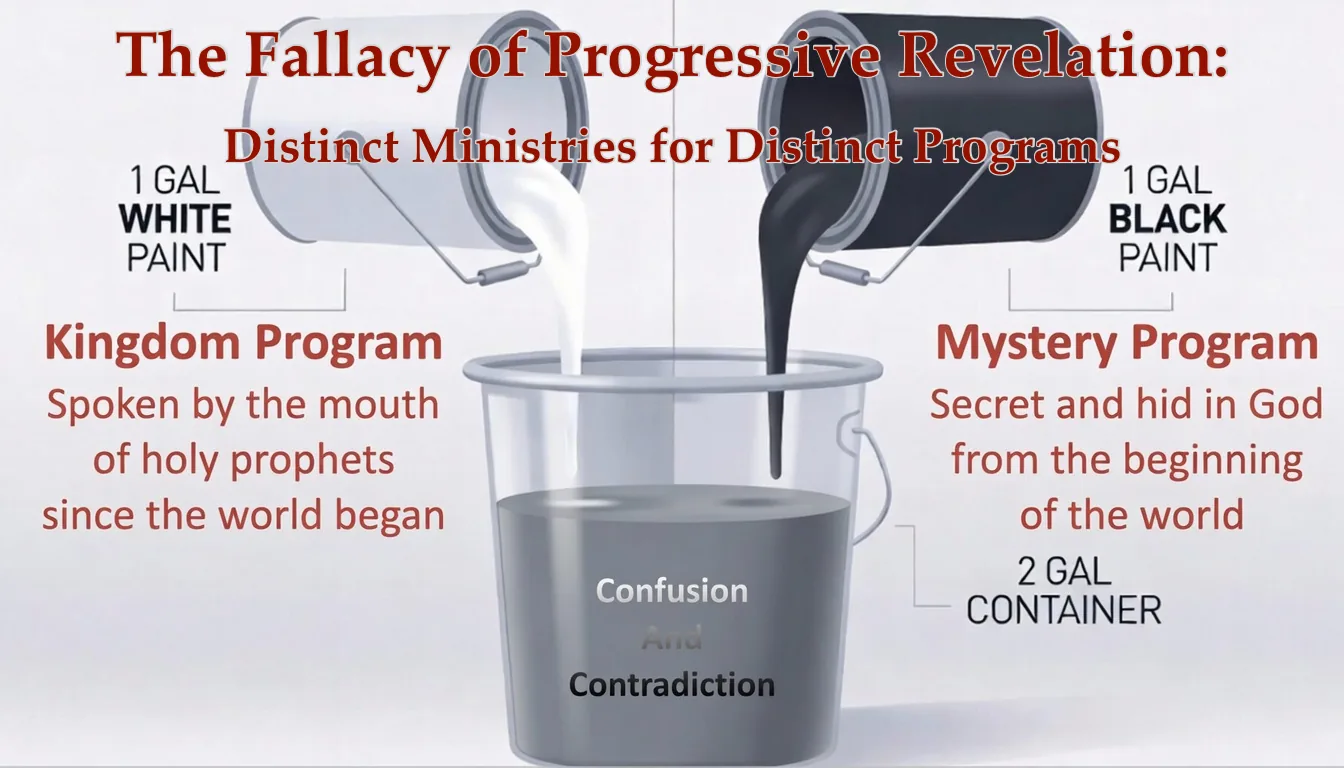
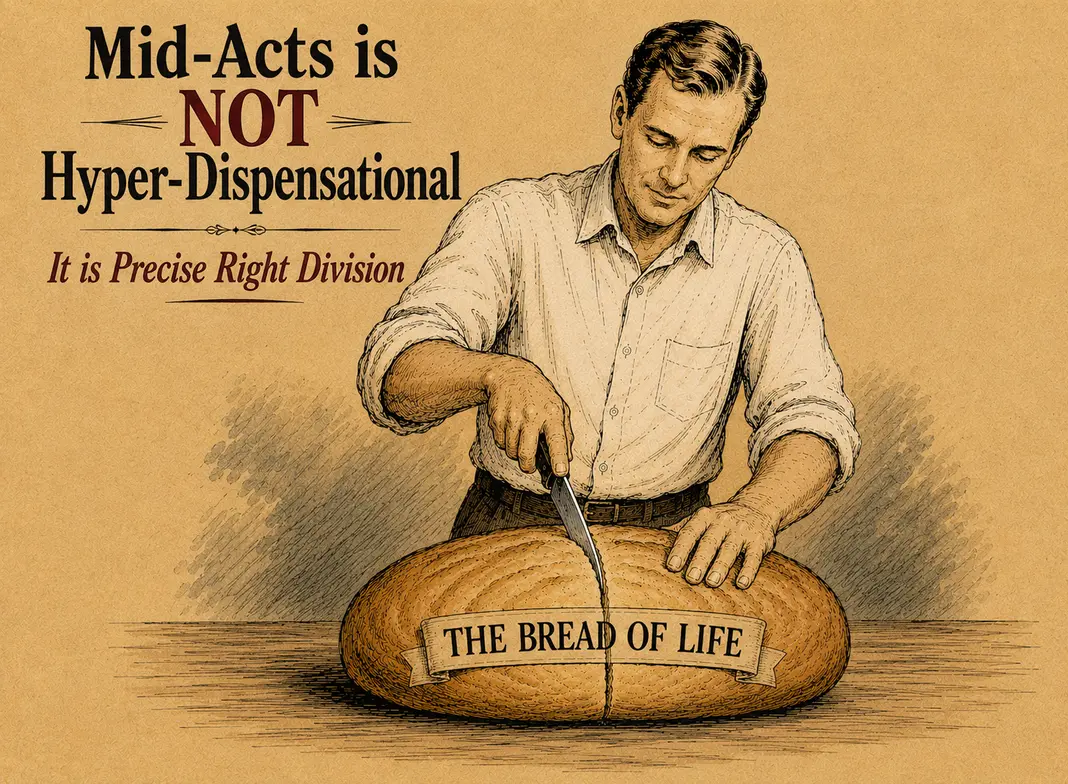
A word before the first objection. Almost every argument against Mid-Acts reduces to one charge: you are dividing what God has joined together. But the charge trades on a confusion between two very different things — dividing the word, and dividing the people of God. Dividing the word is not the error; it is the assignment. Paul commands it: "rightly dividing the word of truth" (2 Timothy 2:15 KJV). And everyone already obeys it to a degree. That a Bible holds sixty-six books, that we turn to one place for the Law and another for the Gospels and another for the epistles, that no one reads Leviticus as a letter written to himself — these are all divisions, and no one calls them a splitting-up of God's people. Right division simply carries that same discernment past the book titles to the seams God actually wrote into the text: between Israel and the Body of Christ, law and grace, prophecy and mystery. To divide the word rightly is not to fracture the people of God or the plan of God — it is to read the one plan accurately. Israel and the Body are both saved by one cross and headed to the glory of one God; they are simply called to two places, one earthly and one heavenly, under two administrations of His single purpose. Keep the two senses of divide apart, and most of the objections answer themselves.
Objection 1 — The church began at Pentecost, not with Paul
This is the most common objection, and the most deeply assumed. The reasoning runs: the Spirit fell in Acts 2, three thousand were added, the apostles held the keys, and from that day the church existed. Therefore the Body of Christ was born at Pentecost, and Paul merely joined a church already founded.
The objection rests on a word and a baptism, and both prove the opposite of what is claimed.
The word is church. It is assumed that wherever the word appears it means the Body of Christ. But the word simply means a called-out assembly, and Scripture uses it of more than one company. Stephen speaks of "the church in the wilderness" (Acts 7:38 KJV) — Israel at Sinai, fifteen hundred years before Pentecost. No one imagines the Body of Christ stood at the foot of the burning mountain. So the mere presence of the word church in Acts 2 settles nothing. The question is always which assembly, and that must be decided by the doctrine attached to it, not by the label.
The baptism is the heart of the matter. The Body of Christ is formed by one specific operation: "For by one Spirit are we all baptized into one body" (1 Corinthians 12:13 KJV). That is the Spirit doing the baptizing, placing the believer into Christ's Body. But what happened at Pentecost was a different baptism — the risen Lord pouring out the Holy Ghost upon the waiting disciples, exactly as John had foretold and exactly as Joel had prophesied. Peter said so: "this is that which was spoken by the prophet Joel" (Acts 2:16 KJV). Pentecost was the fulfillment of prophecy. The Body of Christ is the subject of a mystery — something "kept secret since the world began" (Romans 16:25 KJV). A thing prophesied openly by Joel and a thing kept secret since the world began cannot be the same thing. Pentecost fulfilled what the prophets had said. The Body fulfilled nothing the prophets said, because the prophets never said it.
There is a further proof in the same direction, and it settles the matter from the side of the apostleship itself. If the Body of Christ began at Pentecost and Paul merely joined a church already founded, then Paul must be a thirteenth apostle, added to the twelve of Jerusalem. But that office was closed, fixed, and full before Saul was ever converted. Its number was twelve by the Lord's own appointment — "ye also shall sit upon twelve thrones, judging the twelve tribes of Israel" (Matthew 19:28 KJV) — and when one seat fell vacant the eleven did not improvise a replacement; they filled it by stated qualifications: a man who had "companied with us all the time that the Lord Jesus went in and out among us, Beginning from the baptism of John, unto that same day that he was taken up", a "witness with us of his resurrection" (Acts 1:21-22 KJV). And the charge naming the vacancy defined it as one bounded office: the replacement was to "take part of this ministry and apostleship, from which Judas by transgression fell" (Acts 1:25 KJV) — one named ministry, one named apostleship, with a single seat to be filled. Matthias met every term and was "numbered with the eleven apostles" (Acts 1:26 KJV). The twelve was complete.
Paul met none of those terms. He had not companied with the Lord through the earthly ministry from John's baptism; he came in "as of one born out of due time" (1 Corinthians 15:8 KJV), seeing not the Lord who went in and out among them but the risen and ascended Christ in glory. He could not be the thirteenth of a body already filled — twelve thrones do not become thirteen. So the objector is forced to a fork: either Paul is no apostle at all, which his every epistle forbids, or his apostleship is a different apostleship, of a different program — "the apostle of the Gentiles" (Romans 11:13 KJV), commissioned by the glorified Lord to make known the mystery. And this is no inference pressed on the text; Paul states it in Galatians in the plainest words. He names two commissions in a single breath — "the gospel of the uncircumcision was committed unto me, as the gospel of the circumcision was unto Peter" (Galatians 2:7 KJV) — and then, lest anyone miss it, two apostleships: "he that wrought effectually in Peter to the apostleship of the circumcision, the same was mighty in me toward the Gentiles" (Galatians 2:8 KJV). One apostleship to the circumcision, worked through Peter; another to the Gentiles, worked through Paul. Scripture itself counts two apostleships, not twelve-and-then-a-thirteenth. The Pentecostal assembly had its twelve and needed no more; Paul stands outside that number precisely because he stands inside another ministry altogether. That is not a man joining an existing church — it is the head of a new one. The two apostleships are set side by side in The Holy Apostles of Ephesians 3:5 — Two Apostleships, Two Programs, and Why Paul Names Peter in His Letters.
This is treated at length in When the Church Began — When Grace Was Given, including the contrast between the baptism of the Holy Ghost and the baptism by the Spirit into the Body, and the reason the answer is Acts 9 — not Acts 2, and not Acts 28.
Objection 2 — There is one people of God; you divide what God has joined
This is the structural objection, usually pressed by Reformed and covenant teachers, and it is the most serious because it is not about a single verse but about the whole shape of Scripture. The argument: there is one olive tree (Romans 11), one flock (John 10:16), "one body, and one Spirit... One Lord, one faith, one baptism" (Ephesians 4:4-5 KJV). To split the redeemed into Israel and the Body of Christ shatters the unity of God's people and the unity of His plan.
The answer is the one stated at the outset, and it turns on the word divide. To divide the word of truth — exactly as Paul commands — is to see the distinctions God Himself wrote into it; it is not to fracture His people or His purpose. The objector hears divide and pictures the church torn into rival camps, when what is being divided is the text, not the company of the saved. The unity he defends is real so far as it truly reaches, and Mid-Acts holds it without reserve: one God, one Saviour, one cross by which every saved soul of every age is saved. But it reaches no farther than that. The one God administers two programs — prophecy and mystery — and calls His people to two destinies, Israel's upon the earth and the Body's in the heavenlies. To confess one God and one cross is not to melt His two callings into a single hope. Now notice what "one body" actually says. Paul does not write one people made up of all the saved of every age. He writes one body — and he has just spent the letter telling us what that body is: a new creation, "one new man", formed of Jew and Gentile on equal terms, seated together in the heavenlies, the subject of a mystery hid in God. The oneness of Ephesians 4 is the oneness of the Body of Christ within itself — one body, not two; Jew and Gentile no longer at a distance but one. It is not a statement that the Body and Israel are the same company. To read "one body" as one people of all ages is to import into the verse the very thing in dispute.
The olive tree is misread the same way. The branches broken off and the wild branch "graffed in" (Romans 11:17 KJV) picture the place of God's blessing in the earth — a place Israel forfeited in unbelief and into which Gentiles are now shown mercy. The tree is the channel of promised blessing, not the Body of Christ; the very next chapters keep Israel and the nations as distinct parties, with Israel's national restoration still future. A figure of grafting proves movement of blessing between two parties — it cannot prove the two parties are one.
What the objector mistakes for unity is uniformity — the demand that God deal with every people in every age the same way. He never has. He dealt with Adam one way, Abraham another, Israel under law another, and the Body of Christ under pure grace. One God, many administrations. That is not division; that is stewardship. The failure to see it is the failure traced in What Is Wrong With Reformed Theology: The Failure to Rightly Divide — collapsing two elections, two callings, and two destinies into one, and then having to flatten the Scriptures to keep them level.
Objection 3 — Paul is not unique; the twelve preached the same gospel
The objection: at Jerusalem the pillars gave Paul "the right hands of fellowship" (Galatians 2:9 KJV); Peter said Israel would "be saved, even as they" the Gentiles (Acts 15:11 KJV); and Paul himself said, "whether it were I or they, so we preach" (1 Corinthians 15:11 KJV). One faith, one apostolic message — so there is no distinct Pauline deposit, and to exalt Paul above the twelve is to invent a division the apostles themselves did not recognize.
This objection fuses two things that must be kept apart: the ground of salvation and the gospel that is preached. The ground is one and has never changed — every saved soul of every age rests on the one cross, the shed blood of Christ, for "without shedding of blood is no remission" (Hebrews 9:22 KJV). On that one ground stand Abel and Abraham, the believing remnant of Israel, and the Body of Christ alike. But the gospel — the message God commissions a man to preach, and the terms on which He bids men respond — is not one, and Scripture says so in as many words.
Galatians names two gospels, not one: "the gospel of the uncircumcision was committed unto me, as the gospel of the circumcision was unto Peter" (Galatians 2:7 KJV). These are not two titles for a single message. Peter's gospel of the circumcision was the gospel of the kingdom — the good news God "hath spoken by the mouth of all his holy prophets since the world began" (Acts 3:21 KJV), that the Christ had come and the kingdom was at hand, calling Israel to "Repent, and be baptized every one of you in the name of Jesus Christ for the remission of sins" (Acts 2:38 KJV). Paul's gospel of the uncircumcision was the gospel of the grace of God (Acts 20:24) — the mystery "kept secret since the world began" (Romans 16:25 KJV), that "Christ died for our sins... and that he rose again the third day" (1 Corinthians 15:3-4 KJV), the believer justified freely by faith, apart from the law, apart from water, apart from a covenant. And the salvation each gospel held out stands at a different point in time. Peter's was good news of a salvation still future — "we shall be saved" (Acts 15:11 KJV), "he that shall endure unto the end, the same shall be saved" (Matthew 24:13 KJV) — a deliverance awaited at the coming of the kingdom and held fast by endurance to the end. Paul's is good news of a salvation already present — "now is the day of salvation" (2 Corinthians 6:2 KJV), "by grace are ye saved" (Ephesians 2:8 KJV) — a finished work received and possessed the moment it is believed. One gospel was foretold by the prophets; the other was hidden from them. One called men to repent and be baptized toward a coming kingdom; the other announces a finished work to be believed now. Prophesied against hidden, kingdom against grace, baptism against faith apart from works, a salvation awaited against a salvation possessed — these are not one gospel wearing two names. They are two gospels, exactly as Paul says. The tense itself tells the tale, as Shall Be Saved vs. Are Saved: Two Programs, Two Tenses, One Divided Word sets out at length: Israel's program speaks of those who shall be saved, while the gospel of grace speaks of those who are saved.
Now the three texts the objector leans on, each in its place. First, "so we preach" (1 Corinthians 15:11 KJV). Read the chapter and its subject is the resurrection — Paul has just named the witnesses who saw the risen Lord: Cephas, the twelve, above five hundred, James, and last of all himself. What "we" all preach is that Christ rose; the resurrection is common testimony, and Mid-Acts grants it gladly. But the bare fact that Christ rose is not the gospel of grace Paul built upon it. That Christ died for our sins as a complete justification, received by faith without the deeds of the law — that is the deposit Paul says he received not from the twelve but from the Lord. All preached a risen Christ; only one was given the mystery of grace.
Second, "saved... even as they" (Acts 15:11 KJV). These words are spoken late — after Cornelius, after Paul's Gentile ministry was years underway — and they are Peter acknowledging the grace that had come to light through Paul, not preaching it from the first. Peter is conceding that even Israel shall be saved "through the grace of the Lord Jesus Christ", the same way the Gentiles are, against the party that wanted the Gentiles circumcised and put under the law. That is Peter catching up to grace at the Jerusalem council — not Paul borrowing his message from Peter.
Third, the right hands of fellowship (Galatians 2:9). When the pillars "perceived the grace that was given unto me", they did not erase the difference; they ratified it — "that we should go unto the heathen, and they unto the circumcision". The handshake divided the field into two commissions. It is not evidence that Paul and Peter preached an identical gospel; it is the apostles formally agreeing that they did not.
And the origin of Paul's gospel forbids the whole objection. He insists it was "not after man... but by the revelation of Jesus Christ" (Galatians 1:11-12 KJV), committed to him as "the unsearchable riches of Christ" and the "fellowship of the mystery, which from the beginning of the world hath been hid in God" (Ephesians 3:8-9 KJV). A man does not labour to prove the independent origin of a message he received second-hand from Jerusalem. The very strain of Paul's insistence is itself proof that his gospel was not the gospel the twelve already preached. When Did Paul's Gospel Begin? traces this in full.
Objection 4 — Rightly dividing does not mean dispensations
A more careful objector goes after the motto itself. Paul's charge to "rightly dividing the word of truth" (2 Timothy 2:15 KJV), it is said, does not mean carve the Bible into dispensations. The figure is of a workman handling his material accurately — cutting a straight furrow, holding a true line. So the verse commands faithful, accurate handling of Scripture, and Mid-Acts has hung an entire system on a phrase that means no such thing.
Grant the objection its best case: read the phrase as handle accurately, cut a straight line. The position does not move an inch. For notice what follows — if the command is to cut a straight line through the word of truth, then there is a true line to cut and a crooked one to avoid. A workman who lays the law of Sinai across the Body of Christ, or reads Israel's earthly kingdom promises as the church's hope, has not cut straight; he has cut crooked. The exhortation to handle the word accurately is the exhortation to distinguish the things that differ, because the word itself contains things that differ — promises to Israel and to the Body, commands under law and under grace, a kingdom on earth and a calling in heaven. You cannot handle it straight while mixing them.
And here the objector is undone by his own practice, for he already divides the word — everyone does. He does not preach Leviticus as a letter written to himself; he does not bring a lamb to an altar; he turns to the Gospels for one thing and to Paul's epistles for another. Every preacher who opens his Bible to the right page has divided it. The only question between us is how far the dividing goes — whether it stops at the seams the printer set between the books, or follows the seams God set between the programs. Right division is not a strange new way of reading; it is the very thing the objector is already doing, carried honestly past the book titles to the deeper distinctions the text itself insists on — Israel and the Body, law and grace, prophecy and mystery. To divide as far as the table of contents and no farther is not to refuse division; it is only to divide poorly, and then to fault those who finish the work.
And let this be said plainly, for it is no retreat but the opposite: Mid-Acts rests squarely on rightly dividing the word of truth — gladly, openly, because that is Paul's own command to every workman who would be approved. What the position does not hang upon is the objector's leave to read the word his way. For the divisions are written across Paul's epistles in statements that wait on no argument over a phrase — a mystery hid in God and revealed to one man, a body that is neither Jew nor Gentile, an apostle of the Gentiles with his own gospel, a calling in the heavenlies that no prophet ever named. Grant the objector his narrowest reading of the words, and the very next pages still press those distinctions upon him. The command names the duty; Paul's letters supply the doctrine that duty must honour.
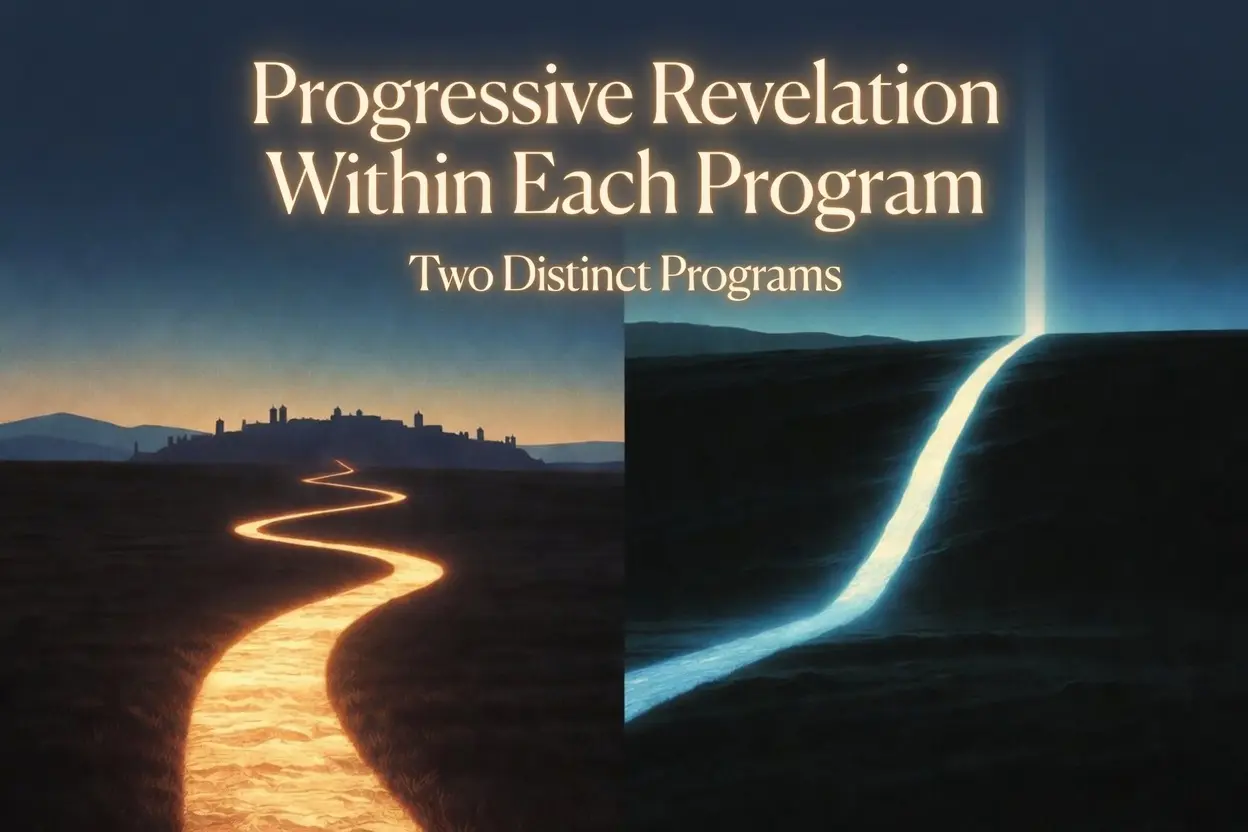
And there is a further turn worth pressing, which is the whole burden of When There Was No Rightly Dividing. The command to divide the word appears exactly once in all of Scripture, and it appears late — written by Paul, to Timothy, near the end of his final epistle. No prophet was ever charged to rightly divide; no one in the Gospels; not Peter at Pentecost. Why not? Because before Paul there was nothing of this kind to divide. One program ran through the Old Testament and on into the early book of Acts — Israel, her law, her prophets, her promised earthly kingdom — a single stream, and a single stream needs no dividing. The command could not be given until there were two things to hold apart: until the mystery had broken in alongside the prophesied kingdom, and a heavenly calling stood beside an earthly one. So the very lateness the objector might take for weakness is the proof: the duty to divide arrives precisely when the second program does. That a believer is first told to divide the word only after Paul is itself a witness that something began with Paul — and that something is the Body of Christ. The full argument, and the watershed it turns on, is laid out in When There Was No Rightly Dividing.
Objection 5 — Paul baptized, so water baptism continues
The objection is practical and pointed: Mid-Acts says water baptism is not for the Body of Christ today, yet Paul plainly baptized people — Crispus, Gaius, the household of Stephanas. "I baptized none of you, but Crispus and Gaius" (1 Corinthians 1:14 KJV) — none, but — so he did baptize. The practice cannot be set aside.
Before weighing the verse, weigh the reasoning, for the objection rides on a hidden premise: that whatever Paul did, the Body of Christ must do. State that premise out loud and it falls apart, because no one actually holds it. Paul circumcised Timothy (Acts 16:3); he took a vow and shaved his head at Cenchrea (Acts 18:18); he told the Ephesians he must by all means keep a feast at Jerusalem (Acts 18:21); he paid the temple-purification charges of four men under a vow (Acts 21:23-26). The very people who argue Paul baptized, therefore we must baptize do not circumcise their sons, take Nazarite vows, or keep feasts at Jerusalem — though Paul did every one of those things, and in the same period. An apostle's action is not, by itself, a commandment to the Body; example is not doctrine. What binds the Body is what Paul teaches it to practice, not everything he was found doing while Israel's program and the mystery still overlapped. So the question is never merely did Paul baptize? — plainly he did, a handful of times — but did he commit water baptism to the Body as its standing practice? To that, his own pen gives the answer. This sorting of Paul's transitional acts from his abiding doctrine is laid out across Not Everything Paul Did Is What We Do: Transitional Elements in His Acts-Period Ministry.
Read the whole passage and watch Paul himself draw the line. He has just named the few he baptized — and then, far from commending the practice, he is relieved he did so little of it, because the Corinthians were turning their baptisms into party badges. Then comes the sentence that settles his commission: "For Christ sent me not to baptize, but to preach the gospel" (1 Corinthians 1:17 KJV). Put the question to that verse plainly. If water baptism were the abiding ordinance of the Body of Christ, no apostle of the Body could possibly say his Lord "sent me not to baptize". Yet that is exactly what the apostle of the Body does say. The few baptisms early in his ministry belong to the transition out of Israel's program; his settled commission, stated in his own words, set baptizing to one side and preaching at the center.
And there is the matter of "one baptism" (Ephesians 4:5 KJV). The Body has one — and it is the one of 1 Corinthians 12:13, the Spirit's act of placing the believer into Christ. If water is also a present baptism for the Body, then the Body has two, and Ephesians is mistaken. It is not mistaken. Rightly Dividing or Wrongly Accusing: A Response to Ruckman's Attack on Mid-Acts Dispensationalism answers the charge that this denial is heretical, and shows Paul's early baptizing for what it was — apostolic confirmation in a transitional period, not a church ordinance binding the Body.
Objection 6 — The Great Commission is the church's marching orders
The objection: the risen Lord commanded, "Go ye therefore, and teach all nations, baptizing them" (Matthew 28:19 KJV). This is the church's commission, prayed and preached in every generation. To say it is not for the Body today is to mutiny against the Lord's own marching orders.
The answer is in the words the objector leaves off. The commission does not end at baptizing them. It continues: "Teaching them to observe all things whatsoever I have commanded you" (Matthew 28:20 KJV). All things whatsoever I have commanded you — and what the Lord had commanded the eleven, through His earthly ministry to Israel, was the law and the kingdom: sell what you have, keep the commandments, the Sabbath, what was spoken to them at Sinai and on the mount. Anyone who takes Matthew 28 as his commission has taken on the obligation to teach the nations to keep all of it. No one who presses this objection actually does so; they keep verse 19 and quietly drop verse 20, which is to handle the verse exactly as they accuse Mid-Acts of handling the Bible. The commission is a true commission — to the eleven, for Israel's kingdom program, with its own baptism and its own body of commands. And that the eleven understood it exactly so is plain from the record: a generation after Pentecost, James could tell Paul of "how many thousands of Jews there are which believe; and they are all zealous of the law" (Acts 21:20 KJV). Their commission had produced law-keepers — which is precisely what "teaching them to observe all things whatsoever I have commanded you" required, and precisely what Paul's commission never produced. The Body of Christ has its own commission from its own apostle: "Christ sent me... to preach the gospel" — the gospel of the grace of God, not the keeping of all things commanded to Israel. The fuller answer to the Matthew 28 objection — including the trap that to limit it by Paul is already to concede that Paul governs — is set out in Rightly Dividing or Wrongly Accusing: A Response to Ruckman's Attack on Mid-Acts Dispensationalism.
Objection 7 — Romans was written during Acts, so your Acts-versus-prison line collapses
A sharper objection from those who know the territory: Mid-Acts leans on a difference between Paul's Acts-period epistles and his prison epistles, yet Romans, Corinthians, and Galatians were all written during the book of Acts and are full of Body doctrine. So the supposed boundary between the Acts period and the prison epistles falls apart, and with it the system.
This objection scores against a position Mid-Acts does not hold. The beginning of the Body of Christ is not at the close of Acts; it is at Acts 9, with the conversion of Saul — the "chosen vessel" sent "to bear my name before the Gentiles" (Acts 9:15 KJV) — and the pattern believer, the first "for a pattern to them which should hereafter believe" (1 Timothy 1:16 KJV). From that point Paul is the apostle of the Body, and all his epistles — Romans and Galatians no less than Ephesians and Colossians — are written to the Body and apply to it. There is no doctrinal boundary at Acts 28 where the Body finally begins. To put one there is the error of Acts-28 ultra-dispensationalism, which Mid-Acts rejects.
What does run through the book of Acts is a transition — Israel's program diminishing, the mystery rising, a nation being set aside in stages while the new revelation matures through Paul's letters. The Acts-period epistles still address audiences in which Jew and Gentile, kingdom-saint and Body-member, stand side by side; the prison epistles speak from the far side of Israel's setting aside, the mystery now full and the wall fully down. That is a difference of unfolding within one program, not a second beginning of the Body. Where Does Acts End and the Mystery Begin? The Dispensational Boundary and Not Everything Paul Did Is What We Do: Transitional Elements in His Acts-Period Ministry lay out the hinges; Begun Together: The Body of Christ and the Dispensation of Grace answers the specific claim that the Body waited for the prison epistles to arrive.
Objection 8 — Salvation was always by grace through faith, so no dispensational break is needed
The objection: Abraham believed God and it was counted to him for righteousness; the just have always lived by faith; salvation has never been by works in any age. Since the way of salvation is one and unchanging, there is no need to carve history into dispensations or to make Paul a new beginning.
One thing in the premise is true, though it must be stated with care: the ground of salvation has never been human merit. From Abel forward, every saved soul rests on the cross, the shed blood of Christ; no man ever bought heaven with his own goodness. But here a distinction must be drawn, or the whole picture is falsified. The cross is the one provision behind every salvation — yet it was God, and God alone, who was looking forward to it. The men saved before Calvary were not believing in the cross; they could not, for it had not been revealed. They believed what God had spoken to them in their day — a promise, a coming Messiah, a kingdom — and God reckoned them righteous on the ground of a sacrifice still future, which He saw and they did not, passing over the "sins that are past, through the forbearance of God" (Romans 3:25 KJV). So far was the cross from being the object of their faith that even the Lord's own disciples, when He began plainly to tell them He "must... be killed, and be raised again the third day" (Matthew 16:21 KJV), would not have it — Peter rebuked Him, "Be it far from thee, Lord: this shall not be unto thee" (Matthew 16:22 KJV) — and even at the last, "they understood none of these things... neither knew they the things which were spoken" (Luke 18:34 KJV). The provision was always the cross; the object of men's faith was not the cross until Paul preached it. So even on the side of the premise that is true, the dispensational seam shows: one provision, but not one message believed. And on the side that is false the seam is plainer still — for the objection slides from the truth about the provision to a falsehood about the terms, that the terms of receiving have always been the same, faith and faith only, apart from works. They have not. And the difference is not a fine point; it is the very thing Paul fought for.
Consider how God dealt with Israel. There, faith was never alone; it was a faith that had to obey, or it did not save. James, writing to the twelve tribes, asks it as bluntly as it can be asked: "though a man say he hath faith, and have not works? can faith save him?" (James 2:14 KJV) — and answers, "faith, if it hath not works, is dead, being alone" (James 2:17 KJV), so that "by works a man is justified, and not by faith only" (James 2:24 KJV). That is not a slip of the pen, and it does not contradict Paul; it is a different program with different terms. The very message preached to Israel carried the required work inside it: "Repent, and be baptized every one of you in the name of Jesus Christ for the remission of sins, and ye shall receive the gift of the Holy Ghost" (Acts 2:38 KJV). Baptism was not an optional badge added after belief — it was part of the message to be believed. So a man who professed to believe and then refused the water had not believed a little less; he had proved he never believed the message at all, for he rejected what the message commanded. "He that believeth and is baptized shall be saved" (Mark 16:16 KJV); "he that shall endure unto the end, the same shall be saved" (Matthew 24:13 KJV). Believe, be baptized, endure — faith there was a working faith, or it was a dead one.
Now hear Paul, and hear the reversal. He preaches justification "to him that worketh not, but believeth on him that justifieth the ungodly" (Romans 4:5 KJV); saved "by grace... through faith; and that not of yourselves: it is the gift of God: Not of works, lest any man should boast" (Ephesians 2:8-9 KJV). No baptism completes it, no enduring secures it, no work finishes it — the work was finished at the cross, and faith simply rests in it. That is salvation by grace through faith in the sense Paul means: faith alone, apart from works. And it is precisely the arrangement that did not obtain before him. To say salvation was always by grace through faith is to smuggle Paul's faith-alone gospel back into a program where God plainly required the obedience of works as the condition of His promise. James and Paul are not at war; they are stewards of two different administrations — and the wall between them is the very dispensational break the objection denies.
This is why grace must be distinguished as two things. Grace as God's eternal disposition is older than the world — He saved us "according to his own purpose and grace, which was given us in Christ Jesus before the world began" (2 Timothy 1:9 KJV). But grace as a dispensation — a salvation offered to the world on terms of faith without works, administered through Paul — is new. The ground (the cross) never moved; the terms did, from a faith that had to be completed by works to a faith that rests in a finished one. The break is exactly where Paul says it is.
Objection 9 — Mid-Acts is novel; no one believed it for nineteen hundred years
The objection appeals to history: if this were the truth, the church would have held it from the beginning. Instead it appears only in the last century or so, with a handful of teachers. A doctrine that no one saw for nineteen hundred years cannot be the plain teaching of Scripture.
Three answers. First, the test of doctrine is never antiquity or numbers; it is the Scripture itself. By the historical test the Judaizers would have beaten Paul, for they had Moses and fifteen centuries of practice, and he had a revelation only newly given. Paul's own answer to any rival message, however ancient or popular, was the word, not the consensus: "though we, or an angel from heaven, preach any other gospel unto you than that which we have preached unto you, let him be accursed" (Galatians 1:8 KJV).
Second, and most pointedly, the objection assumes a continuity that never existed. It pictures Paul's gospel held intact by the church for centuries and only lately abandoned by Mid-Acts — when the truth is the reverse. The church departed from Paul, and the departure began while Paul was still alive. Near the end of his course he wrote, with no exaggeration, "This thou knowest, that all they which are in Asia be turned away from me" (2 Timothy 1:15 KJV). All of them. "Demas hath forsaken me, having loved this present world" (2 Timothy 4:10 KJV). He had already warned the Ephesian elders that "after my departing shall grievous wolves enter in among you" and that "of your own selves shall men arise, speaking perverse things, to draw away disciples after them" (Acts 20:29-30 KJV). The forsaking of Paul's distinctive doctrine is not a development of the modern age; it is a fact of the first century, recorded by Paul's own pen. His followers have never been the mainstream — they were a faithful few before the ink of his last epistle was dry. So to object that Mid-Acts is not the historic majority position is to announce, as though it refuted the position, the very thing Paul foretold would happen to it. The early departure, and the men who drove it, are traced in Teachers of the Law: Vain Jangling, Drawing Away Disciples, and the Early Departure from Pauline Doctrine.
Third, the premise overstates the silence. The recovery of a truth long buried is the very pattern of church history. Justification by faith was, to the eye of 1516, a novelty against a thousand years of practice — and it was the gospel, recovered. That a thing was lost and found again says nothing against it; it says something about the church that lost it. The right division of the word is not a new revelation but a recovered reading of the revelation already given — given, in fact, to be understood, for Paul wrote expecting to be read and rightly divided.
Objection 10 — This is hyper-dispensationalism, and it makes Paul the foundation
The last objection is really two, often thrown together as a final charge. First: this is Bullingerism, hyper-dispensationalism — it ends by denying baptism, denying the Lord's Supper, splitting the gospel in two, and slicing the Bible to ribbons. Second: it makes Paul, not Christ, the foundation — Paulism in place of Christianity.
On the first: the charge lumps together things that do not belong together, and pins on Mid-Acts a position it does not hold. There is a genuine over-reach — Acts-28 ultra-dispensationalism — which dates the Body's beginning at the close of Acts, sets aside the Lord's Supper for the Body, and divides Paul's own ministry against itself, treating his earlier epistles as something less than full Body doctrine. Mid-Acts holds none of that. It places the Body's beginning at Acts 9; it keeps all of Paul's epistles, Romans through Philemon, as Scripture for the Body; and it keeps the Lord's Supper as the Body's memorial. That is the line between Mid-Acts and the hyper-dispensationalism it is accused of. As for the rest of the charge — that Mid-Acts sets water baptism aside for the Body today, and distinguishes Paul's gospel of grace from the gospel of the kingdom — those are not wild excesses smuggled in from Bullinger; they are the plain conclusions argued in the objections above, drawn from Paul's own words, and they take nothing from the one ground on which every saved soul of every age rests: the cross. To be charged with going too far by men who have not seen where the line actually falls is to be charged with another man's error. The honest course is to read what Mid-Acts teaches before naming it, which Rightly Dividing or Wrongly Accusing: A Response to Ruckman's Attack on Mid-Acts Dispensationalism sets side by side with the caricature.
On the second: the foundation is Christ, and Mid-Acts says so in Paul's words — "other foundation can no man lay than that is laid, which is Jesus Christ" (1 Corinthians 3:11 KJV). Paul is not the foundation; he is the pattern (1 Timothy 1:16), the apostle through whom the ascended Christ administers this present grace, the one believer the Lord set forth first that the rest might follow. And follow him we do — but never apart from his own qualifier: "Be ye followers of me, even as I also am of Christ" (1 Corinthians 11:1 KJV). To follow Paul is not to follow a man instead of the Lord; it is to follow the Lord by the road the Lord Himself appointed for this age — through the apostle He chose, converted, and commissioned to make it known. That is the whole argument of Following Paul Is Following Christ — and Not Following Paul Is Disobedience to Christ.
A Closing Word
None of these objections is frivolous, and a man who holds Mid-Acts without having weighed them does not really hold it; he has only inherited it. But weighed they have been — for years, by the people most eager to be corrected if they are wrong — and they are found wanting, not because the answers are clever, but because the distinction they all deny is written across the page of Scripture in plain words: a mystery hid in God, revealed to one man, for a body that is neither Israel nor the nations, called not to an earthly kingdom but to the heavenly places in Christ — and told, not that it shall be saved if it endures to the end, but that by grace it already is saved.
So "prove all things". Bring the objection that topples the position, if there is one; the interest in finding it is real, for it is more important to get the Bible right than to keep a position out of habit. Until that objection comes, the apostle's charge stands as it has always stood — "hold fast that which is good" (1 Thessalonians 5:21 KJV) — and the good thing to hold fast is Jesus Christ according to the revelation of the mystery.
© 2026 Edward R. Cross



Comments
No comments yet. Be the first to share your thoughts.
Leave a comment