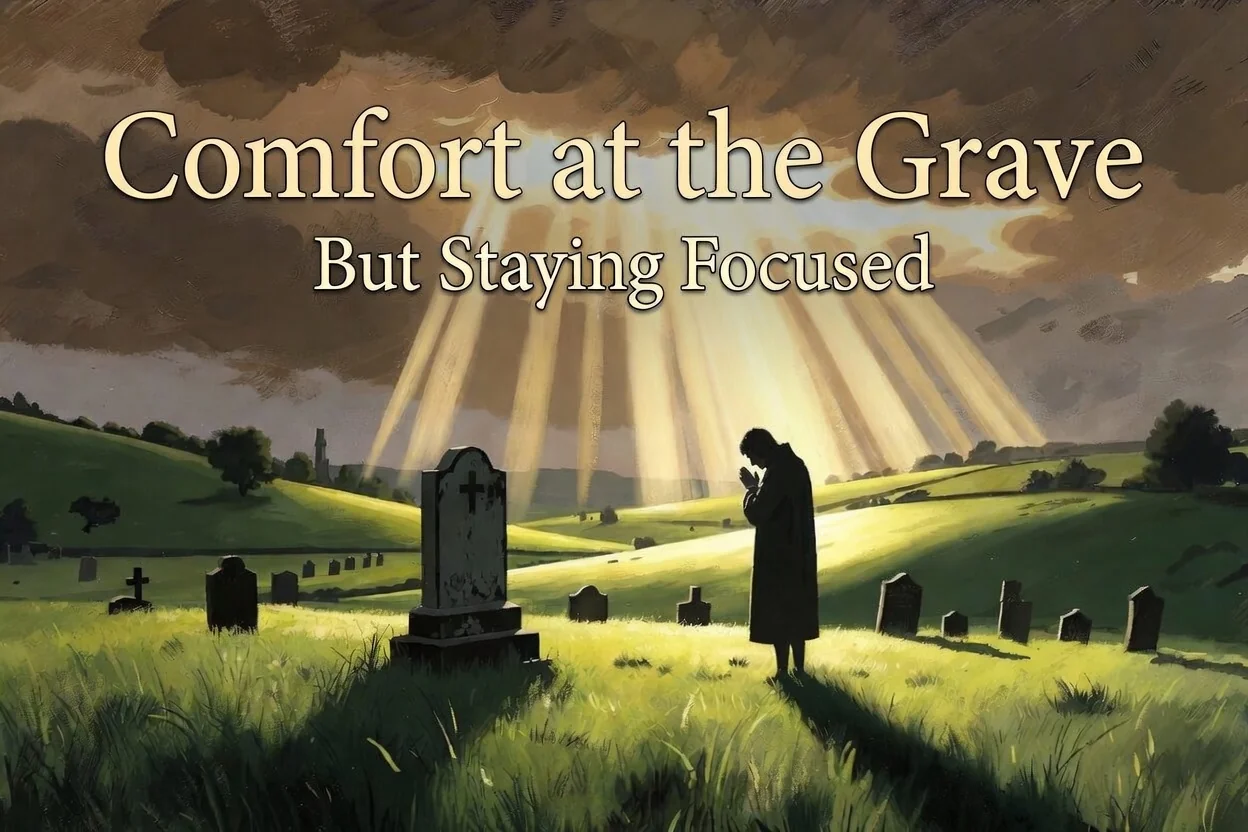
Have you ever stood at a graveside with a broken heart, wondering where your loved one in Christ has gone and whether you'll ever see them again? Or have you heard the warnings about "the tribulation" and felt a knot of fear wondering if the Body of Christ will have to endure Jacob's trouble? The Apostle Paul gave us clear answers to both of these burdens — and they flow straight from the revelation of the mystery committed to him for this dispensation of the grace of God. Let's open the King James Bible and see what Paul actually emphasizes.
Comfort for Those Who Have Fallen Asleep in Christ
Paul doesn't leave us guessing about what happens when a believer dies. He wrote to the Thessalonians who were sorrowing over loved ones who had "fallen asleep":
"But I would not have you to be ignorant, brethren, concerning them which are asleep, that ye sorrow not, even as others which have no hope. For if we believe that Jesus died and rose again, even so them also which sleep in Jesus will God bring with him." (1 Thessalonians 4:13-14 KJV)
Have you noticed how tender Paul is here? He doesn't scold them for grieving — he comforts them with truth. The dead in Christ haven't been abandoned. They will be raised first, and then we who are alive will be caught up together with them:
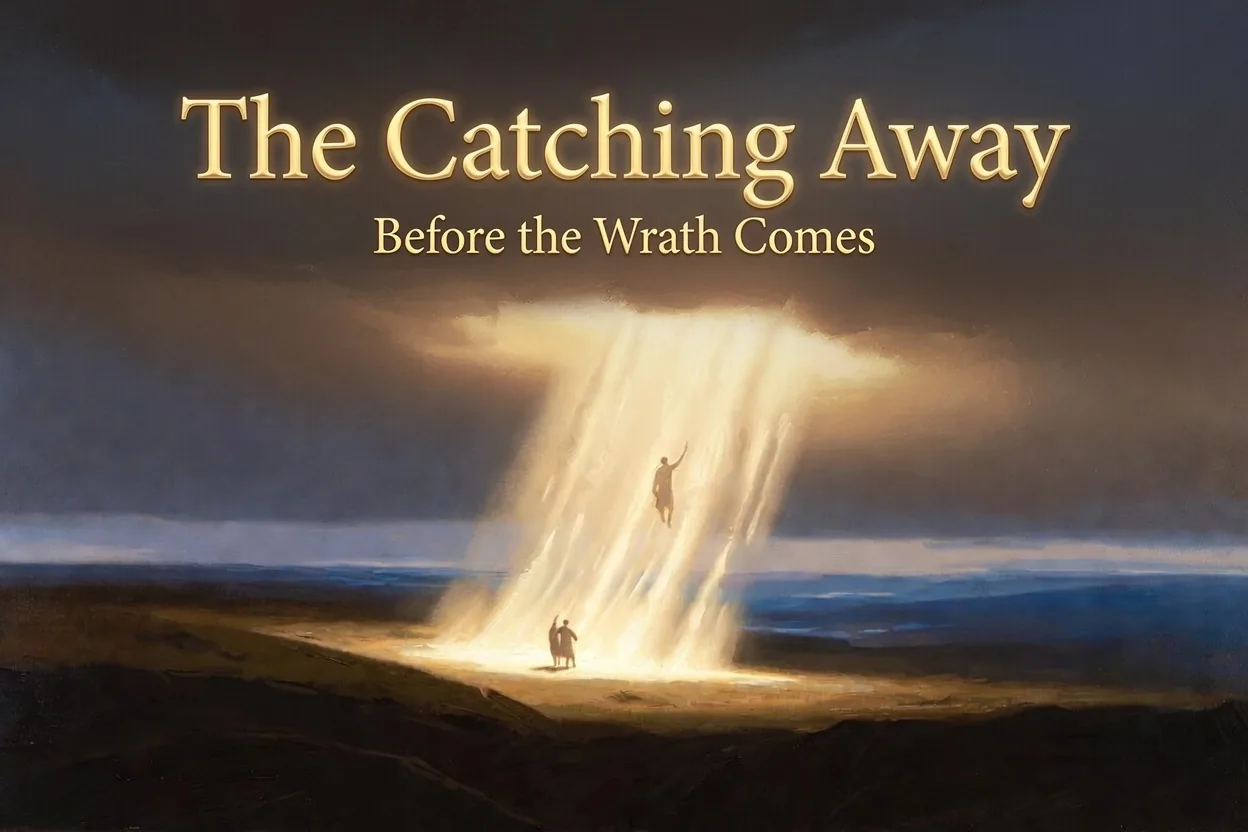
"For the Lord himself shall descend from heaven with a shout, with the voice of the archangel, and with the trump of God: and the dead in Christ shall rise first: Then we which are alive and remain shall be caught up together with them in the clouds, to meet the Lord in the air: and so shall we ever be with the Lord. Wherefore comfort one another with these words." (1 Thessalonians 4:16-18 KJV)
This is the blessed hope — not some vague "going to heaven when we die," but the personal, literal, imminent return of the Lord for His Body. We meet Him in the air. No judgment of wrath, no tribulation, no "enduring to the end." Just comfort one another with these words. Paul doesn't build a whole system of prophecy around it because the comfort itself is the point for those grieving.
We Are Not Appointed to Wrath — Jacob's Trouble Is for Israel
Paul continues right into the next chapter with another great comfort:
"For God hath not appointed us to wrath, but to obtain salvation by our Lord Jesus Christ, Who died for us, that, whether we wake or sleep, we should live together with him." (1 Thessalonians 5:9-10 KJV)
Have you ever wondered why so many mix the Body of Christ into Israel's prophetic program and try to make us go through the tribulation? The answer to what "wrath" means in verse 9 is in the context Paul has already established just a few verses earlier in the same chapter. Before declaring that we are not appointed to wrath, Paul has been speaking directly about the Day of the Lord:
"But of the times and the seasons, brethren, ye have no need that I write unto you. For yourselves know perfectly that the day of the Lord so cometh as a thief in the night." (1 Thessalonians 5:1-2 KJV)
He then draws a sharp line: "But ye, brethren, are not in darkness, that that day should overtake you as a thief" (1 Thessalonians 5:4). The "wrath" we are not appointed to in verse 9 is the very thing Paul has just been describing — the Day of the Lord, the time of Jacob's trouble (Jeremiah 30:7). This is not simply a promise of escaping hell. This is deliverance from Israel's specific prophetic judgment — the wrath poured out in connection with that nation's restoration. It is Jacob's trouble because it belongs to Jacob — not to the Body of Christ.
Why does the Body of Christ have no place in that judgment at all? Because the two programs are entirely separate. Israel's program was "spoken by the mouth of all his holy prophets since the world began" (Acts 3:21). The Body of Christ's program was "kept secret since the world began" (Romans 16:25) and "hid in God" from before the foundation of the world (Ephesians 3:9). A program that was hidden cannot be found in the prophetic Scriptures. The tribulation belongs to the prophetic program — we belong to the mystery program.
Our deliverance is not based on our endurance or our faithfulness — it is based on the finished work of Christ and the revelation of the mystery. And because the catching away belongs to that mystery program, it carries no preceding signs. It is imminent — it can happen at any moment. No tribulation can be inserted before a signless, imminent return. We are already delivered from the wrath to come (1 Thessalonians 1:10).
What Paul Actually Emphasizes Most
With both burdens answered — sorrow at the grave and fear of the tribulation — a natural question arises: what does Paul actually want occupying our hearts while we wait?
The blessed hope is settled and certain. And precisely because it is settled, Paul does not station us there — he turns us to who we already are in Christ right now. Read through his thirteen epistles and the weight of his writing falls on present truth: our position as new creatures in Christ (2 Corinthians 5:17, Galatians 6:15), being complete in Him (Colossians 2:10), all spiritual blessings already ours in heavenly places (Ephesians 1:3), forgiveness of all trespasses (Colossians 2:13), the mystery of Christ in you, the hope of glory (Colossians 1:27), walking worthy of our calling, standing fast in liberty, the fruit of the Spirit, grace, reconciliation, our heavenly hope. The rapture is wonderful comfort — especially for those who have lost loved ones — but it is the certainty of the catching away that frees Paul to plant us firmly in present truth rather than leaving us anxiously scanning the future.
Have you noticed how much modern teaching treats prophetic speculation as the very heart of the Christian life, while these unsearchable riches of Christ go largely untaught? Paul's desire is that we be "grounded and settled" in the present truth of the grace of God (Colossians 1:23, 2 Peter 1:12) — rooted in what is already ours, not anxious about what is coming. The certainty of the catching away is precisely what frees us to live there.
Our Focus While We Wait
Paul's pattern for us is clear. While we wait for the Lord to descend, he gives us five anchors to hold to.
Rejoice in the finished work. Paul tells the Philippians to "rejoice in the Lord alway" (Philippians 4:4) and to count all things loss for the excellency of the knowledge of Christ Jesus (Philippians 3:8). This is not a rejoicing in favorable circumstances — it is a rejoicing rooted in what Christ has already accomplished. The work is done. The debt is paid. The righteousness is ours by faith. There is nothing left to earn and nothing left to fear. That settled confidence is the soil in which Paul's joy grows, and it is available to every member of the Body of Christ right now, regardless of what is happening in the world around them.
Walk in newness of life as new creatures. Paul writes that we are "buried with him by baptism into death: that like as Christ was raised up from the dead by the glory of the Father, even so we also should walk in newness of life" (Romans 6:4). The new creature is not something we are working toward — it is what we already are in Christ (2 Corinthians 5:17). The old things have passed away. Paul's consistent plea is that our daily walk would match our standing. We don't walk in newness of life to become new creatures; we walk that way because we already are new creatures. The practical holiness Paul describes in his epistles flows from identity, not from effort to earn favor with God.
Comfort one another with the hope of the rapture. This is the one place Paul directs us toward the catching away — not as a subject to obsess over, but as a word of comfort to share with those who are grieving. "Wherefore comfort one another with these words" (1 Thessalonians 4:18). The rapture is Paul's answer to the sorrowing saint standing at a grave. It is pastoral truth, tenderly applied. We are to hold it out to one another as a lamp in a dark moment, not as a system to argue about or a calendar to calculate from.
Stand fast in the liberty of grace. "Stand fast therefore in the liberty wherewith Christ hath made us free, and be not entangled again with the yoke of bondage" (Galatians 5:1). Paul warns the Galatians that turning back to law-keeping — even in part — is a fall from grace (Galatians 5:4). The believer in this dispensation stands in a liberty that was purchased by Christ and revealed through Paul. Paul himself guards against the misuse of that liberty: "use not liberty for an occasion to the flesh, but by love serve one another" (Galatians 5:13). It is freedom from the law as a system of standing before God. Holding that ground matters. When teachers mix law and grace, when they put the Body of Christ under commandments given to Israel, they rob believers of the very footing Paul died to establish. Stand fast.
Labor in the ministry of reconciliation. God was in Christ reconciling the world unto himself and has committed to us the word of reconciliation. "Now then we are ambassadors for Christ, as though God did beseech you by us: we pray you in Christ's stead, be ye reconciled to God" (2 Corinthians 5:20). We are not waiting passively. We are ambassadors of the grace of God, carrying the gospel of the grace of God to a lost world that does not yet know what Christ has accomplished for them. Paul's ministry was urgent and active, and the same commission rests on every member of the Body of Christ today.
The blessed hope is real. The catching away is certain. But the bulk of Paul's teaching is not "when will it happen?"* but *"who are you in Christ right now, and how should you walk?"
Have you been living under the pressure of trying to figure out every prophetic detail, or have you seen the glorious liberty of resting in what Christ has already accomplished and what Paul has already revealed?
The next time you stand at a grave or hear someone stirring fear about the tribulation, remember Paul's words: "Wherefore comfort one another with these words." We sorrow not as others who have no hope. Our loved ones in Christ are with the Lord, and we will be caught up to meet them — and best of all, to meet Him.
Grace and peace be multiplied unto you through the knowledge of God and of Jesus our Lord. Stand fast in the liberty wherewith Christ hath made us free, and keep your eyes on the blessed hope while living as the new creature you already are in Him.
© 2026 Edward R. Cross





Comments
No comments yet. Be the first to share your thoughts.
Leave a comment