Have you ever wondered why the miracles, tongues, and healings we read about in the Gospels and early Acts seem so far removed from our everyday experience as believers today? It's a fair question—and one that Gideon himself asked when the Lord called him to deliver Israel.
"And Gideon said unto him, Oh my Lord, if the LORD be with us, why then is all this befallen us? and where be all his miracles which our fathers told us of, saying, Did not the LORD bring us up from Egypt? but now the LORD hath forsaken us, and delivered us into the hand of the Midianites." (Judges 6:13 KJV)
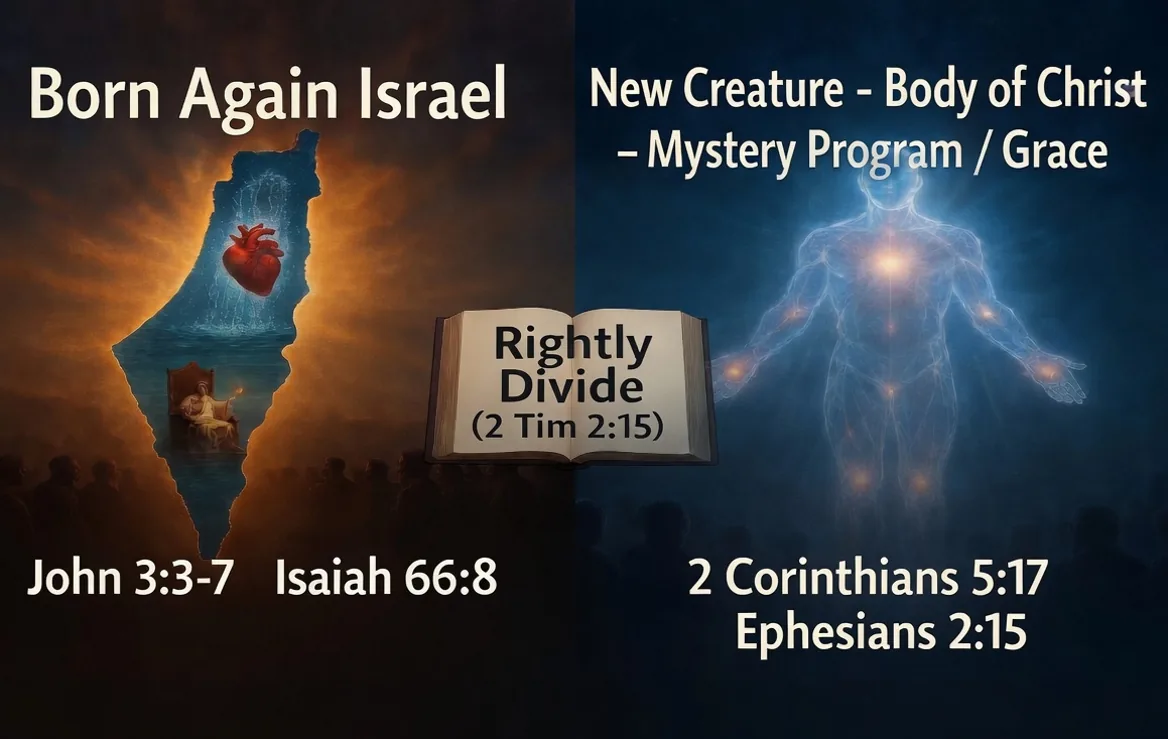
Gideon wasn't being faithless; he was voicing what every Israelite expected under the prophetic program. Signs and wonders were part of God's covenant dealings with the nation. Israel looked for miracles as confirmation that God was with them and that His promised King and kingdom were at hand. That expectation didn't disappear when Christ came—it actually intensified. Let's rightly divide the Word of truth and see exactly where tongues, signs, and healing fit in God's timeline, and why they are not the pattern for us in this present dispensation of grace.
Israel's Expectation of Signs
From the very beginning of His public ministry, the Lord Jesus performed signs and wonders specifically to manifest Himself to Israel as their promised Messiah and King. Remember, He was "a minister of the circumcision for the truth of God, to confirm the promises made unto the fathers" (Romans 15:8 KJV). Those promises included a kingdom with visible power and glory.
John the Baptist introduced the King with water baptism "to manifest him to Israel" (John 1:31 KJV). Jesus then continued the same message: "Repent: for the kingdom of heaven is at hand" (Matthew 4:17 KJV). And what followed? Miracles everywhere He went.
The blind received their sight, the lame walked, lepers were cleansed, the deaf heard, the dead were raised, and the poor had the gospel preached to them (Matthew 11:5 KJV). These were not random acts of kindness. They were deliberate signs pointing directly to the King and the kingdom that had been promised throughout the Old Testament.
"But if I cast out devils by the Spirit of God, then the kingdom of God is come unto you." (Matthew 12:28 KJV)
When He commissioned the twelve, He sent them only to "the lost sheep of the house of Israel" (Matthew 10:6 KJV) with this instruction:
"And as ye go, preach, saying, The kingdom of heaven is at hand. Heal the sick, cleanse the lepers, raise the dead, cast out devils: freely ye have received, freely give." (Matthew 10:7-8 KJV)
Later, in the expanded commission of Mark 16, the Lord again tied belief and baptism to signs that would follow:
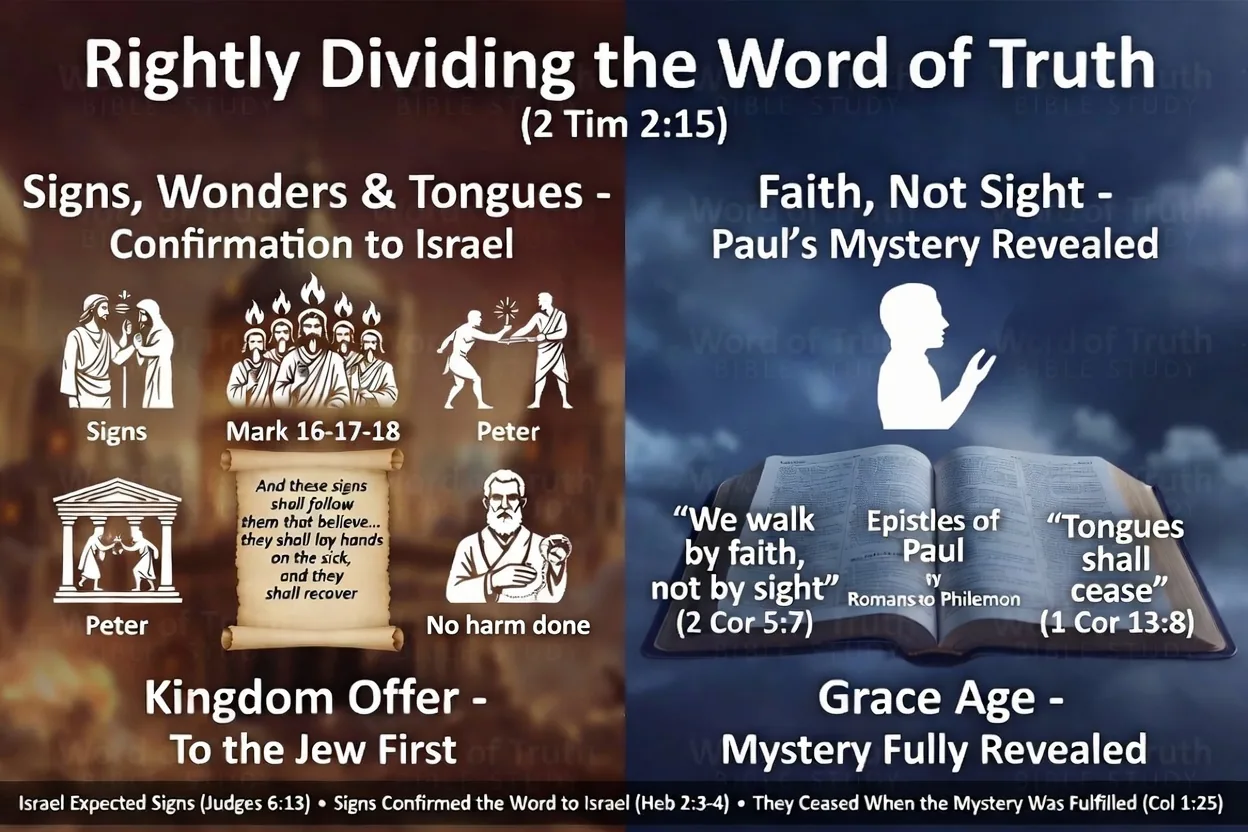
"And these signs shall follow them that believe; In my name shall they cast out devils; they shall speak with new tongues; They shall take up serpents; and if they drink any deadly thing, it shall not hurt them; they shall lay hands on the sick, and they shall recover." (Mark 16:17-18 KJV)
The signs were never the main thing—they confirmed the message. Israel required a sign (1 Corinthians 1:22 KJV), and God gave them one in abundance.
Signs and Wonders in Early Acts
On the day of Pentecost, the twelve spoke with other tongues as the Spirit gave utterance (Acts 2:4 KJV)—a clear sign to the Jews from every nation under heaven that God was doing something prophetic. Peter stood up and explained exactly what was happening by quoting the prophet Joel:
"And it shall come to pass in the last days, saith God, I will pour out of my Spirit upon all flesh: and your sons and your daughters shall prophesy, and your young men shall see visions, and your old men shall dream dreams." (Acts 2:17 KJV)
The tongues were not a private prayer language for personal edification; they were a public demonstration so that devout Jews could hear the wonderful works of God in their own languages (Acts 2:5-11). This was the fulfillment of Joel's prophecy concerning Israel's restoration and the coming kingdom.
Healings exploded across the early chapters. The lame man at the temple gate was healed in the name of Jesus (Acts 3:1-10). Peter's shadow fell on the sick and they were healed (Acts 5:15-16). Stephen did great wonders and miracles among the people (Acts 6:8). Philip healed the sick and cast out unclean spirits in Samaria (Acts 8:6-7). Dorcas was raised from the dead (Acts 9:40). Tongues appeared again at the household of Cornelius (Acts 10:46) and at Ephesus (Acts 19:6).
The writer of Hebrews sums it up plainly:
"How shall we escape, if we neglect so great salvation; which at the first began to be spoken by the Lord, and was confirmed unto us by them that heard him; God also bearing them witness, both with signs and wonders, and with divers miracles, and gifts of the Holy Ghost, according to his own will?" (Hebrews 2:3-4 KJV)
Signs confirmed the word of the kingdom to Israel. They belonged to Israel's prophetic program and the confirmation of the word during the transitional period.
The Signs of an Apostle
Not everyone who performed signs was an apostle, but every apostle had to have the "signs of an apostle" to be recognized. Paul explains it plainly:
"Truly the signs of an apostle were wrought among you in all patience, in signs, and wonders, and mighty deeds." (2 Corinthians 12:12 KJV)
Why were these signs necessary? Because the Jews "require a sign" (1 Corinthians 1:22 KJV). When a new apostle like Paul appeared—outside the original twelve—his apostleship had to be confirmed the same way. Without those credentials, who would have believed him? He was a former persecutor of the church, now claiming a new revelation and a new commission.
Paul performed the signs during the transitional period to authenticate his apostleship to both Jews and Gentiles. The signs served their purpose in confirming the messenger so the message of grace could go forward.
The Cessation of Signs, Tongues, and Healing
The signs did not continue indefinitely. They were tied to Israel's prophetic program and the confirmation of the word during the transition. Paul himself tells us:
"Charity never faileth: but whether there be prophecies, they shall fail; whether there be tongues, they shall cease; whether there be knowledge, it shall vanish away." (1 Corinthians 13:8 KJV)
As Israel nationally rejected the risen Christ, God began to set them aside temporarily. Paul declared it plainly at the end of Acts:
"Be it known therefore unto you, that the salvation of God is sent unto the Gentiles, and that they will hear it." (Acts 28:28 KJV)
Paul fulfilled the word of God by delivering the complete revelation of the mystery (Colossians 1:25-26). Once that was done, the need for confirmatory signs passed away. The written Word now stands complete. We no longer need miracles to confirm what God has fully revealed through Paul. Faith now comes by hearing the Word, not by seeing signs (Romans 10:17 KJV).
We see the practical evidence in Paul's later ministry. He left Trophimus sick at Miletum (2 Timothy 4:20 KJV). He told Timothy to take a little wine for his stomach and often infirmities (1 Timothy 5:23 KJV). No longer do we read of Paul healing everyone who came to him. The signs had served their purpose and were fading as the transition ended.
Tongues were a sign "to them that believe not" (1 Corinthians 14:22 KJV)—primarily to unbelieving Jews. Once the transition was complete, they ceased. The sign gifts were never given as a permanent possession for the body of Christ; they belonged to the time when God was still dealing with Israel on a national level and confirming the word to them.
What This Means for Us Today
If you are a member of the body of Christ, you are not living in the time when signs, tongues, and healing were the normal confirmation of God's program. We are living in the dispensation of the grace of God where we walk by faith, not by sight (2 Corinthians 5:7 KJV).
Our hope is not in signs but in "Christ in you, the hope of glory" (Colossians 1:27 KJV). Our power is not in miracles but in the gospel of the grace of God that saves us and makes us new creatures (2 Corinthians 5:17 KJV).
The signs did exactly what they were designed to do: they confirmed the word to Israel during the offer of the kingdom. Now that the mystery has been revealed, we have something even better—the completed revelation of God's grace through the epistles of Paul.
Study to shew thyself approved… rightly dividing the word of truth (2 Timothy 2:15 KJV). That's where the real power is.